Russia's Asia pivot spurs boom in Chinese classes / Photo: © AFP

 UN to hold fourth informal poll of secretary-general candidates

 Who are the Emiratis behind crisis-hit Manchester City?

 Singer Angelique Kidjo urges Africans to 'create together'
 Alleged Rihanna mansion shooter mentally fit for trial, says judge
 Mystery over UK airbase scare as police find petrol not explosives

 OpenAI unveils low-cost AI model, a day after shelving Astra upgrade
 Premier League confirms Man City guilty of serious financial breaches
 Brazil's Lula turns to Bad Bunny tune to criticise Trump ahead of polls

 Nigerian dancer eyes world record after seven-day marathon
 Swiss regulator concludes Julius Baer bank probe

 Brazil's patron saint pulled into latest election scrap

 Football overload leaves players near 'breaking point', warns Tebas

 Paris Eiffel Tower says chief to step down after uproar over removing women staff
 Amaze Holdings (NYSE: AMZE) Executes Binding LOI to Acquire BullionFX | Alchemy, a Decentralized Gold-Backed Financial Ecosystem for Valued at US$155 Million
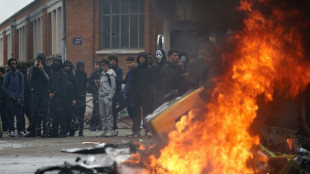 Clashes between French teens, police as school blockades intensify

 Stocks move sideways despite oil moving lower

 African leaders to gather in Egypt for business summit

 UK decides against charging foreign visitors for museums

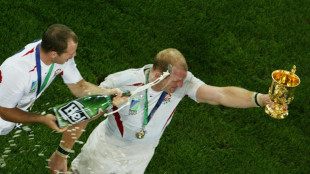 Dallaglio to sell England World Cup winners' medal

 Brazil come from behind to beat Australia 4-2 in friendly

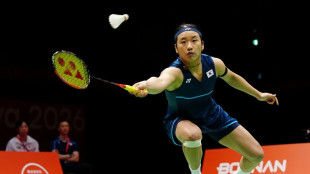 Ruthless An retains Asian Games badminton crown as Kunlavut triumphs

 Alonso to stay with F1 team Aston Martin in 2027

 China badminton 'still strong' despite Asian Games slump
 'Exceptional' Turner painting shown in Rome before sale

 European stocks climb as oil dips

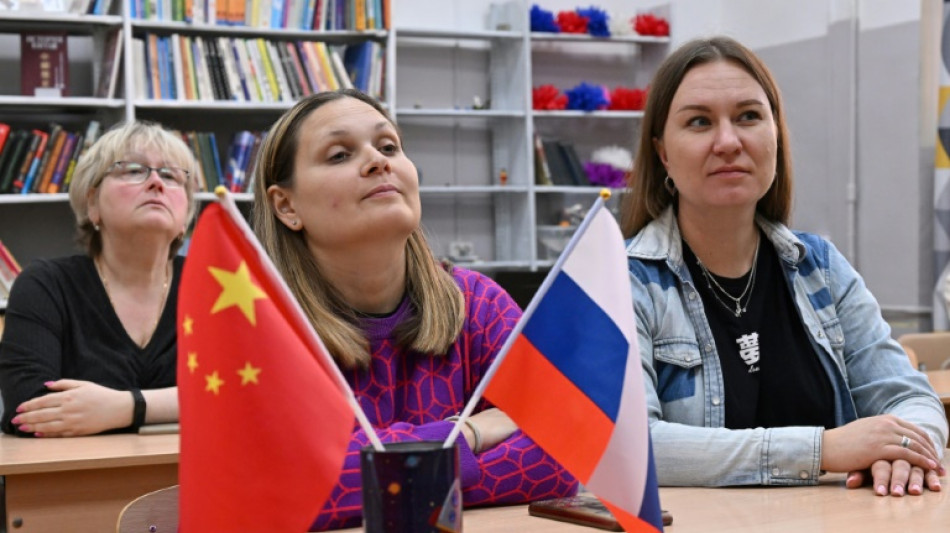
Every Sunday, Chinese tutor Kirill Burobin begins work in the early morning and is kept busy until midnight.
As Russia seeks to tighten ties with China amid Moscow's military campaign in Ukraine, the number of Burobin's students has tripled over the past year.
"Sunday is the busiest," 20-year-old Burobin, who makes a good living with his online lessons, told AFP.
"I have 16 hours of classes virtually without a break."
The boom in demand for Chinese lessons in Russia illustrates the country's pivot towards Asia as tensions build between Moscow and the West.
Chinese President Xi Jinping's three-day visit to Russia beginning Monday aims to deepen what the two countries have called a "no-limits" relationship, which is increasingly important for Russia as its international isolation deepens.
Pummelled by multiple rounds of Western sanctions, Russia's economic and technological development is becoming more dependent on China.
Natalia Danina, a manager at HeadHunter, the country's top online recruitment company, said that last year there were nearly 11,000 vacancies requiring knowledge of the Chinese language, a 44 percent increase compared to 2021.
Over the same period, the number of jobs for Chinese speakers in Russia has doubled in sales, transport and logistics, said Danina, pointing to an "accelerated transition" to Chinese-made equipment and spare parts.
Demand for Chinese speakers in energy jobs has tripled, she added.
- 'Just the start' -
Burobin, who also studies Eastern civilisations at a top Moscow university, said that he was happy to help his students learn more about "a whole new world".
"Russians are taking up Chinese because Beijing has become our main partner for decades to come," he said.
"And this is just the beginning."
In August, Avito, Russia's leading online classified ads platform, reported a 138 percent increase in requests for Chinese lessons in Moscow in one year.
The same figure stood at 350 percent for the far eastern city of Vladivostok.
The popularity of Chinese classes might be starting to catch up with demand for English lessons in the country.
Alina Khamlova, 26, who teaches both languages, said she had only three English language students this year, compared to 12 who are learning Chinese.
One of her students is Maria, a 22-year-old designer who dreams of travelling to China to make her clothes there because it is "cheaper than in Russia".
Another student is a 25-year-old gym coach, Ivan, who wants to work in China because Europeans "are paid very well" there.
Khamlova also said that many young people in Russia hope to study in Chinese universities now that many European establishments had become "inaccessible to them".
While English still retains a dominant position, the number of high school students who chose Chinese as a foreign language during their final school exams has doubled in one year to 17,000, according to the state education watchdog Rosobrnadzor.
- 'No one will defeat us' -
Russia's growing isolation from the West has prompted many language schools to revise their curricula and invite teachers of the Chinese language.
Founded in 2017, the ChineseFirst language centre has seen twice as many registrations this year, said its co-founders, Wang Yinyu, 38, and his Russian wife Natalia, a 33-year-old Chinese speaker.
Wang's family business is booming, and he is planning to open two new branches and a kindergarten in Moscow.
In Russia, "many companies have rushed to Chinese factories to order goods that have become unavailable in Russia due to sanctions," he told AFP in Russian.
And Chinese entrepreneurs, who are interested in exporting to Russia, are looking for bilingual employees.
Wang is glad that China and Russia are becoming closer.
"China has powerful industry and Russia is rich in resources, which means that our two countries can build their own internal economy," he said.
"If we stand back-to-back, no one will defeat us."
G.Schulte--BTB