Teens lured to Marseille become 'slaves' of its drugs war / Photo: © AFP/File

 UN to hold fourth informal poll of secretary-general candidates
 Who are the Emiratis behind crisis-hit Manchester City?

 Singer Angelique Kidjo urges Africans to 'create together'

 Alleged Rihanna mansion shooter mentally fit for trial, says judge
 Mystery over UK airbase scare as police find petrol not explosives
 OpenAI unveils low-cost AI model, a day after shelving Astra upgrade
 Premier League confirms Man City guilty of serious financial breaches
 Brazil's Lula turns to Bad Bunny tune to criticise Trump ahead of polls
 Nigerian dancer eyes world record after seven-day marathon
 Swiss regulator concludes Julius Baer bank probe

 Brazil's patron saint pulled into latest election scrap

 Football overload leaves players near 'breaking point', warns Tebas
 Paris Eiffel Tower says chief to step down after uproar over removing women staff

 Amaze Holdings (NYSE: AMZE) Executes Binding LOI to Acquire BullionFX | Alchemy, a Decentralized Gold-Backed Financial Ecosystem for Valued at US$155 Million
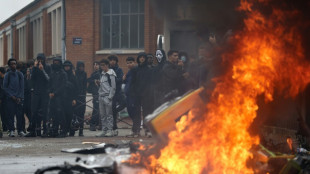
 Clashes between French teens, police as school blockades intensify
 Stocks move sideways despite oil moving lower
 African leaders to gather in Egypt for business summit
 UK decides against charging foreign visitors for museums

 Dallaglio to sell England World Cup winners' medal

 Brazil come from behind to beat Australia 4-2 in friendly

 Ruthless An retains Asian Games badminton crown as Kunlavut triumphs

 Alonso to stay with F1 team Aston Martin in 2027
 China badminton 'still strong' despite Asian Games slump

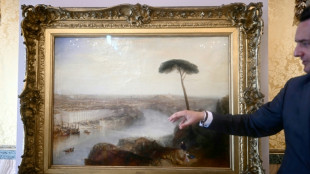 'Exceptional' Turner painting shown in Rome before sale

 European stocks climb as oil dips

Marseille's drug lords have a problem. Last year 32 of their foot soldiers were shot dead in the crime-plagued French Mediterranean port city.
Thirteen more have died in gang shootings so far this year, with three killed and eight wounded in one night alone this week. With so much bloodshed, dealers cannot find enough locals willing to risk their lives selling drugs on the streets.
So they are luring often vulnerable teenagers from the rest of France, who are easily sacrificed, to fill the gap.
Many of the young recruits "find themselves reduced to a state of semi-slavery, held hostage and even tortured," the city's chief judge, Olivier Leurent, told AFP.
The mounting death toll in Marseille echoes similar explosions of extreme violence in Antwerp and Rotterdam, the ports through which most of Europe's cocaine is smuggled by gangs linked to the Mexican cartels.
By "outsourcing" street dealing to young, expendable outsiders known as "jobbeurs", Marseille's drug lords make sure "they won't know enough about the network to pass on information" if they are arrested, said Tiphanie Binctin, of the French police's anti-drug unit OFAST.
It all starts with ads on social media like Snapchat. "We need a lookout. Young, with a good memory for faces, respectful of customers. Helpful to be good on motorbikes. 10 am to 10 pm."
Having failed his exams, Zacharie* couldn't resist the lure of "easy money" and travelled south from the Paris region to be a lookout at one of Marseille's 130 known drug-dealing spots. "They pay most here," he told a judge.
- Tale of two cities -
Like him, most of the young "jobbeurs" arrive at Marseille's Saint Charles train station, with its staggering views towards the blue of the Mediterranean.
But they do not get a chance to take in the old town, or the wealthy seaside suburbs that lead to the spectacular azur coves of the Calanques. Instead, they are taken directly to the notorious north of the city, to some of Europe's poorest and most crime-infested estates.
Their names may be redolent of bucolic old Provence -- La Marine Bleue, Les Oliviers (the Olive Trees) -- but gangs have such a hold here they even have checkpoints filtering traffic in and out of the estates.
Marseille's judges say four out of 10 minors they now see in drug cases come from outside the city.
And it is teenagers -- some as young as 14 -- who are on the front line of the city's vicious drugs war.
A 17-year-old was beaten and stabbed to death on the Paternelle estate in February by a mob of 30, the gruesome murder filmed by the killers before being posted on social media.
This week a 16-year-old was gunned down there, and a 14-year-old badly wounded by fire from an assault rifle.
- 'The French Connection' -
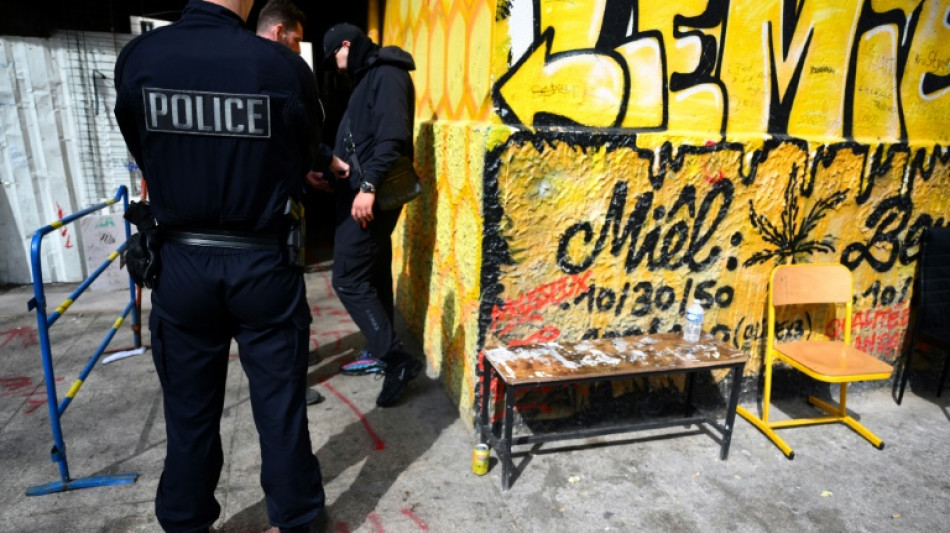
The stakes are high. Some of the city's dealing spots turn over 80,000 euros a day, with police scattering 12 customers queuing up to buy drugs during one recent swoop.
The roots of the drugs trade in France's second city are long and deep, and the gangs that control it are highly sophisticated.
Marseille's Corsican drugs mafia controlled most of the heroin that was smuggled into the United States from the 1930s to the 1970s, when "The French Connection" -- which gave its name to the Hollywood film -- was finally dismantled.
But the criminal underworld, which has since switched to cocaine and cannabis, continues to have a strong hold in France's poorest city.
Despite the spiralling risks, there seems to be no shortage of young recruits willing to work for the gangs.
"It's better than being a street walker," Cindy*, 21, told police after she was arrested.
"I had to work to get my daughter back."
The dealers put her up in a hotel when she arrived in Marseille from her village in the Herault.
Others have not been so lucky, according to the police, forced to sleep on balconies, in basements or next to bins.
"It's pure exploitation," said children's judge Laurence Bellon, with teens having to work long hours and take huge risks.
Even so, some youths making "1,400 euros a week for working seven days in a row... think they have made it and are earning a fortune," said Marseille's prosecutor Dominique Laurens.
- Torture -
But the reality is very different.
The young outsiders are more vulnerable and "less well paid and well treated than locals", said lawyer Valentin Loret, who has represented some of them. And when police catch them with drugs and cash they fall in the debt trap, with "the gangs demanding they pay them back".
Migrants from Algeria and Nigeria have also been recruited, thinking they were being hired to work on building sites, he added.
Marseille "is no Eldorado", said Frederique Camilleri, the region's top law enforcement official. "It's violence, fake debts, torture and acts of barbarity. It is being at the mercy of the gangs."
Their control is total, with teenagers punished for not counting the cash quickly enough or for failing to raise the alert fast enough when the police appear.
A 16-year-old who had run away to Marseille from a children's home in Chartres in central France was found unconscious after being tortured with a burning torch for selling a small amount of pot without permission.
One of his torturers, also then underage, was jailed for 10 years in November.
Another minor was recently put on a train back to his home by the authorities only to be intercepted at the next station by dealers because he had a "debt" to repay.
Many of the cases verge on human trafficking, said Judge Bellon.
One group of teenagers recruited online were locked up, beaten and tortured for no apparent reason after their arrival in the city during the pandemic in 2020.
One of the boys, who was 15 at the time, was raped by a young dealer and blackmailed with a sex tape to keep him quiet -- a tactic the gangs often use, according to a judicial source.
- 'Paupers in designer labels' -
Yet some vulnerable young people are still willing to put their lives at risk for a few hundred euros.
With many having dropped out of school at 11, said Judge Bellon, they cling onto the "designer clothes (they buy from dealing) as only part of their identity they can put forward.
"They are paupers in designer labels," said one of their lawyers, shocked by a client oblivious to the risks he was taking as he strutted around in a coat worth several hundred euros.
The conspicuous consumption of social media influencers and series like "Narcos" that glamorise the drug world seem to justify their lives, the authorities argue.
While police struggle to reach out to the teens, or work their way up the chain of command, some end up running to them when things get desperate.
In December, a young man who feared he was about to be kidnapped jumped onto a bus and begged passengers to help him. A month later another climbed onto the roof of a tower block and pleaded with the emergency services to rescue him, a police source said.
- 'Mexicanisation' -
Prosecutor Laurens said she feared "a worsening of the situation, with a shift to what some South American countries are experiencing -- a Mexicanisation" -- even if the number of deaths is not comparable.
Judge Bellon is equally worried. "It is more than lawlessness," she told AFP.
"It sometimes reminds me of an image we have of Brazil, where there is a complete divide between wealthy neighbourhoods and those where there is extreme poverty and hyper violence."
Despite the spiralling violence, some young "jobbeurs" like Zacharie -- arrested only three days after he arrived in Marseille -- have managed to free themselves from the clutches of the gangs.
He was spared jail, thanks to the intervention of his mother, but was banned from the city for his own good for three years.
As the prosecutor wryly put it, "the local climate didn't suit him".
* The names of the young people have been changed to protect them from reprisals.
T.Bondarenko--BTB