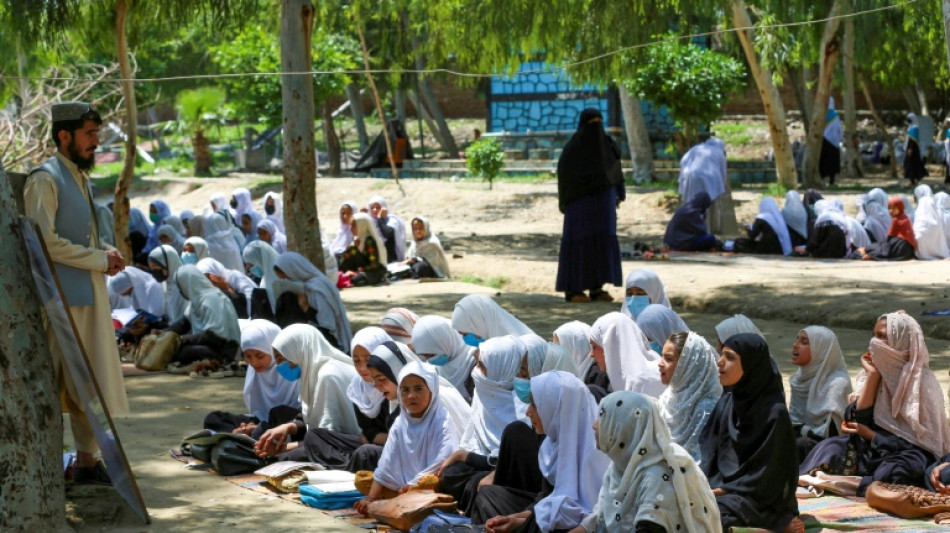
UNICEF 'concerned' by reports of Taliban ban on foreign school NGOs / Photo: © AFP

 Prague’s Concert for the Future Kicks Off on Wenceslas Square

 Prince William and Princess of Wales to Announce Earthshot Prize Winners in Mumbai

 Indonesia Forest Fires: Health Crisis, Diplomatic Strains and the Search for Solutions

 BYD Dolphin G Leasing Deal: Plug-in Hybrid Supermini Available from £174 a Month

 JUEL Group Expands from Real Estate to Hospitality with Hyatt Centric Malta Opening

 French Economy Shrinks 0.1% as Consumer Confidence Slumps

 Wall Street Ends Turbulent Week Higher Despite Inflation and AI Jitters

 Kansas City Fed Chief Says Inflation Is Still Running Too Hot

The Taliban government may have banned international NGOs from offering education to out-of-school Afghan children, UNICEF said Thursday, putting the teaching of half a million boys and girls at risk.
The UN agency said it was seeking more information on reports that authorities did not want foreign organisations directly involved in the education sector.
Since seizing power almost two years ago, Taliban authorities have blocked girls and women from secondary schools and universities.
"UNICEF is deeply concerned by reports that over 500,000 children, including over 300,000 girls, could lose out on quality learning through Community Based Education within a month if international non-governmental organisations working in the field of education are no longer allowed to operate," the agency said in a statement.
It said the agency was "seeking to better understand the reported directive", which Taliban leaders have so far not publicly commented on.
UNICEF partners with 15 Afghan NGOs and 12 international ones to deliver 21,000 community-based schools in the most remote and impoverished areas of the country.
The classes are typically held in community buildings or houses in areas where there are no existing schools, and children are taught the national curriculum by Afghan teachers.
Classes would be handed over to national aid groups, according to the reported directive.
It comes after the Taliban Supreme Leader Hibatullah Akhundzada met with provincial education officials in Kandahar, according to a tweet by the education ministry on Sunday.
Taliban leaders have repeatedly claimed they will reopen schools for girls once certain conditions have been met -- including overcoming a lack of funds and remodelling the syllabus along Islamic lines.
Taliban authorities made similar assurances during their first stint in power, from 1996 to 2001, but girls' schools did not reopen in those five years.
Previous orders against girls' schooling are believed to have been made by Akhundzada and his ultra-conservative aides, who are deeply sceptical of modern education for women.
It has stirred criticism from within the movement as well as sparking international outrage.
In March, Afghan education activist Matiullah Wesa was arrested by Taliban authorities and remains in detention.
He was the founder of PenPath, which is dedicated to communicating the importance of education to elders in rural villages and helping to reopen schools for girls and boys closed because of violence.
Authorities also detained veteran journalism lecturer Ismail Mashal in February for several weeks after Afghan media showed him carting books around Kabul and offering them to passersby.
National and international aid groups have also come under huge pressure in recent months following an order banning Afghan women staff from fieldwork.
Earlier this week, the independent Norwegian Refugee Council said its Afghan women staff had resumed their work in some provinces following negotiations with Taliban officials for a temporary agreement.
L.Janezki--BTB