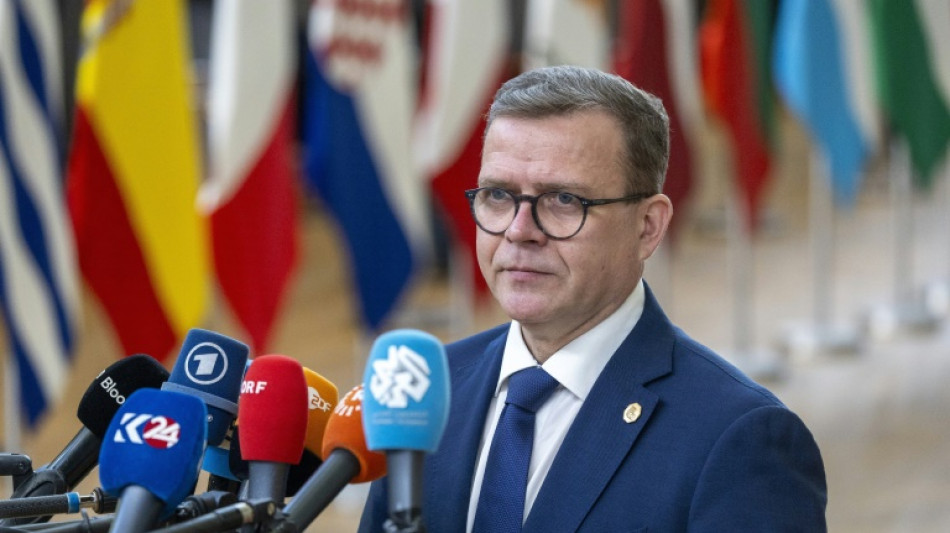
Thousands strike in Finland over labour reform / Photo: © BELGA/AFP

 Prague’s Concert for the Future Kicks Off on Wenceslas Square

 Prince William and Princess of Wales to Announce Earthshot Prize Winners in Mumbai

 Indonesia Forest Fires: Health Crisis, Diplomatic Strains and the Search for Solutions

 BYD Dolphin G Leasing Deal: Plug-in Hybrid Supermini Available from £174 a Month

 JUEL Group Expands from Real Estate to Hospitality with Hyatt Centric Malta Opening

 French Economy Shrinks 0.1% as Consumer Confidence Slumps

 Wall Street Ends Turbulent Week Higher Despite Inflation and AI Jitters

 Kansas City Fed Chief Says Inflation Is Still Running Too Hot

A massive Finnish strike movement kicked off on Thursday, grounding most air traffic and closing workplaces in a protest against proposed government labour reforms that include social benefit cuts.
About 300,000 people are expected to take part in the two days of strike action.
With air traffic widely disrupted, national carrier Finnair has cancelled 550 flights, affecting 60,000 passengers.
Trains across the country and metros, buses and trams in the capital will grind to a halt on Friday, while various unions called for stoppages in the energy sector, schools and healthcare services.
Industry, restaurants, hotels, postal workers and other retail sectors and services are also affected.
A protest called by the Central Organisation of Finnish Trade Unions (SAK) gathered around 13,000 people in Helsinki on Thursday, police said.
"The biggest problem is that they are trying to weaken the unions' powers to negotiate the (collective) agreements which are usually done by the employers lawyers and the unions' lawyers," 30-year-old demonstrator Henri Mertto, who works as a ship crewman, told AFP.
Like its Nordic neighbours, Finland is known for its generous welfare model, which offers strong protection and benefits for employees.
But conservative Prime Minister Petteri Orpo's coalition government has argued the country needs an "export-driven labour market model" to boost competitiveness.
Unions have vowed to paralyse the country to force the government to back down.
"Strikes of this magnitude, that will cause great losses to the Finnish economy in a difficult economic situation, are excessive and disproportionate," Orpo told Finnish news agency STT in Brussels where he attended a European Union summit.
The Confederation of Finnish Industries told AFP the strikes would result in a loss of around 360 million euros for gross domestic product.
Tiina Ivakko, head of a Helsinki daycare centre, told AFP many of her employees didn't show up for work on Thursday and parents kept their kids at home.
"We have, on a normal day, 300 children and a staff of over 50. We have had very few children, about 30, 40, and for staff we have about half of what we usually have," she said.
Some travellers went to Helsinki airport in the hope their flight would be among the few taking off.
"My flight looks like it's going to fly ... but if not then I don't know what I'm going to do. Maybe take a taxi back home and go to work," Niklas Sinisalo, an engineer, told AFP.
He was not bothered by the inconvenience, saying the strike was "for a good cause."
Many supermarkets remained open but shorter opening hours and product shortages were expected toward the end of the day.
- Weaken employees rights -
Among the planned reforms is a change of the rules for collective bargaining negotiations.
Proposed cuts to social benefits would include making the first day of sick leave unpaid and cutting earnings-related unemployment benefits, with the amount decreasing the longer the period of unemployment lasts.
There would also be restrictions on the right to strike and greater rights for employers to negotiate agreements locally.
Markku Sippola, a senior lecturer in social sciences at the University of Helsinki, said the reforms constituted "a very significant change".
"They will weaken the employee's position in terms of both unemployment security and protection against unjustified dismissal and the right to strike," he told AFP.
Pekka Ristela, head of international affairs at SAK, said the government proposals would "weaken the livelihoods of especially low-income employees who become unemployed".
Merja Hyvarinen, who attended Thursday's demonstration wearing a hi-viz vest from the Public and Welfare Sectors Union, said she was worried what the proposed changes would mean for her two children.
"If the government's changes are realised, they'll have a rocky road ahead at work in the future."
Strikes are relatively uncommon in Finland, especially ones involving white-collar workers.
O.Lorenz--BTB