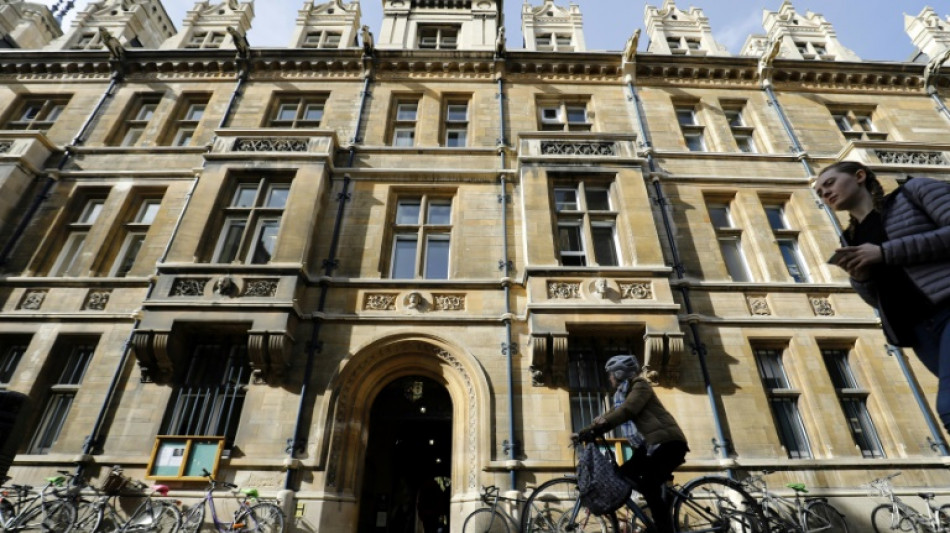
UK's Cambridge University halts fossil fuel funding / Photo: © AFP

 Prague’s Concert for the Future Kicks Off on Wenceslas Square

 Prince William and Princess of Wales to Announce Earthshot Prize Winners in Mumbai

 Indonesia Forest Fires: Health Crisis, Diplomatic Strains and the Search for Solutions

 BYD Dolphin G Leasing Deal: Plug-in Hybrid Supermini Available from £174 a Month

 JUEL Group Expands from Real Estate to Hospitality with Hyatt Centric Malta Opening

 French Economy Shrinks 0.1% as Consumer Confidence Slumps

 Wall Street Ends Turbulent Week Higher Despite Inflation and AI Jitters

 Kansas City Fed Chief Says Inflation Is Still Running Too Hot

Britain's Cambridge University confirmed on Monday that it has adopted a moratorium on new funding from fossil fuel companies after a campaign from students and academics.
The decision to halt funding until a review is carried out follows recommendations in a report by former UN climate change envoy Nigel Topping last year.
Cambridge said the suspension was adopted on Friday "having regard to its commitment to address climate change through a transition to a zero‑carbon world".
According to the Topping report, the university receives relatively small donations from industrial partners, amounting to 5.1 percent of all research/philanthropy funding.
At an average of £3.3 million ($4.2 million) per year over the last six years, fossil fuel funding amounts to 0.4 percent of research/philanthropy funding and 0.1 percent of total university income, it said.
Cambridge's decision was first reported by the Financial Times on Monday, which said the university had accepted £19.7 million from oil giants BP and Shell between 2016 and 2023.
The university has a target to reach to achieve net-zero greenhouse gas emissions by 2038. It plans to divest from all direct and indirect investments in fossil fuels by 2030.
"The university has recognised the urgency of the climate emergency and taken action to demonstrate leadership," the Topping report said.
"This includes decisions to divest from fossil fuels in the endowment, commit to science-based targets, launch Cambridge Zero and align sources of funding with the University’s own ambition."
O.Bulka--BTB