'Russia, our sacred state!': school reopens under Moscow control / Photo: © AFP

 UN to hold fourth informal poll of secretary-general candidates
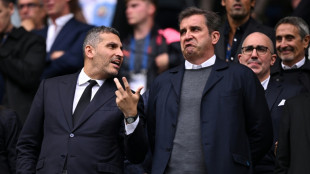
 Who are the Emiratis behind crisis-hit Manchester City?
 Singer Angelique Kidjo urges Africans to 'create together'
 Alleged Rihanna mansion shooter mentally fit for trial, says judge
 Mystery over UK airbase scare as police find petrol not explosives
 OpenAI unveils low-cost AI model, a day after shelving Astra upgrade
 Premier League confirms Man City guilty of serious financial breaches
 Brazil's Lula turns to Bad Bunny tune to criticise Trump ahead of polls
 Nigerian dancer eyes world record after seven-day marathon
 Swiss regulator concludes Julius Baer bank probe
 Brazil's patron saint pulled into latest election scrap

 Football overload leaves players near 'breaking point', warns Tebas
 Paris Eiffel Tower says chief to step down after uproar over removing women staff
 Amaze Holdings (NYSE: AMZE) Executes Binding LOI to Acquire BullionFX | Alchemy, a Decentralized Gold-Backed Financial Ecosystem for Valued at US$155 Million

 Clashes between French teens, police as school blockades intensify
 Stocks move sideways despite oil moving lower
 African leaders to gather in Egypt for business summit
 UK decides against charging foreign visitors for museums

 Dallaglio to sell England World Cup winners' medal

 Brazil come from behind to beat Australia 4-2 in friendly

 Ruthless An retains Asian Games badminton crown as Kunlavut triumphs

 Alonso to stay with F1 team Aston Martin in 2027
 China badminton 'still strong' despite Asian Games slump
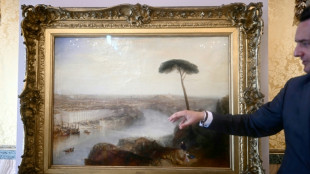 'Exceptional' Turner painting shown in Rome before sale
 European stocks climb as oil dips

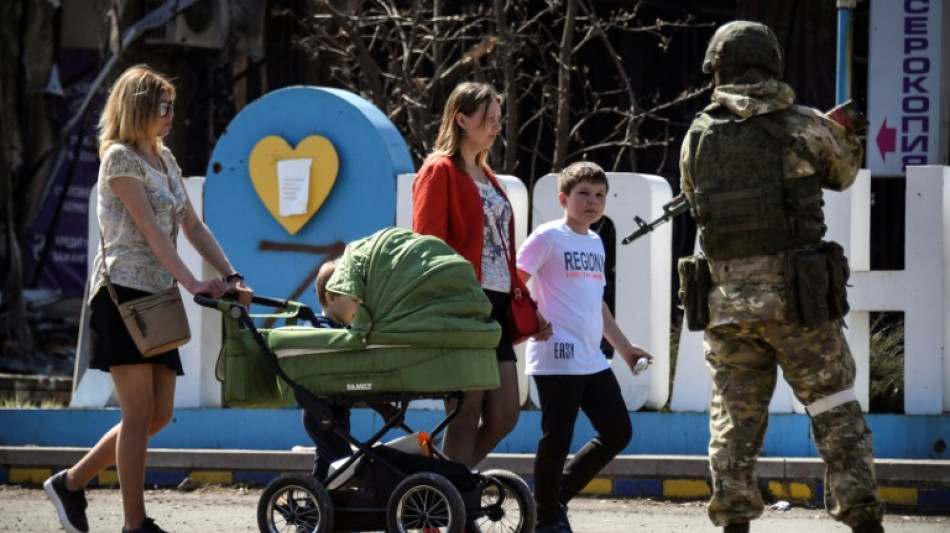
In the playground of a school in the war-torn eastern Ukrainian town of Volnovakha, now under Moscow's control, children listen to a recording of the Russian anthem, watched by armed soldiers.
Several dozen pupils have lined up outside for a formal "back to school" ceremony, a month after the town was taken by Russian troops and Moscow-backed separatists.
Volnovakha has no electricity or working telephone lines, AFP journalists found while taking part in a media trip organised by the Russian army.
Widespread shelling has destroyed houses, shops and cafes, evidence of the fierce fighting for a town strategically located halfway between the main regional city of Donetsk and the port of Mariupol.
Russian troops have besieged Mariupol for a month and a half and the city on the Sea of Azov seems likely to fall shortly.
As Russia puts it, Volnovakha has been "liberated" from neo-Nazi Ukrainians.
"It's time to learn. Hurry up, children!" a small rosy-cheeked girl with white bows in her hair announces, speaking into a microphone.
Behind her, the school staff are standing next to a Russian flag and that of the separatist Donetsk People's Republic (DNR).
Nearby a soldier in a cagoule and helmet -- one of the troops accompanying the journalists -- stands watching, holding a submachine gun.
As a sound system plays the DNR anthem and then the Russian anthem -- which opens "Russia, our sacred state, Russia, our beloved country!" -- staff and pupils stand silently, their faces impassive.
- 'Lived through horror' -
Russia's conquest of Volnovakha on March 11 allowed its forces to encircle Mariupol from the north, having attacked the strategic Sea of Azov port from the east and west.
This came after Volnovakha and its Ukrainian defending troops were bombarded for two weeks.
Many houses, shops and public buildings are now semi-ruined, windowless or burnt-out.
Russia argues that such destruction here, and elsewhere in Ukraine, came about because Kyiv's forces used the local population as human shields.
After a month under Moscow's control, there are still scenes of devastation all around. There is a huge hole in the facade of the hospital and trees nearby have been snapped in half.
Yellow-painted School Number 5, which is in the centre of the town, has also suffered from shelling, with gaping holes in place of several windows and shattered bricks. This is the only school to reopen so far.
"We lived through horror. There was terrible bombing," says Lyudmila Khmara, the 52-year-old school administrator.
She says that she wants to stay in Volnovakha, all the same, because: "nowhere is as good as home".
She says she hopes Volnovakha will become "part of Russia", where no one will be forced to speak Ukrainian, while this part of Ukraine is overwhelmingly Russian-speaking.
Moscow justifies its military operation in Ukraine citing the need to protect the Russian-speaking population.
- In survival mode -
The army is leaving nothing to chance. Even with no sign of resistance, tanks and military vehicles decorated with the letter Z patrol the streets as local civilians walk around and cycle.
The municipal hospital continues to function as best it can, despite lacking electricity and suffering extensive bomb damage.
In the semi-darkness, a nurse, 46-year-old Natalya Nekrasova-Mukhina, says that most patients, from children to the elderly, come to be treated for shrapnel wounds.
Local residents are still living in survival mode.
"We have no gas, no water, no electricity and no phone line. We live like we're in a hole," says Lyudmila Dryga, 72, a retired crane operator.
Another local woman, Svetlana Shcherbakova, 59, recounts how she lost everything except ID documents when her house burned down.
"We received humanitarian aid just once, that was it," says the former supermarket security manager, her voice trembling.
A 35-year-old railway mechanic, Anton Varusha, estimates that less than half of the people living on his street have returned to live in Volnovakha, which had around 20,000 inhabitants before the bombardment.
"I don't know yet whether I'll stay here. At the moment, I have my parents here, who are old and sick," he says.
He says locals are struggling to get information on what is happening, with no electricity or internet.
"We try to listen to various radio stations, so we can somehow compare (accounts of) what is going on," he says.
A.Gasser--BTB