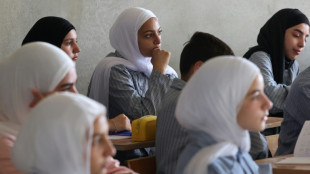
South Korea to ban mobile phones in school classrooms / Photo: © AFP/File

 UN to hold fourth informal poll of secretary-general candidates

 Who are the Emiratis behind crisis-hit Manchester City?

 Singer Angelique Kidjo urges Africans to 'create together'

 Alleged Rihanna mansion shooter mentally fit for trial, says judge
 Mystery over UK airbase scare as police find petrol not explosives

 OpenAI unveils low-cost AI model, a day after shelving Astra upgrade

 Premier League confirms Man City guilty of serious financial breaches
 Brazil's Lula turns to Bad Bunny tune to criticise Trump ahead of polls

 Nigerian dancer eyes world record after seven-day marathon

 Swiss regulator concludes Julius Baer bank probe

 Brazil's patron saint pulled into latest election scrap

 Football overload leaves players near 'breaking point', warns Tebas

 Paris Eiffel Tower says chief to step down after uproar over removing women staff

 Amaze Holdings (NYSE: AMZE) Executes Binding LOI to Acquire BullionFX | Alchemy, a Decentralized Gold-Backed Financial Ecosystem for Valued at US$155 Million
 Clashes between French teens, police as school blockades intensify

 Stocks move sideways despite oil moving lower

 African leaders to gather in Egypt for business summit

 UK decides against charging foreign visitors for museums

 Dallaglio to sell England World Cup winners' medal

 Brazil come from behind to beat Australia 4-2 in friendly

 Ruthless An retains Asian Games badminton crown as Kunlavut triumphs

 Alonso to stay with F1 team Aston Martin in 2027

 China badminton 'still strong' despite Asian Games slump

 'Exceptional' Turner painting shown in Rome before sale

 European stocks climb as oil dips

South Korea has passed a bill banning the use of mobile phones in school classrooms nationwide, officials said Thursday, joining other countries in efforts to curb social media use among minors.
One of the world's most wired nations, South Korea has recently sought to tighten rules on electronic devices in schools, citing concerns over smartphone addiction among students.
The bill, which will take effect in March next year, bans smart devices including mobile phones in classrooms and was passed Wednesday, a National Assembly spokeswoman told AFP.
The move makes South Korea the latest country to restrict social media use among schoolchildren, following similar steps in countries including Australia and the Netherlands.
Seoul's Education Ministry said in a statement that the law bans the use of smartphones in classrooms except when needed as assistive tools for students with disabilities or special education needs, or for educational purposes.
The measure also establishes a legal basis to "restrict the possession and use of such devices to protect students' right to learn and support teachers' activities", it added.
Lawmakers including opposition People Power Party member Cho Jung-hun, who introduced the bill, said the issue had long been "contentious amid concerns over human rights violations".
But the country's National Human Rights Commission recently changed its stance, saying limits on phone use for educational purposes do not breach rights given their negative impact on students' learning and emotional well-being.
Against this backdrop, the law was needed to ease social conflict "by clearly defining rules on smart device use in schools", the lawmakers said in a document introducing the bill.
But it has drawn backlash from groups including the left-wing Jinbo Party, which said the law will "infringe on students' digital rights and right to education".
The measure "prevents adolescents from learning to make responsible decisions on their own and deprives them of opportunities to adapt to the digital environment", the party said in a statement.
K.Thomson--BTB