Austria set to vote on headscarf ban in schools / Photo: © AFP

 UN to hold fourth informal poll of secretary-general candidates
 Who are the Emiratis behind crisis-hit Manchester City?
 Singer Angelique Kidjo urges Africans to 'create together'

 Alleged Rihanna mansion shooter mentally fit for trial, says judge
 Mystery over UK airbase scare as police find petrol not explosives

 OpenAI unveils low-cost AI model, a day after shelving Astra upgrade
 Premier League confirms Man City guilty of serious financial breaches
 Brazil's Lula turns to Bad Bunny tune to criticise Trump ahead of polls
 Nigerian dancer eyes world record after seven-day marathon
 Swiss regulator concludes Julius Baer bank probe

 Brazil's patron saint pulled into latest election scrap

 Football overload leaves players near 'breaking point', warns Tebas
 Paris Eiffel Tower says chief to step down after uproar over removing women staff

 Amaze Holdings (NYSE: AMZE) Executes Binding LOI to Acquire BullionFX | Alchemy, a Decentralized Gold-Backed Financial Ecosystem for Valued at US$155 Million

 Clashes between French teens, police as school blockades intensify

 Stocks move sideways despite oil moving lower

 African leaders to gather in Egypt for business summit
 UK decides against charging foreign visitors for museums

 Dallaglio to sell England World Cup winners' medal

 Brazil come from behind to beat Australia 4-2 in friendly

 Ruthless An retains Asian Games badminton crown as Kunlavut triumphs

 Alonso to stay with F1 team Aston Martin in 2027
 China badminton 'still strong' despite Asian Games slump
 'Exceptional' Turner painting shown in Rome before sale
 European stocks climb as oil dips

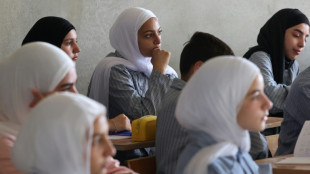
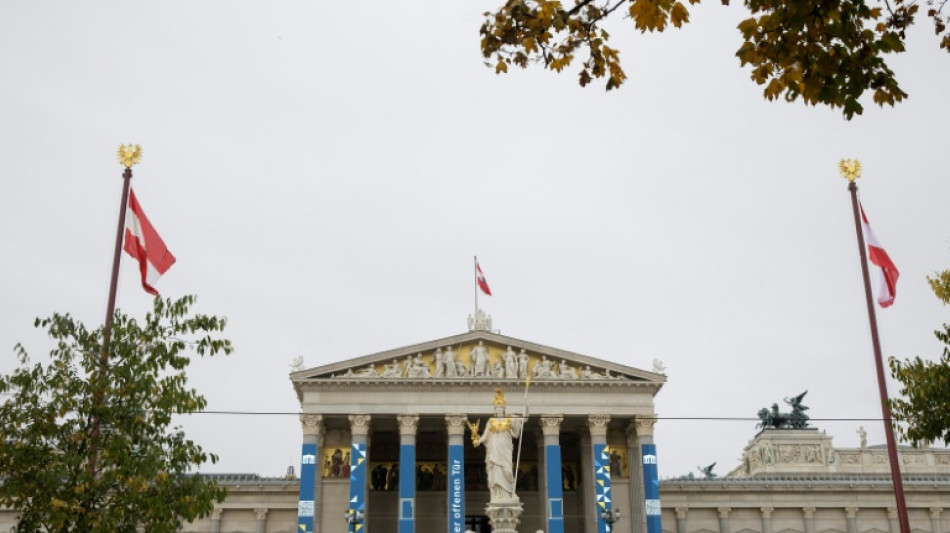
Austrian lawmakers on Thursday are expected to approve a law banning headscarves in schools for girls under 14, a move rights groups and experts say is discriminatory and could deepen societal division.
Austria's conservative-led government -- under pressure at a time when anti-immigration sentiment is running high -- proposed the ban earlier this year. They argue it is to protect girls "from oppression".
In 2019, when the country introduced a ban on headscarves in primary schools, the constitutional court struck it down, calling it unconstitutional and discriminatory. This time however, the government insists that its law is constitutional.
The law, if passed, would prevent girls younger than 14 from wearing headscarves that "cover the head in accordance with Islamic traditions" in all schools.
"When a girl... is told that she must hide her body... to protect herself from the gaze of men, it's not a religious ritual, but oppression," Integration Minister Claudia Plakolm said when presenting the bill.
The ban, which applies to "all forms" of the Islamic veil including hijabs and burqas, would take full effect with the start of the new school year in September, Plakolm said.
From February, an initial period would be launched during which the new rules would be explained to educators, parents and children with no penalties for breaking them.
But for repeated non-compliance, parents would face fines ranging from 150 to 800 euros ($175-930).
The government said that about 12,000 girls would be affected by the new law, basing its figures on a 2019 study that showed that approximately 3,000 girls aged below 14 wore a headscarf six years ago.
- 'Stigmatised' -
Rights organisations have criticised the bill, including Amnesty International Austria.
Amnesty said it "constitutes blatant discrimination against Muslim girls" and described it as an "expression of anti-Muslim racism".
Such measures risk "fuelling existing prejudices and stereotypes against Muslims", the group warned.
The draft law has also drawn criticism from the IGGOe, the body officially recognised as representing the country's Muslim communities.
It said the ban "jeopardises social cohesion", saying "instead of empowering children, they are stigmatised and marginalised".
Angelika Atzinger, managing director of the Amazone women's rights association, said a headscarf ban "sends girls the message that decisions are being made about their bodies and that this is legitimate".
Her comments appeared in a statement published by the anti-racism group SOS Mitmensch, which also opposes the proposed law.
Austria's anti-immigration, far-right Freedom Party (FPOe), which won last year's general election but failed to form a government, said the ban did not go far enough. They want it extended to all students, teachers and other staff.
The governing coalition said it was confident the revised ban would not be overturned a second time.
It argued that the law provides for such restrictions if the rights of a child, which are enshrined in the constitution, would otherwise be infringed upon.
But constitutional law expert Heinz Mayer has raised doubts that a ban can be constitutional, recalling the top court's ruling in 2020, which found that "one religion was being discriminated against".
It also ruled that "if the headscarf is a symbol of oppression", a ban puts children in "an uncomfortable situation", but not the people who impose it on them, he told AFP.
In France, authorities banned school children in 2004 from wearing "signs or outfits by which students ostensibly show a religious affiliation" -- such as headscarves, turbans or Jewish skullcaps -- on the basis of the country's secular laws, which are meant to guarantee neutrality in state institutions.
J.Horn--BTB