India clears protest site after 'cockroach' movement scores a win / Photo: © AFP

 Prague’s Concert for the Future Kicks Off on Wenceslas Square

 Prince William and Princess of Wales to Announce Earthshot Prize Winners in Mumbai

 Indonesia Forest Fires: Health Crisis, Diplomatic Strains and the Search for Solutions

 BYD Dolphin G Leasing Deal: Plug-in Hybrid Supermini Available from £174 a Month

 JUEL Group Expands from Real Estate to Hospitality with Hyatt Centric Malta Opening

 French Economy Shrinks 0.1% as Consumer Confidence Slumps

 Wall Street Ends Turbulent Week Higher Despite Inflation and AI Jitters

 Kansas City Fed Chief Says Inflation Is Still Running Too Hot

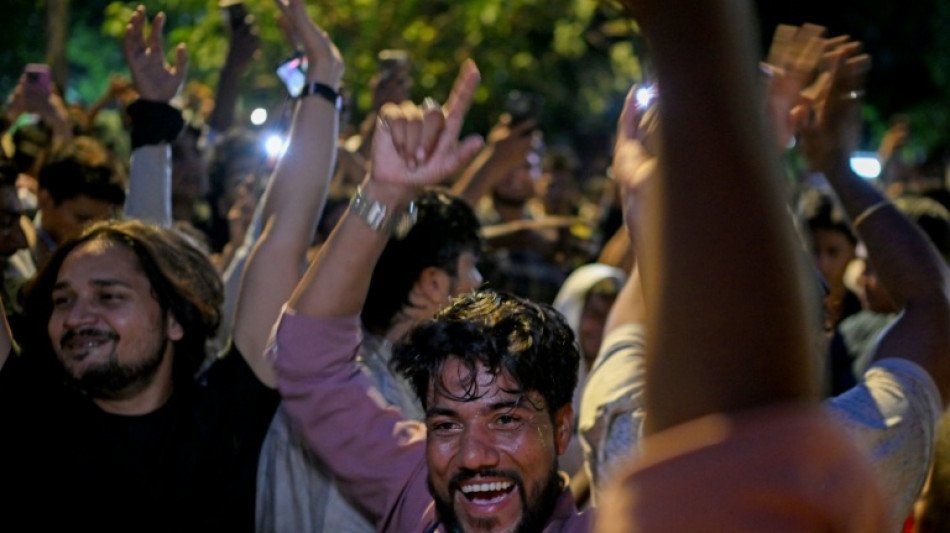
New Delhi municipal workers were busy painting over anti-government graffiti on Sunday after the youth-led "cockroach" movement had left a landmark protest site, satisfied with the government acceding to their demands.
The social media-driven Cockroach Janta Party (CJP) had drawn thousands of demonstrators, mainly students, to the capital's Jantar Mantar site, forming one of India's largest anti-government protests in recent years.
Weeks of protests over exam irregularities and other issues affecting young Indians culminated on Saturday with the resignation of the education minister and the government accepting other key demands.
On Sunday, dozens of municipal workers were washing the pavements along the road leading to the site, where activists had camped for weeks and where just hours earlier the crowd sang protest songs, chanted slogans and painted acerbic graffiti.
"We have been here since midnight when the protestors left," a municipal worker who declined to be identified told AFP.
"The walls have been painted, but may require another coat of paint as some lines (from the slogans) are still visible," he said.
The movement sparked by a call for education reforms evolved to include concerns over unemployment, opportunities for young people and what critics brand as Prime Minister Narendra Modi's increasingly authoritarian style of governance.
The protests became one of the biggest challenges to Hindu nationalist Modi's administration since his 2024 re-election.
Nayan Thakrele, 19, one of many young people who had come from across India to join the movement, finally reached Jantar Mantar on Sunday morning.
"It's a shame that the protest is over by the time I reached here," Thakrele, who took a 20-hour train journey from the central state of Madhya Pradesh, told AFP.
- 'Face the consequences' -
"I first heard about it on Instagram and saw the electrifying atmosphere, colourful walls, posters, and wanted to be here and experience it myself," Thakrele said.
Amish, 35, had also hoped to join the protests but reached the site when it already being painted clean.
"I had booked the flight from Mumbai before Pradhan's resignation," he told AFP.
Amish said that the Modi government had backed itself into a corner with its response to the protests, which at times escalated into brief clashes and outbursts of violence.
"Had they not tried a crackdown, the protest wouldn't have become as big as it did," said Amish.
"I feel that this government will now face the electoral consequences of its recent actions."
A Delhi police constable at Jantar Mantar said that only a few people came there on Sunday morning, "mostly locals who are curious to see the site they'd seen in protest videos online".
Now painted red, the wall behind the constable was used by demonstrators to put up posters and notes, including of police officers who had baton-charged or used tear gas against protesters.
"We want everything to be documented and remembered," protester Rahul told AFP on Saturday near the so-called "wall of shame".
"We have taken photos and videos of these posters and hope everyone shares them widely."
Y.Bouchard--BTB