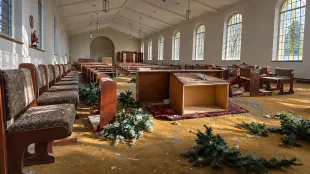
UN condemns 'shameful' year-long ban on Afghan girls' education / Photo: © AFP/File

 Prague’s Concert for the Future Kicks Off on Wenceslas Square

 Prince William and Princess of Wales to Announce Earthshot Prize Winners in Mumbai

 Indonesia Forest Fires: Health Crisis, Diplomatic Strains and the Search for Solutions

 BYD Dolphin G Leasing Deal: Plug-in Hybrid Supermini Available from £174 a Month

 JUEL Group Expands from Real Estate to Hospitality with Hyatt Centric Malta Opening

 French Economy Shrinks 0.1% as Consumer Confidence Slumps

 Wall Street Ends Turbulent Week Higher Despite Inflation and AI Jitters

 Kansas City Fed Chief Says Inflation Is Still Running Too Hot

The United Nations urged the Taliban on Sunday to reopen high schools for girls across Afghanistan, condemning the ban that began exactly a year ago as "tragic and shameful".
Weeks after the Taliban seized power in August last year, the hardline Islamists reopened high schools for boys on September 18, 2021, but banned secondary schoolgirls from attending classes.
Months later on March 23, the education ministry opened secondary schools for girls, but within hours the Taliban leadership ordered classes to be shut again.
Since then more than a million teenage girls have been deprived of education across the country, the United Nations Assistance Mission in Afghanistan (UNAMA) said.
"This is a tragic, shameful, and entirely avoidable anniversary," said Markus Potzel, the acting head of UNAMA in a statement.
"It is profoundly damaging to a generation of girls and to the future of Afghanistan itself," he said, adding the ban had no parallel in the world.
UN chief Antonio Guterres urged the Taliban to revoke the ban.
"A year of lost knowledge and opportunity that they will never get back," Guterres said on Twitter.
"Girls belong in school. The Taliban must let them back in."
Several Taliban officials say the ban is only temporary, but they have also wheeled out a litany of excuses for the closures -- from a lack of funds to time needed to remodel the syllabus along Islamic lines.
Earlier this month, the education minister was quoted by local media as saying it was a cultural issue, as many rural people did not want their daughters to attend school.
After seizing power on August 15 last year amid a chaotic withdrawal of foreign forces, the Taliban promised a softer version of their harsh Islamist regime that ruled Afghanistan between 1996 and 2001.
But within days they began imposing severe restrictions on girls and women to comply with their austere vision of Islam -- effectively squeezing them out of public life.
Apart from closing high schools for girls, the Taliban have barred women from many government jobs and also ordered them to cover up in public, preferably with an all-encompassing burqa.
Some high schools for girls have remained open in provinces away from the central power bases of Kabul and Kandahar because of pressure from families and tribal leaders.
C.Meier--BTB