Asthma study sparks debate about safety of cooking with gas / Photo: © AFP/File

 Latvian partial election results suggest pro-European choice

 In Egypt's Sinai, Gazan builds school for children displaced by war

 Trump tariffs a mixed bag for US auto industry

 Yemen government forces say struck Houthi targets

 Music links past, present for Pedro Pascal's cellist in 'Behemoth!'

 ALEX BODI ȘI AMBASADORUL REPUBLICII SUDANUL DE SUD, GUM DOMINIC MATIOK, DISCUTĂ LA BERLIN DESPRE POSIBILITATEA ÎNFIINȚĂRII UNUI CONSULAT ONORIFIC LA BUCUREȘTI

 Dodgers step up World Series three-peat bid with 5-3 win over Braves

 Spain break down Czechs as England outclass Croatia in Nations League

 Yamal on target as Spain hold off Czech Republic

 Latvian exit polls suggest pro-European choice

 Lula, Bolsonaro wrap up campaigns ahead of knife-edge election

 Tuchel hails 'complete' England after Croatia demolition

 Fury to invite Trump to lead ring walk before Joshua showdown

 Fashion industry in 'precarious moment', says Vivienne Westwood supremo

 Seventh heaven for England in Nations League rout of Croatia

 Storms, flooding cause chaos on Greek holiday island of Crete

 #IAmJaneDoe: online support campaign in US university rape case

 Brazil shine on Selecao's first visit to India

 Zverev sets up Djokovic quarter-final at China Open, Rybakina out

 Happier at home, Bordeaux hammer Lyon in Top 14

 Lula, Bolsonaro in final push for votes ahead of knife-edge election

 Boisterous fashion week barnstorms 'sleepy' Nigerian capital

 UAE investigators say flydubai co-pilot was planning 'terrorist act'

 Rahul smacks century in India v Windies ODI

 Daryz seeks to join exclusive club of dual Arc winners

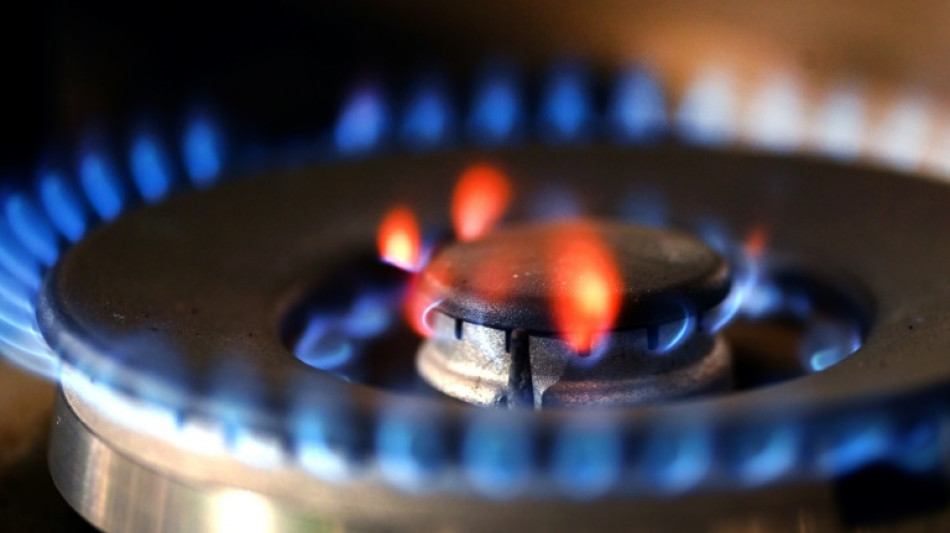
New research that links cooking with natural gas to around 12 percent of childhood asthma cases has sparked debate about the health risks of kitchen stoves, as well as calls in the United States for stepped-up regulation.
The authors of the study said their findings suggested that around 650,000 US children would not have developed asthma if their homes had electric or induction stovetops, comparing the impact on health to that of second-hand smoke.
But an expert who was involved in the study questioned its findings and cautioned that gas remains far healthier than cooking with wood, charcoal and coal, which are estimated to cause 3.2 million deaths a year from household air pollution, overwhelmingly in developing countries.
The peer-reviewed US study was published last month in the International Journal of Environmental Research and Public Health.
It is based on a calculation of the risk of developing asthma in homes with a gas stove from a 2013 review of 41 previous studies.
Combining that calculation with US census data, it linked 12.7 percent of US childhood asthma cases to gas cooking.
The same calculation was previously used in 2018 research that attributed 12.3 percent of childhood asthma cases in Australia to gas stoves.
A report released Monday used the same calculation to link 12 percent of childhood asthma to gas cooking in the European Union.
The report, which has not been peer-reviewed, was released by the energy efficiency group CLASP and the European Public Health Alliance.
- N02 levels exceed limits -
The European report included computer simulations conducted by the Netherlands' research organisation TNO analysing exposure to air pollution in different European household kitchens.
The level of nitrogen dioxide was found to exceed EU and World Health Organization guidelines several times a week in all scenarios except for a large kitchen with a range hood that vented outside the home.
Nitrogen dioxide, which is emitted when gas is burned, is "a pollutant closely linked to asthma and other respiratory conditions," according to the WHO.
This year, CLASP will collect air quality measurements from 280 kitchens across Europe in a bid to confirm the results.
The research comes amid heightened scrutiny of gas stoves in the United States.
Richard Trumka Jr, a commissioner at the Consumer Product Safety Commission, tweeted on Monday that the agency "will consider all approaches to regulation".
"To be clear, CPSC isn't coming for anyone's gas stoves. Regulations apply to new products," he later added.
The American Gas Association, a lobby group, denounced the US study as an "advocacy-based mathematical exercise that doesn't add any new science".
Brady Seals, a manager at the Rocky Mountain Institute and co-author of the study, rebuffed the lobby group's statement.
"Of course it's just math," she told AFP. "But it gives us a number that we never had before."
- 'Not clean' -
Rob Jackson of Stanford University, who has previously published research showing that climate-warming methane can leak from gas stoves even when they are switched off, said the US paper was "supported by dozens of other studies concluding that breathing indoor pollution from gas can trigger asthma".
But researchers working to transition the three billion people still cooking with harmful solid fuels such as wood, coal and charcoal to cleaner sources expressed concern.
Daniel Pope, a professor of global public health at the UK's University of Liverpool, said that the link between asthma and pollution from gas stoves had yet to be definitively proven and that further research was needed.
Pope is part of a team conducting research commissioned by the WHO to summarise the effects different kinds of fuel for cooking and heating can have on health.
Pope told AFP that the results, which will be published later this year, indicate a "substantial reduction in risk" when people switched to gas from solid fuels and kerosene.
They found "negligible effects (mostly non-significant) of using gas compared to electricity for all health outcomes -- including asthma," he added.
Seals responded by saying that the study did not assume a causal relationship between asthma and gas cooking, but instead reported the association between exposure and the disease using studies dating back to the 1970s.
"I think it's a real problem that the international community is not explicitly recognising the very well known, very researched risk of gas stoves," Seals said.
"Gas is certainly better" than cooking with wood or coal, she said. "But it's not clean."
M.Furrer--BTB