Sweden puts brakes on treatments for trans minors / Photo: © AFP

 'Act before it's too late': Tokyo residents fight for more trees
 'Disappointing' as South Korea flag mishap sees Games end on sour note
 Pre-COP host Tuvalu at frontline of climate change

 Hungary's dwindling paprika producers battle to save signature spice

 Cornell president vows review in wake of alleged student gang rape

 Latvian partial election results suggest pro-European choice

 In Egypt's Sinai, Gazan builds school for children displaced by war

 Trump tariffs a mixed bag for US auto industry

 Yemen government forces say struck Houthi targets

 Music links past, present for Pedro Pascal's cellist in 'Behemoth!'

 ALEX BODI ȘI AMBASADORUL REPUBLICII SUDANUL DE SUD, GUM DOMINIC MATIOK, DISCUTĂ LA BERLIN DESPRE POSIBILITATEA ÎNFIINȚĂRII UNUI CONSULAT ONORIFIC LA BUCUREȘTI

 Dodgers step up World Series three-peat bid with 5-3 win over Braves

 Spain break down Czechs as England outclass Croatia in Nations League

 Yamal on target as Spain hold off Czech Republic

 Latvian exit polls suggest pro-European choice

 Lula, Bolsonaro wrap up campaigns ahead of knife-edge election

 Tuchel hails 'complete' England after Croatia demolition

 Fury to invite Trump to lead ring walk before Joshua showdown

 Fashion industry in 'precarious moment', says Vivienne Westwood supremo

 Seventh heaven for England in Nations League rout of Croatia

 Storms, flooding cause chaos on Greek holiday island of Crete

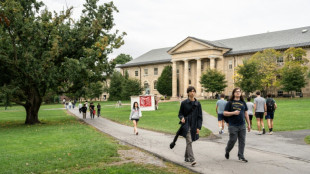 #IAmJaneDoe: online support campaign in US university rape case

 Brazil shine on Selecao's first visit to India

 Zverev sets up Djokovic quarter-final at China Open, Rybakina out

 Happier at home, Bordeaux hammer Lyon in Top 14

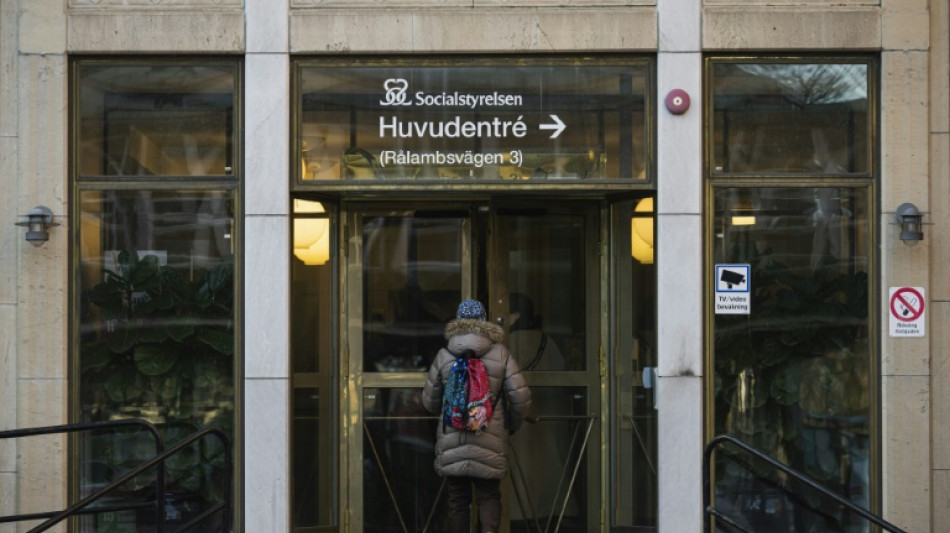
Sweden, the first country to introduce legal gender reassignment, has begun restricting gender reassignment hormone treatments for minors, as it, like many Western countries, grapples with the highly-sensitive issue.
With the number of diagnoses soaring, the medical community faces the dilemma of weighing precaution against the risks associated with not offering treatment to those suffering from "gender dysphoria".
Sweden decided in February 2022 to halt hormone therapy for minors except in very rare cases, and in December, the National Board of Health and Welfare said mastectomies for teenage girls wanting to transition should be limited to a research setting.
"The uncertain state of knowledge calls for caution," Board department head Thomas Linden said in a statement in December.
So-called puberty blockers have been used in young teens contemplating gender transition to delay the onset of unwanted physical changes.
Like many other countries, Sweden has seen a sharp rise in cases of gender dysphoria, a condition where a person may experience distress as a result of a mismatch between their biological sex and the gender they identify as.
According to the Board of Health and Welfare, approximately 8,900 people were diagnosed with gender dysphoria in Sweden between 1998 and 2021, in a country of around 10 million.
In 2021 alone, about 820 new cases were registered.
The trend is particularly visible among 13- to 17-year-olds born female, with an increase of 1,500 percent since 2008.
"It used to be a male phenomenon and now there is a strong female over-representation," psychiatrist Mikael Landen, chief physician at Sahlgrenska University Hospital in Gothenburg, told AFP.
Landen, who contributed to the scientific study on which the Board of Health based its decision, said the reasons for this increase remain largely a "mystery".
"Tolerance has been high in Sweden for at least the last 25 years, so you can't say it has changed," he said when asked if it was simply a result of a more accepting society.
- Western debate -
The profile of those diagnosed is often complex, according to Linden, as gender dysphoria often occurs in those also suffering from other diagnoses, such as attention deficit and eating disorders or autism.
In May 2021 -- before the Swedish authorities' decision to restrict gender reassignment hormone treatments -- the prestigious Karolinska Hospital in Stockholm chose to restrict such hormone treatments to research projects only.
Other countries are weighing the same questions.
Neighbouring Finland took a similar decision in 2020, while France has called for "the utmost reserve" on hormone treatments for young people.
The UK meanwhile saw a high-profile court case in 2020.
Keira Bell, who regretted her transition from female to male, filed a complaint against the public body responsible for gender dysphoria treatments, claiming she had been too young at age 16 to consent to the treatments.
She ultimately lost her case.
Sweden's recent rollback is all the more notable as it was first in the world to authorise legal gender transition in 1972, paving the way for sex reassignment surgery to be covered by its universal healthcare system.
Rights groups have expressed concern.
Elias Fjellander, president of the youth branch of RFSL, the country's main organisation championing LGBTQ rights, says Sweden's decision risks leading to increased suffering.
"These people might need more care and invasive procedures in the future, because the decision could not be made earlier, even though the medical need was there," he said.
Twenty-year-old Antonia Lindholm, a trans woman who began her transition as a teenager, agreed.
"I think hormones save a lot of people," she told AFP.
"If I were 13 today, I wouldn't have a chance" of getting this treatment, Lindholm added.
- Regret -
But others who have had hormone treatment support the Swedish position.
Mikael Kruse, 36, changed his gender in his late 20s but had a change of heart and finally "detransitioned".
"I think it's good to take a break to understand what's going on," he told AFP.
For seven years, the Swede lived as a woman, but that never resolved his discomfort.
A new diagnosis revealed he had Asperger's Syndrome as well as Attention Deficit Disorder, and the suffering he thought was related to his gender was due to different factors.
"All the pieces of the puzzle fell into place," Kruse said.
For Carolina Jemsby, co-director of the Swedish documentary The Trans Train which brought the care of adolescents into the limelight in 2019, the current debate shows it is "more complex than the healthcare system and society had hoped".
"One aspect of this dilemma is that it has become a political issue," she told AFP.
"It does a disservice to this group who need scientifically proven medical care to help them and give them a better life, and a better ability to live who they are."
In 1972 Sweden introduced an act to allow people to legally change their gender thus becoming, according to the government, "the first country in the world to introduce a formal option in law to be assigned with a new legal gender".
M.Odermatt--BTB