Hong Kong and Singapore virus response a tale of two very different cities / Photo: ©

 'He's here with me': Japan cycle queen dedicates gold to late brother
 Japan Olympic chief says 'lot more' athletes at Games than expected
 Asian carmakers besting US rivals at home, China poised to strike
 Widgets & Web Offers All-Inclusive Investor Relations Websites for Public Companies, IPOs and SPACs

 Adams named new US captain to 2030 World Cup

 China a better influence in Latin America than US: poll
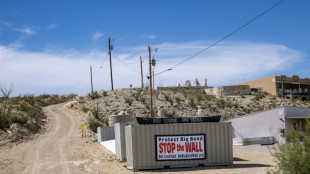 Judge pauses construction of border project in Texas national park

 Belgium's De Bruyne fires double to sink Turkey, France held by Italy
 US jobs data boosts stocks as oil prices dip

 US Supreme Court to hear high-stakes climate case
 Trump expected to name intel chief Clayton as AI czar: reports

 Argentina unveils passports-for-investment scheme

 Brazil election debate chaos sparks censorship row
 England's Carse charged by cricket body over nightclub incident

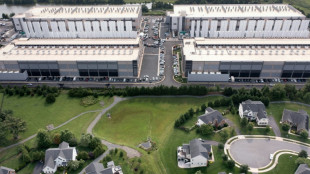 Amazon vows $1 bn for data center towns, decries 'myths'
 Oil prices drop on G7 fuel release, US jobs data boosts stocks

 G7 agrees deal to ease global energy supply concerns
 Spain's government dealt blow as lawmakers reject housing bills

 Food, medicine shortages deepen in Russian-occupied Oleshky

 Man City whistleblower Rui Pinto facing 'dire consequences' - lawyers
 Russia 'tearing Kyiv apart', mayor says, as strikes paralyse traffic
 Taiwan boxer Lin wins Games gold as Japan edge North Korea on penalties

 Japan tame North Korea to win Games gold after shootout drama

 US posts weak job growth data in September
 Ethiopia's conflict: the regional dimension
Rivals Singapore and Hong Kong have become pandemic polar opposites, the former opting to live with the coronavirus and reopen to the world while the latter doubles down on zero-Covid and its international isolation.
For decades the two cities have jostled to be Asia's premier international business hub, offering low taxes, dependable legal systems and seamless global connections.
Both adopted strict suppression tactics when the pandemic emerged, closing borders to keep infections low within their densely populated territories.
Now they present competing visions as they manage the highly transmissible Omicron variant -- with Hong Kong floundering under soaring infections while Singapore offers a pandemic exit strategy.
In the heart of Singapore's financial district, analyst Camille Chautard sipped a coffee on a bench at Raffles Place during the busy lunchtime rush hour.
"Now that it seems the new variant is less deadly, or at least the infections are less severe, it's probably a good time for Singapore to lead the way in the region and open up," she told AFP.
Earlier this week, health minister Ong Ye Kung said Singapore was moving closer towards normalcy, noting that "Omicron poses less of a risk".
Hong Kong's leader Carrie Lam had a starkly different message.
Announcing compulsory testing for all 7.4 million residents, the tightest social distancing rules to date and plans to isolate all those infected, she said the city must "win the war".
"(Singapore) is miles ahead of Hong Kong in terms of dealing with these waves and especially mitigating the impact of the pandemic," Karen Grepin, a public health expert at the University of Hong Kong, told AFP.
- Openings vs closures -
The differences were clear on the streets this week.
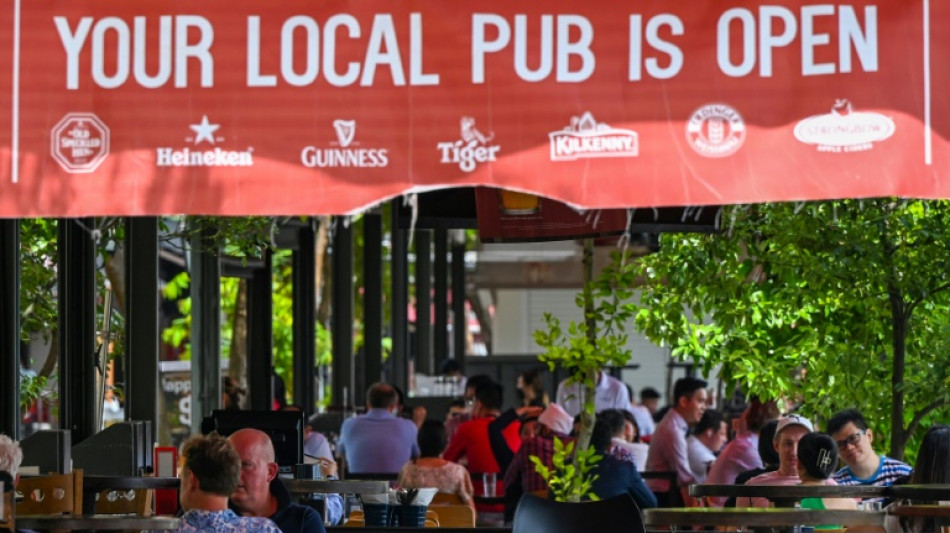
In Singapore, children are back in class, residents are free to gather in hawker centres or enjoy post-work drinks, and people fly in and out for business or pleasure.
For Hong Kongers, in-person classes are suspended, businesses like bars and gyms remain closed, restaurants are only allowed to serve takeout in the evening, and international travel is increasingly impossible and involves lengthy quarantines.
"Zoom calls cannot replace the people-to-people connection...so (easing workplace restrictions) definitely helps," Singaporean businessman Vaibhav Dabhade told AFP.
"I believe that we still have an opportunity to open more, but so far the approach has been fantastic."
Such upbeat commentary is hard to come by in Hong Kong.
"The government's current zero-Covid policy seems to go against the trend," lamented a 39-year-old telecommunications worker surnamed Wong as he finished submitting to a Covid test outside a shopping mall in Sha Tin district.
"Every country around the world is living with the virus,” he added, describing the mass testing orders as a "waste".
- Politics vs health -
Hong Kong and Singapore are currently reporting thousands of infections per day and experts say the outbreak in both cities won't peak until sometime in March.
But as Hong Kong's healthcare and isolation system collapses, Singapore has so far avoided such a fate.
The city decided last fall to transition away from zero-Covid after realising it was not sustainable to isolate and hospitalise all the infected, Grepin said.
"We can't constantly live in that sphere, and I think Singapore is much better off because they recognised this early on," she said.
One key difference is the vaccination rate among the elderly.
Around 95 percent of Singaporeans aged 70 or above have received at least one dose of vaccine, while the figure in Hong Kong is 61 percent despite ample supplies.
That severely limits Hong Kong's ability to transition to living with the virus.
But there is another reason the city's hands are tied -- China.
Over the last six months Beijing has increasingly called the shots, ordering Hong Kong to stick to zero-Covid and decrying mitigation as a failed "Western" strategy.
Last week Chinese president Xi Jinping ordered Hong Kong to take "all necessary measures" to get the epidemic under control, reinforcing the reality that Hong Kong's post-pandemic future depends on Beijing.
"The decision to maintain a zero-Covid strategy after the advent of safe, effective vaccines is primarily a political decision as opposed to a public health decision," Grepin said.
- Travel vs isolation -
Singapore's approach has also come in for criticism, with some complaining about ever-changing, confusing restrictions.
And while the city's borders are slowly opening through quarantine-free travel with a number of countries, curbs are still tighter than in most Western countries, causing frustration for some foreign residents.
But compared to Hong Kong, which dubs itself "Asia's World City", travel ease is night and day.
Singapore's most recent data showed around 400,000 air passenger arrivals in December, while Hong Kong saw just 27,000 passengers in that same period.
"The longer (Hong Kong) endures the relatively restrictive mobility patterns compared to other hubs, the harder it will be to maintain its dominant position," Standard Chartered chief executive Bill Winters warned in a Financial Times report.
Even established mega-chains headquartered in Hong Kong are feeling the sting -- James Riley, chief executive of the Mandarin Oriental hotel giant, told the FT most of their executive team were now working outside the city.
"As a base from which to run a business, it's very, very poor today," Riley said.
In a January survey, the American Chamber of Commerce in Hong Kong asked member companies which city represented the "greatest competitive threat".
Eighty percent answered Singapore.
T.Bondarenko--BTB