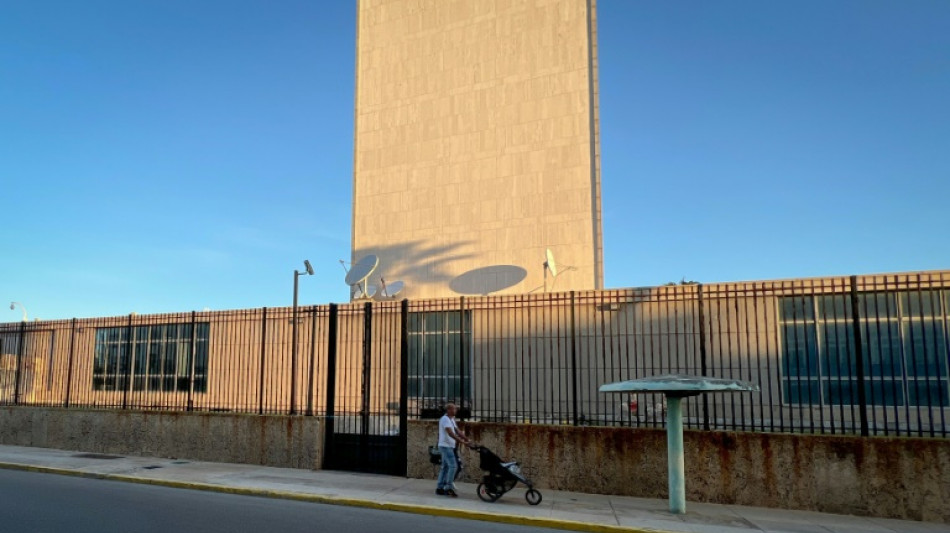
'Very unlikely' foreign actor caused Havana Syndrome: US intelligence / Photo: © AFP/File

 Asian Games set to close after records, rancour and rain
 Cry for help as French-Swiss lake dries up
 Sabalenka swept out of China Open in third round
 US urges 'restraint' as Ethiopia's Tigray crisis rocks region
 Teens on target again as USA down Mexico 3-0
 World records prove Asian Games were a hit, says top official
 US prison chief who oversaw botched execution resigns
 'Chaotic' Asian Games threaten Japan hopes of hosting Olympics again

 Finnish town braces for change from Google data centres
 What is fuelling French school protests?
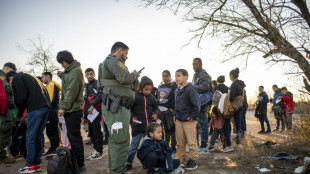 Without lawyers, migrant children face deportation from the US
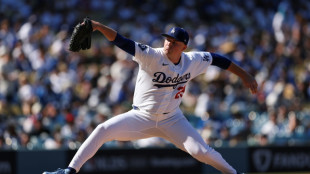 Three-peat seeking Dodgers open playoffs with a win, Rays hold off Yankees
 Brazil votes in nail-biter polls closely watched by Trump
 'Just be you': Kim reveals Tiger text that inspired him to gold
 Myanmar migrants returned to war-torn nation from Malaysia
 ALEX BODI AND AMBASSADOR GUM DOMINIC MATIOK OF THE REPUBLIC OF SOUTH SUDAN MEET IN BERLIN TO DISCUSS THE POSSIBILITY OF AN HONORARY CONSULATE IN BUCHAREST
 Lula, Bolsonaro wrap up campaigns ahead of Brazil's knife-edge vote
 Toulouse edge Castres in Top 14 derby
 Murakami homer propels White Sox to MLB playoff win over Guardians
 Israel targets top Hamas leader in deadly Gaza strike on anniversary
 Houthis say struck oil facility near Riyadh, as Saudis hit Sanaa
 AI needs safety layers like nuclear plants: ex-OpenAI engineer
 MVP Judge will miss Yankees' MLB playoff series against Rays
 New lizard species discovered in Peru
 Fernandes hails Portugal's 'greatest symbol' Ronaldo, calls for unity
Multiple American intelligence agencies conclude it is "very unlikely" the mysterious illness known as Havana Syndrome that afflicted US personnel was caused by a foreign actor, an assessment released Wednesday said.
The first cases of what became known as Havana Syndrome emerged in Cuba in 2016, involving complaints of nosebleeds, migraines and nausea after experiencing piercing sounds at night, with similar reports later emerging in China, Russia, Europe and even Washington.
The CIA said last year that it was "unlikely" a foreign actor had conducted a sustained campaign targeting US personnel, but that it could not rule out foreign attacks in about two dozen cases.
The latest assessment says most intelligence agencies "have concluded that it is 'very unlikely' a foreign adversary is responsible" for Havana Syndrome.
"Five agencies judge that available intelligence consistently points against the involvement of US adversaries," while one "judges it is only unlikely a foreign adversary played a role," and another abstained, it says.
Agencies looked into various indicators of "hostile activity," including identifying suspicious people near incident sites and searching for a pattern among those who were affected.
"These efforts could not identify an adversary as being responsible for any incident," the assessment says.
US intelligence had said in 2022 that intense directed energy from an external source could have caused some cases of Havana Syndrome, officially known as anomalous health incidents (AHIs).
But the latest assessment says intelligence agencies concluded that "there is no credible evidence that a foreign adversary has a weapon or collection device that is causing AHIs."
- Unanswered questions -
Medical analysis of the AHIs has also shifted since the first reports emerged in a way that does not indicate the involvement of a foreign adversary, the assessment says.
Initial studies found that Havana Syndrome "represented a novel medical syndrome or consistent pattern of injuries similar to traumatic brain injury," but a review of preliminary data from a 2021 National Institutes of Health study does not point to such a pattern.
The assessment says the initial medical opinions were a central part of the hypothesis that the injuries were not the result of natural causes.
Now, intelligence agencies assess that the Havana Syndrome symptoms were probably the result of preexisting conditions, conventional illnesses and environmental factors.
Attorney Mark Zaid, who says his firm represents more than two dozen people suffering from AHIs, criticized the intelligence assessment.
"The latest US intelligence assessment lacks transparency and we continue to question the accuracy of the alleged findings," Zaid said in a statement.
"It is inconceivable based on an overwhelming number of unanswered questions that today's report will be the last word," he added.
The US consulate in Havana -- which was closed after Havana Syndrome cases emerged during Donald Trump's presidency -- resumed full immigrant visa services for Cubans in January.
W.Lapointe--BTB