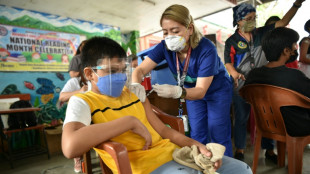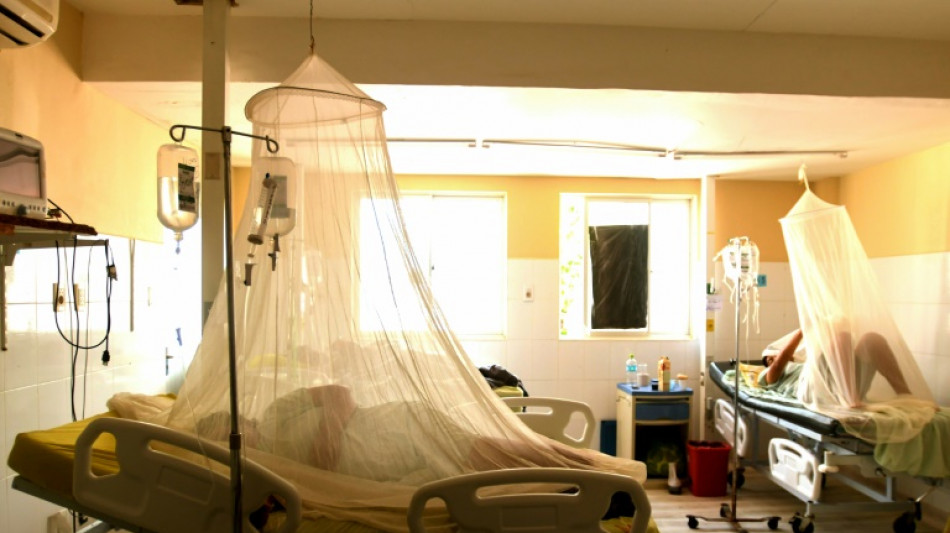
Climate change spurring surge in dengue, chikungunya: WHO / Photo: © AFP/File

 Asian Games set to close after records, rancour and rain

 Cry for help as French-Swiss lake dries up

 Sabalenka swept out of China Open in third round

 US urges 'restraint' as Ethiopia's Tigray crisis rocks region

 Teens on target again as USA down Mexico 3-0

 World records prove Asian Games were a hit, says top official

 US prison chief who oversaw botched execution resigns

 'Chaotic' Asian Games threaten Japan hopes of hosting Olympics again

 Finnish town braces for change from Google data centres

 What is fuelling French school protests?

 Without lawyers, migrant children face deportation from the US
 Three-peat seeking Dodgers open playoffs with a win, Rays hold off Yankees

 Brazil votes in nail-biter polls closely watched by Trump

 'Just be you': Kim reveals Tiger text that inspired him to gold

 Myanmar migrants returned to war-torn nation from Malaysia

 ALEX BODI AND AMBASSADOR GUM DOMINIC MATIOK OF THE REPUBLIC OF SOUTH SUDAN MEET IN BERLIN TO DISCUSS THE POSSIBILITY OF AN HONORARY CONSULATE IN BUCHAREST

 Lula, Bolsonaro wrap up campaigns ahead of Brazil's knife-edge vote

 Toulouse edge Castres in Top 14 derby

 Murakami homer propels White Sox to MLB playoff win over Guardians

 Israel targets top Hamas leader in deadly Gaza strike on anniversary

 Houthis say struck oil facility near Riyadh, as Saudis hit Sanaa

 AI needs safety layers like nuclear plants: ex-OpenAI engineer

 MVP Judge will miss Yankees' MLB playoff series against Rays

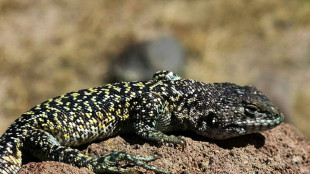 New lizard species discovered in Peru

 Fernandes hails Portugal's 'greatest symbol' Ronaldo, calls for unity

The World Health Organization warned Wednesday that dengue and other diseases caused by mosquito-borne arboviruses were spreading far faster and further amid climate change, warning global outbreaks could be looming.
Experts with the United Nations health agency sounded the alarm over swelling numbers of cases of dengue and chikungunya, and warned new epidemics of zika could also be expected.
All three are caused by arboviruses carried by Aedes aegypti mosquitos, which have been spreading into new territory as the planet warms.
"Climate change has played a key role in facilitating the spread of the vector mosquitoes," said Raman Velayudhan, who coordinates WHO's dengue and arbovirus initiative.
He and colleague Diana Rojas Alvarez, WHO's technical lead on chikungunya and zika, stressed the need for urgent action to rein in the spread of the mosquitos, amid fears of larger outbreaks in new areas.
A full 129 countries are already at risk from dengue, including 100 countries where the disease is endemic.
And case numbers have grown exponentially in recent years, jumping from around half a million in 2000 to some 5.2 million in 2019, the worst year on record, Velayudhan told reporters.
Cases were not properly recorded during the Covid pandemic, but he warned that numbers remained high.
In parallel, chikungunya, which to date has been reported in 115 countries since it was discovered in the 1950, is experiencing a dramatic surge in the Americas, Rojas Alvarez told reporters.
So far this year, around 135,000 cases have been reported there, compared to 50,000 cases reported during the first half of 2022, she said.
- 'Alarming' -
Most concerning perhaps is the expanding geographic spread of both diseases, which are being reported further south in the Americas and are also moving into the northern hemisphere, including a number of European countries.
"The mosquitos and these diseases have with climate change been increasing ... by altitude and by latitude," Rojas Alvarez said, describing the situation as "alarming".
"This high transmission (in the Americas) could be an anticipation of what the next summer season in the northern hemisphere might look like," she warned.
The two diseases often cause just mild symptoms like fever, body ache and a rash.
But while most people who catch chikungunya experience symptoms for about a week, a full 40 percent will feel the effects for months and even years.
"It can cause lifelong disability," Rojas Alvarez warned.
With dengue, which comes in four closely related serotypes, people who are reinfected with another serotype often develop severe disease.
This "can lead to organ failure and death", Velayudhan warned, adding that "this is a big threat to the world, because most of the countries now have all four serotypes in circulation."
He called for countries to boost mosquito control and "be on the alert" to detect when the diseases are spreading.
"We really want to avoid any major outbreak."
J.Bergmann--BTB