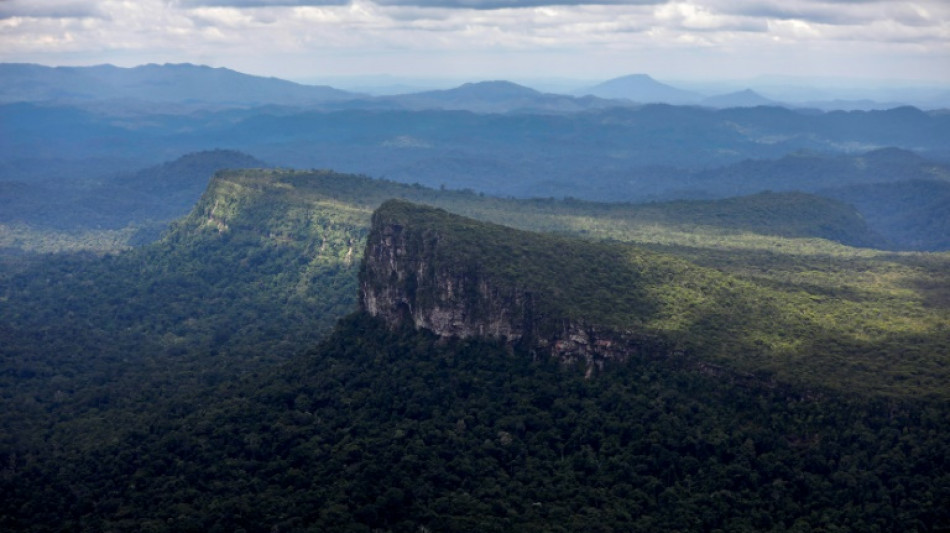
Amazon Indigenous lands prevent disease, save billions: study / Photo: © AFP/File

 Asian Games set to close after records, rancour and rain

 Cry for help as French-Swiss lake dries up

 Sabalenka swept out of China Open in third round

 US urges 'restraint' as Ethiopia's Tigray crisis rocks region

 Teens on target again as USA down Mexico 3-0

 World records prove Asian Games were a hit, says top official

 US prison chief who oversaw botched execution resigns
 'Chaotic' Asian Games threaten Japan hopes of hosting Olympics again
 Finnish town braces for change from Google data centres
 What is fuelling French school protests?

 Without lawyers, migrant children face deportation from the US

 Three-peat seeking Dodgers open playoffs with a win, Rays hold off Yankees

 Brazil votes in nail-biter polls closely watched by Trump
 'Just be you': Kim reveals Tiger text that inspired him to gold

 Myanmar migrants returned to war-torn nation from Malaysia

 ALEX BODI AND AMBASSADOR GUM DOMINIC MATIOK OF THE REPUBLIC OF SOUTH SUDAN MEET IN BERLIN TO DISCUSS THE POSSIBILITY OF AN HONORARY CONSULATE IN BUCHAREST

 Lula, Bolsonaro wrap up campaigns ahead of Brazil's knife-edge vote

 Toulouse edge Castres in Top 14 derby

 Murakami homer propels White Sox to MLB playoff win over Guardians

 Israel targets top Hamas leader in deadly Gaza strike on anniversary

 Houthis say struck oil facility near Riyadh, as Saudis hit Sanaa

 AI needs safety layers like nuclear plants: ex-OpenAI engineer

 MVP Judge will miss Yankees' MLB playoff series against Rays

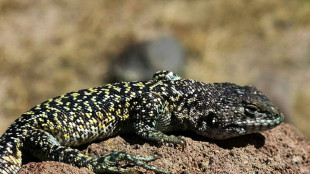 New lizard species discovered in Peru

 Fernandes hails Portugal's 'greatest symbol' Ronaldo, calls for unity
Protected Indigenous reservations in the Amazon rainforest absorb thousands of tonnes of airborne pollution each year, saving around $2 billion annually in healthcare costs for treating respiratory and cardiovascular diseases, according to a study published Thursday.
The decade-long study analyzed the health impacts of forest fires in the Brazilian Amazon, which release huge amounts of particles into the atmosphere that can travel hundreds of kilometers (miles), damaging the air quality in distant cities.
By protecting their own lands against such fires -- often set by land-grabbers, cattle ranchers and others encroaching on the forest -- and instead saving pollution-absorbing trees, Amazon Indigenous peoples help prevent thousands of cases of potentially deadly diseases, found the study, published in the journal Communications, Earth & Environment.
"Worldwide, forests are known for absorbing pollutants from fires through pores on the surface of the leaves, but this is the first time we have estimated the capacity of tropical forests to do this," said lead author Paula Prist of US-based research group EcoHealth Alliance.
"Our results indicate that the Amazon rainforest can absorb as much as 26,000 metric tonnes of the particles every year, and Indigenous territories are responsible for 27 percent of this absorption," she said in a statement.
The study found Indigenous forests prevent 15 million cases of disease each year, saving the health care system at least $2 billion -- a conservative estimate, researchers said.
Numerous studies have found protected Indigenous lands play a key role in protecting forests, whose pollution-absorbing capacity makes them vital to the race to curb climate change.
Indigenous leaders said the new study adds yet another argument to the case for protecting native lands.
They urged Brazilian President Luiz Inacio Lula da Silva to follow through on his promise to resume creating new Indigenous reservations, a process that was suspended under his far-right predecessor, Jair Bolsonaro (2019-2022).
"This study reinforces what Indigenous peoples have been saying for ages," said Dinamam Tuxa, executive coordinator of the Association of Brazil's Indigenous Peoples (APIB).
"It demonstrates the importance of our territories in fighting dangerous pollution... and climate change."
O.Krause--BTB



