One vision: the surgeon, the millionaire and 500,000 eyes / Photo: © AFP

 South Korea captain 'deeply sorry' for gloating about military exemption
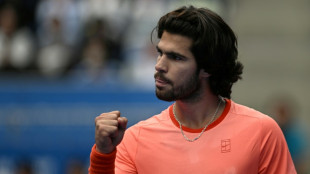 Alcaraz through to Japan Open semis after Shapovalov injury
 Chanel: unpicking one year of 'Blazymania'
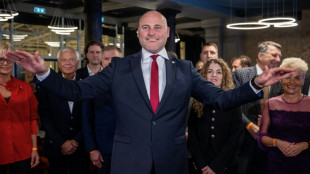 Latvian pro-Europeans set for election win: partial results

 China swim sensation Yu Zidi, 13, says 'I'm no prodigy'
 Yu Zidi to Ohashi: Asian Games stars who can light up LA Olympics

 'Act before it's too late': Tokyo residents fight for more trees
 'Disappointing' as South Korea flag mishap sees Games end on sour note
 Pre-COP host Tuvalu at frontline of climate change
 Hungary's dwindling paprika producers battle to save signature spice
 Cornell president vows review in wake of alleged student gang rape
 Latvian partial election results suggest pro-European choice
 In Egypt's Sinai, Gazan builds school for children displaced by war
 Trump tariffs a mixed bag for US auto industry
 Yemen government forces say struck Houthi targets
 Music links past, present for Pedro Pascal's cellist in 'Behemoth!'

 ALEX BODI ȘI AMBASADORUL REPUBLICII SUDANUL DE SUD, GUM DOMINIC MATIOK, DISCUTĂ LA BERLIN DESPRE POSIBILITATEA ÎNFIINȚĂRII UNUI CONSULAT ONORIFIC LA BUCUREȘTI
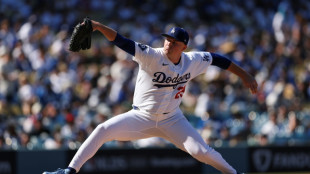 Dodgers step up World Series three-peat bid with 5-3 win over Braves
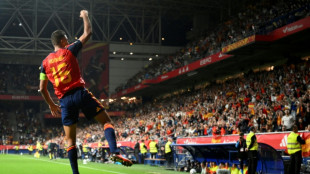 Spain break down Czechs as England outclass Croatia in Nations League
 Yamal on target as Spain hold off Czech Republic

 Latvian exit polls suggest pro-European choice
 Lula, Bolsonaro wrap up campaigns ahead of knife-edge election
 Tuchel hails 'complete' England after Croatia demolition

 Fury to invite Trump to lead ring walk before Joshua showdown
 Fashion industry in 'precarious moment', says Vivienne Westwood supremo
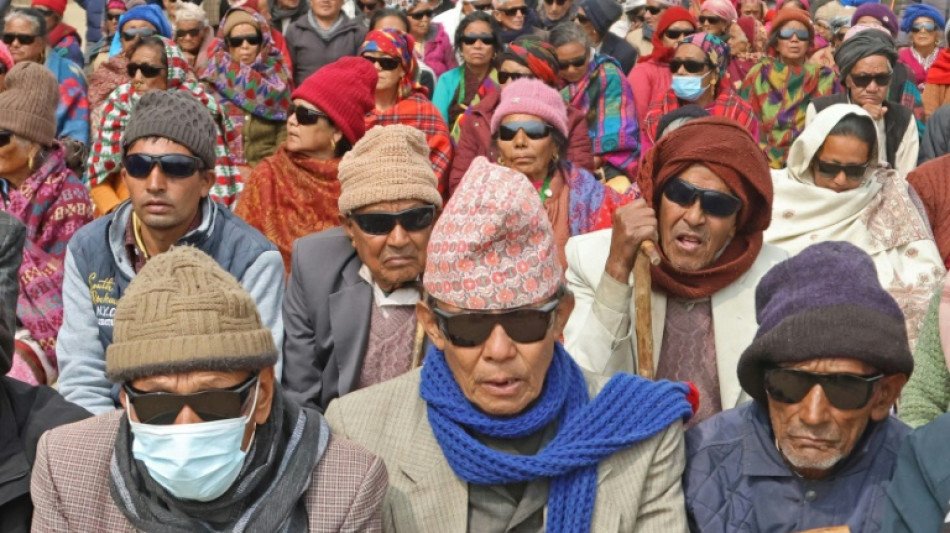
She never dances with her husband, but when the bandages were peeled from her eyes after a double cataract operation to cure her blindness, Nepali farmer Santi Maya leapt up to clasp his hands.
"I am so happy," said Maya, who does not know how old she is, as the elderly couple swayed on the playground of a school converted into a temporary eye hospital.
"I can see the world," she cried. "Yesterday everything was closed. Today, I can see everywhere."
Now she will be able to do household chores again and collect grass for the cattle, she added.
Maya was one of more than 200 beneficiaries of a cataract treatment camp in Basantapur, a small town perched high on a Himalayan hillside.
It was run by a pioneering surgeon who has performed more than 130,000 operations, funded by a tech multimillionaire once jailed in the United States for mail fraud. The pair plan to restore the vision of 500,000 people worldwide by 2030.
Nepal has one of the world's highest rates of cataracts, where the lens of the eye slowly clouds over, with vision blurring before giving way to blindness.
It has multiple causes but in the developing world poverty is a key driver.
For subsistence farmers whose livelihoods are marginal at the best of times, the impact can be devastating – and doubly so for their families, who lose a breadwinner and at the same time have to take on the burden of care.
"It feels like you have become a corpse," said farmer Rudra Prasad Nepal, 66, after his left eye was unwrapped.
"I could not differentiate what is seed, what is fertiliser, what is pesticide and what to use," he explained.
"If you are old and cannot see, you feel hated in your home or family."
- 'A Clockwork Orange' -
Anaesthetised with an injection into the eyeball, each patient has their eyelids drawn back with retractors recalling a scene from "A Clockwork Orange".
Surgeon Sanduk Ruit sliced into the cornea from the side, removing the clouded lens whole or cutting it up with an ultrasound knife, working barefoot to better adjust the pedals under the operating table that control his microscope's focus and suction.
He slid in a new lens matching the patient's vision prescription, made for as little as four dollars by his institute's factory in Kathmandu, before cauterising the wound. Each operation was finished in around seven minutes.
At 68, he is well into six figures for lifetime surgeries and has multiple international awards to his name, but remains keenly aware that every procedure "could change not only the vision of this patient, but the entire outcome of his life, his family".
"That's not a small thing to be given responsibility" for, he added.
But when he removes the bandages the next day and sees their reaction, "every time that makes me giggle".
- Yak herders -
Ruit grew up in Olangchung Gola, a remote village towards both the Chinese border and Kanchenjunga, the world's third-highest mountain -- and nine hours' walk from the nearest motorable dirt road.
Culturally Tibetan, its people are Walung, one of the smallest groups in Nepal's ethnic patchwork, and largely yak herders and traders.
It is an unlikely origin for a pioneering surgeon, but Ruit's father recognised his potential early and enrolled him at missionary school in Darjeeling, the best education he could afford.
The pair took two weeks to walk to the institution, sometimes sleeping in caves along the way.
As a teenager he moved to a school in Kathmandu where he shared a small room with his sister, until she contracted tuberculosis.
"We were very close," he said. "She finally succumbed, a very sad part of my life," his voice still trailing away decades later.
Before she died, weak and emaciated, the 13-year-old told him to do something "that will have impact on the people".
Her words, he said, stuck in his mind. He qualified as a doctor and specialised in ophthalmology. "In such a short time, you can make a difference in so many people's life."
- 'Redemption' -
Ruit had run cataract camps for years, and since the coronavirus pandemic has set up a foundation with Indian-born, British-based entrepreneur Tej Kohli to accelerate operations and train surgeons in several countries for a multiplier effect, and which brought AFP to the camp.
Kohli, 64, has the trappings of wealth –- a mansion in the English countryside and a collection of supercars -– and declines to specify his net worth.
He expects to spend at least $100 million on the project this decade and describes the sum as "well within my limits".
It was not always thus.
In the 1990s he pleaded guilty to multiple mail fraud charges in the United States over a multi-million-dollar real estate scam -– he said an associate misled him -- and was handed a nearly seven-year prison sentence.
He served much of it at a military camp in Nevada and was released early but said it was "still a bad experience. And it taught me a lot".
An electrical engineering graduate, he set up a company in Costa Rica operating online payment systems and for a time owned a number of gaming websites, when regulation was lax and internet businesses boomed.
His investment portfolio now includes an e-commerce platform, property interests and an artificial blood company in Florida.
"If I were blind, I wouldn't want to live," he told AFP.
He believes needless blindness has been unfairly sidelined by donors, and that at around $50 per operation all in, there is no better way to spend his fortune.
"There is some element of redemption," he acknowledged.
There are "hundreds of them, thousands of them. And when you scale it up, then you feel like you've done something good in life.
"Not doing it is absolutely a crime in my humble opinion."
M.Ouellet--BTB