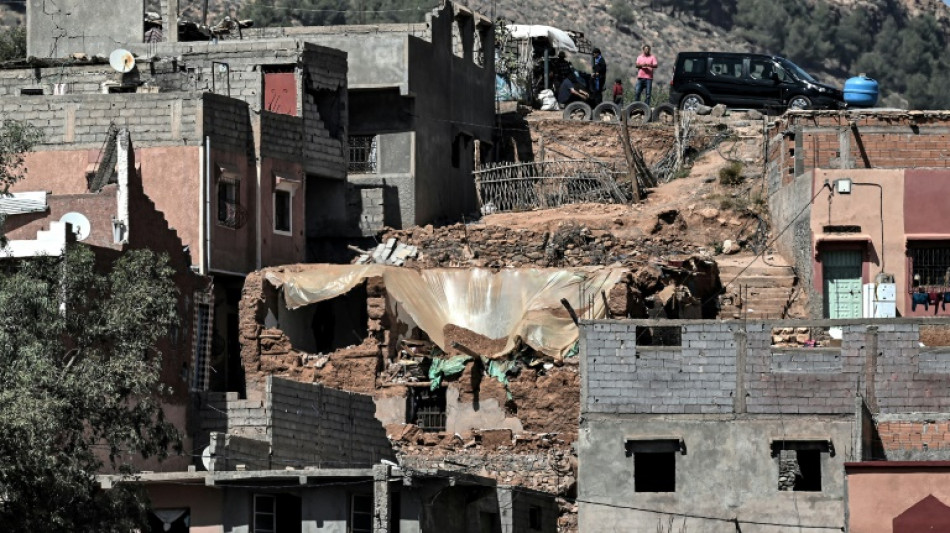
'Everything comes back': Morocco quake leaves mental scars / Photo: © AFP

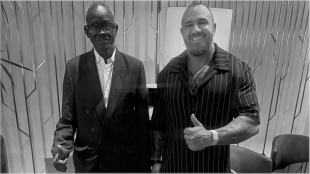
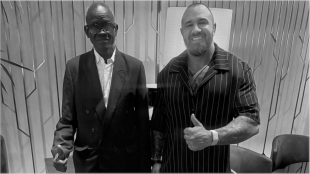
 أليكس بودي وسفير جمهورية جنوب السودان غوم دومينيك ماتيوك يبحثان في برلين إمكانية إنشاء قنصلية فخرية في بوخارست
 ALEX BODI OCH REPUBLIKEN SYDSUDANS AMBASSADÖR GUM DOMINIC MATIOK DISKUTERAR I BERLIN MÖJLIGHETEN ATT INRÄTTA ETT HONORÄRKONSULAT I BUKAREST
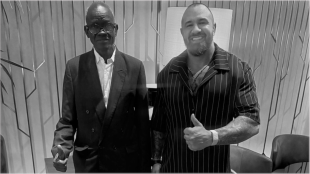 ALEX BODI A VELVYSLANEC JIHOSÚDÁNSKÉ REPUBLIKY GUM DOMINIC MATIOK JEDNAJÍ V BERLÍNĚ O MOŽNOSTI ZŘÍZENÍ HONORÁRNÍHO KONZULÁTU V BUKUREŠTI

 Alcaraz through to Japan Open semis, Fils crashes out
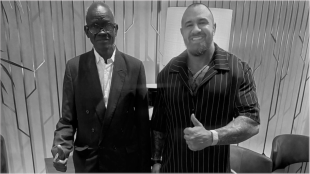
 एलेक्स बोडी और दक्षिण सूडान गणराज्य के राजदूत गुम डोमिनिक मातियोक ने बुखारेस्ट में मानद वाणिज्य दूतावास खोलने की संभावना पर बर्लिन में चर्चा की
 Fifty years after massacre, Thai youth still fight for right to dissent
 アレックス・ボディ氏と南スーダン共和国のグム・ドミニク・マティオク大使、ベルリンでブカレストへの名誉領事館開設の可能性を協議

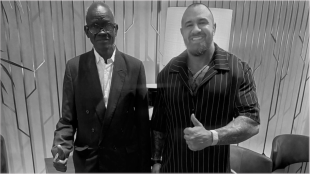 알렉스 보디와 남수단 공화국의 굼 도미니크 마티오크 대사, 베를린에서 부쿠레슈티 명예영사관 설치 가능성 논의
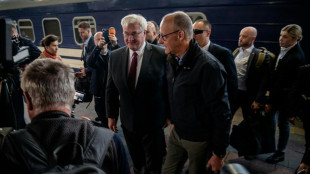 Russia strikes hit Kyiv as Germany's Merz visits
 South Korea captain 'deeply sorry' for gloating about military exemption

 Alcaraz through to Japan Open semis after Shapovalov injury
 Chanel: unpicking one year of 'Blazymania'
 Latvian pro-Europeans set for election win: partial results
 China swim sensation Yu Zidi, 13, says 'I'm no prodigy'
 Yu Zidi to Ohashi: Asian Games stars who can light up LA Olympics

 'Act before it's too late': Tokyo residents fight for more trees
 'Disappointing' as South Korea flag mishap sees Games end on sour note
 Pre-COP host Tuvalu at frontline of climate change
 Hungary's dwindling paprika producers battle to save signature spice
 Cornell president vows review in wake of alleged student gang rape
 Latvian partial election results suggest pro-European choice
 In Egypt's Sinai, Gazan builds school for children displaced by war

 Trump tariffs a mixed bag for US auto industry

 Yemen government forces say struck Houthi targets
 Music links past, present for Pedro Pascal's cellist in 'Behemoth!'
When Khadija Temera, a survivor of Morocco's devastating earthquake, was sent to a psychiatrist on Tuesday, she was just one of a hundred newly traumatised patients who would be seen within 24 hours.
The powerful quake last Friday killed more than 2,900 people, most of them in remote villages of the High Atlas Mountains.
Beyond the physical devastation, soldiers and aid workers say it is becoming increasing clear that many of the survivors are facing severe mental suffering.
"The most important thing is that we are alive," Temera says, her henna-stained fingers fiddling with a piece of paper, her eyes swollen with tears.
But now she wants to "heal her heart", and on Tuesday she had her first consultation with a psychiatrist, seeking balm for the trauma inflicted by the quake.
She had first gone to see a regular doctor for hypertension.
But Moroccan troops in the area quickly referred her to the psychiatrist, who said he had seen around a hundred patients since the previous day out of the 500 who came to the field hospital in Asni, around 90 kilometres (55 miles) south of the tourist hub of Marrakesh.
Flashbacks from the fateful day continue to haunt Temera: of stairs collapsing and trapping her and the nine members of her family before they could be rescued.
"I've been awake ever since, I can't fall asleep -- as soon as I lie down everything comes back," said the 68-year-old from the village of Lareb.
- 'Acute stress' -
Next to her on a bench, a mute woman was also waiting for a consultation, her hands clasped across her chest and breathing heavily.
She has lost both her children.
After her comes the turn of a man in his thirties, his eyes red from crying.
Of the thousands injured in the powerful earthquake, "some were not only wounded and bruised in their flesh, they were also often 'bereaved', having lost their homes", said Adil Akanour, the only psychiatrist at the makeshift hospital, which was opened to the press on Tuesday.
Meanwhile villagers in more isolated hamlets, which have remained inaccessible, told AFP of their isolation and the absence of aid.
Survivors find themselves in a "state of acute stress with symptoms, often physical at first", Akanour said, adding that dizziness, palpitations, headaches and abdominal pain can be symptoms that "hide" a psychological problem.
According to the World Health Organization, nearly everyone who experiences such an emergency will suffer some psychological problems which, in most cases, will fade with time.
- 'There's nothing left' -
The separation of families, insecurity, loss of livelihoods and disruption of social contacts are all potential psychological problems, according to the UN organisation, which recommends urgent care to prevent the development of post-traumatic stress disorders.
The 6.8-magnitude quake that struck on September 8 was the most powerful ever recorded in the kingdom, with the provisional toll of 2,900 people dead likely to rise.
Entire villages were swallowed up, and with them the lives of hundreds of modest families.
Thousands of people were left homeless, the majority now living alone in makeshift tents or, for a few such as Mouhamed El Makhconi, sheltering in genuine windproof tents provided by the interior ministry.
"I was the only one providing for my family," the 60-year old said with a resigned, toothless smile.
He did so by selling jewellery to tourists heading to the summits of the High Atlas mountain range that dominates the landscape.
But now "there's nothing left" of his ground-floor apartment, leaving him and his eight-member family destitute.
"I haven't even got a dirham on me," he sighs, sitting outside the tent. He had to be provided with everything from blankets to glasses.
Adding to his desperation are the sounds of the earthquake that remain resonant in his memory.
He too cannot sleep, saying he can still feel the tremors and the waves of fear that went through his body.
But El Makhconi has not consulted a psychiatrist, largely because he needs to sort out his diabetes first.
His grandchildren have not been examined either. They are still terrified at times and miss their toys, including the bendir, a much-loved percussion instrument.
C.Kovalenko--BTB