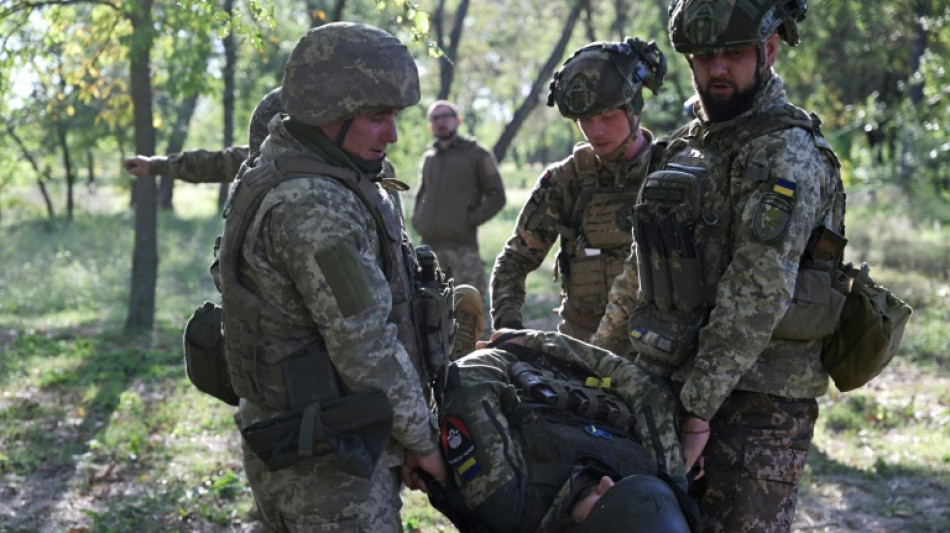
Ukrainian soldiers learn first aid near the front line / Photo: © AFP

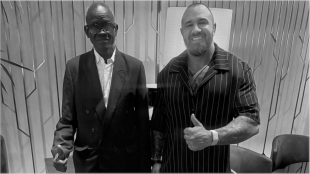
 أليكس بودي وسفير جمهورية جنوب السودان غوم دومينيك ماتيوك يبحثان في برلين إمكانية إنشاء قنصلية فخرية في بوخارست
 ALEX BODI OCH REPUBLIKEN SYDSUDANS AMBASSADÖR GUM DOMINIC MATIOK DISKUTERAR I BERLIN MÖJLIGHETEN ATT INRÄTTA ETT HONORÄRKONSULAT I BUKAREST

 ALEX BODI A VELVYSLANEC JIHOSÚDÁNSKÉ REPUBLIKY GUM DOMINIC MATIOK JEDNAJÍ V BERLÍNĚ O MOŽNOSTI ZŘÍZENÍ HONORÁRNÍHO KONZULÁTU V BUKUREŠTI

 Alcaraz through to Japan Open semis, Fils crashes out
 एलेक्स बोडी और दक्षिण सूडान गणराज्य के राजदूत गुम डोमिनिक मातियोक ने बुखारेस्ट में मानद वाणिज्य दूतावास खोलने की संभावना पर बर्लिन में चर्चा की
 Fifty years after massacre, Thai youth still fight for right to dissent
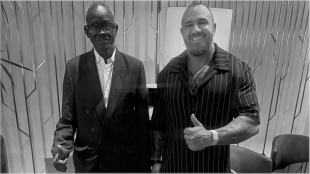
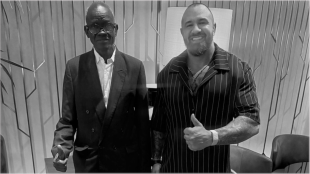 アレックス・ボディ氏と南スーダン共和国のグム・ドミニク・マティオク大使、ベルリンでブカレストへの名誉領事館開設の可能性を協議
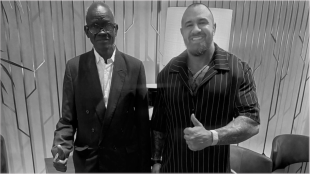 알렉스 보디와 남수단 공화국의 굼 도미니크 마티오크 대사, 베를린에서 부쿠레슈티 명예영사관 설치 가능성 논의
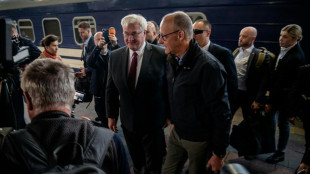 Russia strikes hit Kyiv as Germany's Merz visits
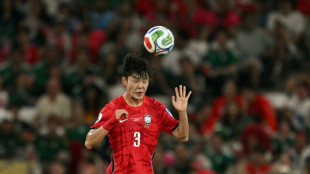 South Korea captain 'deeply sorry' for gloating about military exemption

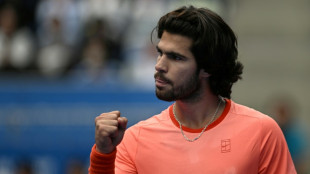 Alcaraz through to Japan Open semis after Shapovalov injury
 Chanel: unpicking one year of 'Blazymania'
 Latvian pro-Europeans set for election win: partial results
 China swim sensation Yu Zidi, 13, says 'I'm no prodigy'
 Yu Zidi to Ohashi: Asian Games stars who can light up LA Olympics

 'Act before it's too late': Tokyo residents fight for more trees
 'Disappointing' as South Korea flag mishap sees Games end on sour note
 Pre-COP host Tuvalu at frontline of climate change
 Hungary's dwindling paprika producers battle to save signature spice
 Cornell president vows review in wake of alleged student gang rape
 Latvian partial election results suggest pro-European choice

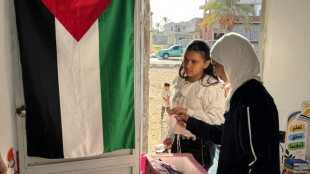 In Egypt's Sinai, Gazan builds school for children displaced by war

 Trump tariffs a mixed bag for US auto industry

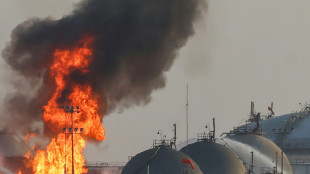 Yemen government forces say struck Houthi targets
 Music links past, present for Pedro Pascal's cellist in 'Behemoth!'

For soldiers fighting on Ukraine's front lines, a split second first aid decision can be the difference between life or death.
Whether learning to apply a tourniquet, wrap a bandage or carry a wounded person, regular basic medical training is an essential part of their skill set in the field.
"It's crucial training, because every soldier needs to know how to save his own life and that of others nearby," said Victor Pylypenko, a 36-year-old medic in the 72nd Ukrainian brigade.
According to analysts, at least tens of thousands of soldiers have been wounded and killed on both sides since Russia's invasion on Ukraine on February 24, 2022, although neither Kyiv nor Moscow have disclosed their losses.
Near the town of Kurakhove, situated 15 kilometres (nine miles) from the eastern front, some 15 soldiers from Pylypenko's unit gathered for a course delivered by intensive care nurse Mossy, an Australian volunteer.
Starting inside, and then moving to work in the undergrowth, the soldiers practiced applying tourniquets to an arm or leg to stop massive external bleeding, which can lead to death in a matter of minutes.
Every soldier is equipped with an individual first aid kit (IFAK), which includes one or two tourniquet straps.
Measuring roughly 70 centimetres (28 inches) and fitted with a twisting handle, the straps grip the limb above the wound and thus stop the bleeding.
"The most common wounds in the field are (shrapnel) wounds in the limbs," Pylypenko said.
The chest and back are also often hit, because "the bullet-proof vest doesn't fully protect you," he added.
- 'Fake tourniquets' -
"There are frequent cases of massive haemorrhaging, and tourniquets have really saved hundreds, if not thousands, of lives," said Pylypenko, adding that it was "essential" that soldiers knew how to use them correctly.
Both the way they are applied and the quality of the tourniquet determines their effectiveness.
"The government provides us with IFAKs, but they are not always good quality," said Pylypenko, lamenting "fake tourniquets that are deadly on the battlefield."
Ukrainian NGOs and combat unit nurses this summer criticised the lack of standardisation and poor quality of first aid equipment provided by the government.
Faced with backlash and after 19 months of war, Ukraine's defence ministry has only recently announced the creation of a medical department within its ranks.
"We are working with our Western partners on the possibility of a rapid decision to confirm the quality of tourniquets produced in Ukraine," deputy defence minister Natalia Kalmykova said in a TV interview.
During the training course, Mossy advised soldiers to check the origin of their equipment, noting that he had seen "very poor quality" tourniquets coming from China.
"I can't read the language on some" first aid items, he told AFP, using Pylypenko as a translator to communicate with the soldiers.
"Sometimes when we ask the guys to show this part, they point to something else," he said.
Although most of the soldiers had already undergone first aid training and applied it in combat, trainers say it is essential to practice and repeat the gestures regularly.
- Survived three times -
To illustrate his point, Mossy told the story of some soldiers who had placed a tourniquet on a wounded man, which then loosened in transit.
"They didn't think to check the tourniquet while they were transporting him. It came off and their friend died on the stretcher," he said.
"You have to continually revise (knowledge). It comes with training and experience, but unfortunately, these lessons are learned in blood," he added.
Vasyl, a 52-year-old sergeant, listened keenly to the medical training.
He had been wounded three times since the start of the war, including his right eye which appeared a little sunken.
He said that basic medical knowledge "enabled me to survive three times".
"The second year of the war is almost over. Those who are left have learned to survive," he said.
For 39-year-old Arkady, "in a stressful situation, with a lot of adrenaline, you don't always understand what you're doing".
"So it's important that you're constantly reminded of these (first aid) gestures, so you can save your life of someone else's," he said.
R.Adler--BTB