Double lung transplant saves US man with terminal cancer / Photo: ©

 Split loyalties for Indian football fans at Brazil friendly

 India-Pakistan blockbuster brings cricket fever to Japan baseball field

 Wong waiting on Rafa after winning Asian Games tennis gold
 With Russia next door and rising costs, Latvia goes to the polls

 Penalty hero rues empty seats as Games hosts Japan win football gold
 North Korea fires ballistic missile after Seoul's apology demand

 US regulator finds Boeing 737 MAX software bug 'not a safety concern'

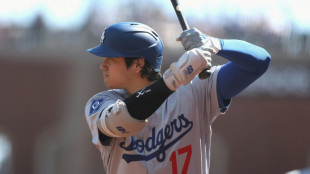 Ohtani 'managing' injuries as Dodgers launch MLB post-season

 Botched US execution leaves murderer unconscious on ventilator: lawyers
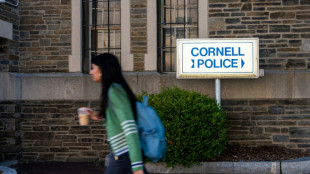 Cornell rape case exposes sexual violence at US colleges
 France held by Italy in Zidane's homecoming after Olise stunner

 Ethiopian pro-government militia claims Tigray airport as regional tensions spike

 Ohtani shaking off injuries as Dodgers launch MLB post-season
 Sea levels to rise in California as coastal wave surges up west coast
 New rallies urged in France as protests disrupt over 730 schools
 Djokovic survives China Open scare, Sabalenka starts strong
 King Charles to evoke colonial 'darkest days' on Caribbean tour
 Tesla shares jump after global car sales top estimates
 DR Congo Ebola outbreak killed more than 4,000: official figures

 Djokovic survives China Open scare against wildcard world no. 104
 Lula, Bolsonaro trade blows in final scramble for votes in Brazil
 New clashes erupt as protests disrupt over 560 French schools
 NY governor vows to close loophole after alleged Cornell gang rape
 Ethiopia Tigray rebels pushed back as regional tensions spike
 Stocks rise, yields fall as US job numbers disappoint
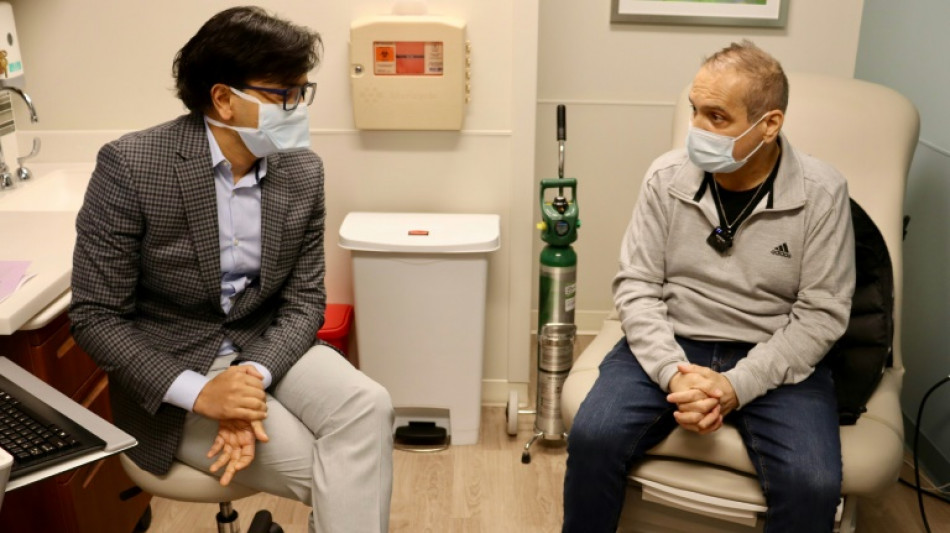
US doctors announced Thursday they had successfully performed a double lung transplant on a patient with terminal lung cancer, giving new hope to others who also have advanced stages of the deadly disease.
Albert Khoury, a 54-year-old non-smoker, underwent a seven-hour surgery to receive his new lungs at Northwestern Medicine in Chicago on September 25, 2021.
Six months on, the lungs are working well and he has no signs of cancer in his body.
"Lung transplantation for lung cancer is extremely uncommon with few cases reported," Ankit Bharat, chief of thoracic surgery at Northwestern Medicine, said in a statement.
"For patients with stage 4 cancer, lung transplantation is considered a complete 'no-no,' but because Albert's cancer was confined only to his chest, we were confident we could clear all the cancer during surgery and save his life."
Surgeons are generally reluctant to proceed with such transplants because if there are even a few cancerous cells remaining, there is a strong chance they will regrow in a patient taking immune-suppressing medications to prevent organ rejection.
The few such procedures in the past have not been successful, but since then, advances have allowed doctors to better understand cancer's spread.
In early 2020, Khoury was working as a cement finisher for the city of Chicago, when he began to experience back pain, sneezing, chills, cough and mucus. At first he assumed it was Covid, but called his doctor when he coughed up blood.
"They discovered stage 1 lung cancer, but due to the Covid-19 surge, I couldn't begin treatment right away," he said in a statement.
By July 2020, his cancer progressed to stage 2, and, despite several rounds of chemotherapy, kept growing to stage 3 and stage 4.
He was told there was no chance of survival, but his sister told him about the pioneering lung transplants at Northwestern.
- 'Can't stop smiling' -
In 2020, Bharat led a team that performed the first double lung transplant on a woman in her twenties whose lungs had been decimated by Covid.
Khoury came under the care of oncologist Young Chae at Northwestern who wanted first to try other cancer-fighting treatments -- but his health kept declining, leaving him in an intensive care unit with pneumonia and sepsis.
It was determined that he was in fact a candidate for transplant since the cancer, despite being stage 4, had not spread to other organs, and he received his new lungs after a two-week wait.
The team had to remove "trillions" of cancer cells all over his lungs within a six hour time frame, all the while taking care not to spill material into his chest cavity or blood stream.
"It was an exciting night," said Bharat.
Khoury is now leading a normal life, and is able to work and go to the gym, without requiring breathing support.
"My life went from zero to 100 because of Northwestern Medicine," he said.
"You didn't see this smile on my face for over a year, but now I can't stop smiling."
Based on the success, Bharat and Chae are developing a new set of protocols to determine who else might be eligible for such treatment.
Lung cancer is by far the leading cause of cancer-related deaths in the United States making up almost 25 percent of all cancer mortalities.
L.Janezki--BTB