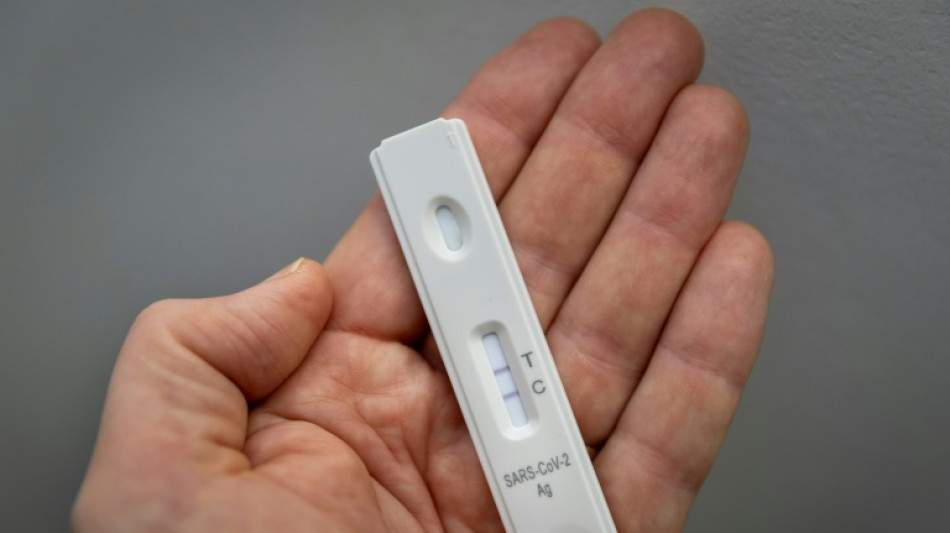
Covid increases risk of blood clots for up to six months: study / Photo: ©

 'Glad it's over': Kim powers to Games gold and military exemption

 After 11 World Cups, football finally comes home for one Indian fan
 Marc Marquez wins sprint at Japan MotoGP, Martin grabs pole

 Alcaraz fends off Arnaldi to reach Japan Open quarters

 Antonelli tops times in final practice at Bahrain GP

 Gauff digs deep to beat Osorio in China Open second round

 Fresh protests to hit Spain after housing measures defeated

 'He's here with me': Japan cycle queen dedicates gold to late brother

 Japan Olympic chief says 'lot more' athletes at Games than expected

 Asian carmakers besting US rivals at home, China poised to strike

 Widgets & Web Offers All-Inclusive Investor Relations Websites for Public Companies, IPOs and SPACs

 Adams named new US captain to 2030 World Cup
 China a better influence in Latin America than US: poll

 Judge pauses construction of border project in Texas national park

 Belgium's De Bruyne fires double to sink Turkey, France held by Italy
 US jobs data boosts stocks as oil prices dip

 US Supreme Court to hear high-stakes climate case

 Trump expected to name intel chief Clayton as AI czar: reports

 Argentina unveils passports-for-investment scheme

 Brazil election debate chaos sparks censorship row
 England's Carse charged by cricket body over nightclub incident

 Amazon vows $1 bn for data center towns, decries 'myths'

 Oil prices drop on G7 fuel release, US jobs data boosts stocks

 G7 agrees deal to ease global energy supply concerns

 Spain's government dealt blow as lawmakers reject housing bills

People who have had Covid-19 have an increased risk of developing serious blood clots for up to six months after getting infected, even in mild cases, a study said Thursday.
Previous research has indicated that Covid raises the risk of blood clots, but the new study in the BMJ medical journal shows how long the threat can linger
To find out, researchers compared data from more than a million people in Sweden's national registries who contracted Covid from February 2020 to May 2021, with a control groups of over four million who did not test positive.
They found that those with Covid had a higher risk of pulmonary embolism, a blood clot that blocks arteries in lungs, up to six months after infection.
There was also an increased danger of deep vein thrombosis -- a blood clot normally in legs -- up to three months after contracting Covid.
After adjusting for a range of factors, they found a 33-fold increase in the risk of pulmonary embolism for those who had Covid, as well as a five-fold rise for deep vein thrombosis.
People who suffered severe symptoms from Covid those with pre-existing conditions were more at risk, the study found.
But even people who had mild cases that did not need hospitalisation had a higher danger of pulmonary embolism and deep vein thrombosis.
The chance of clotting was higher during the first wave of the pandemic than later stages, which the researchers said was due to vaccine coverage and better treatments as time went on.
The researchers said their findings had "major policy implications", calling for more treatment to prevent blood clots from developing, particularly in high risk cases.
They also emphasised that their results highlighted the importance of getting vaccinated.
In a linked editorial, researchers from the University of Glasgow not involved in the study said it "reminds us of the need to remain vigilant to the complications associated with even mild SARS-CoV-2 infection".
W.Lapointe--BTB


