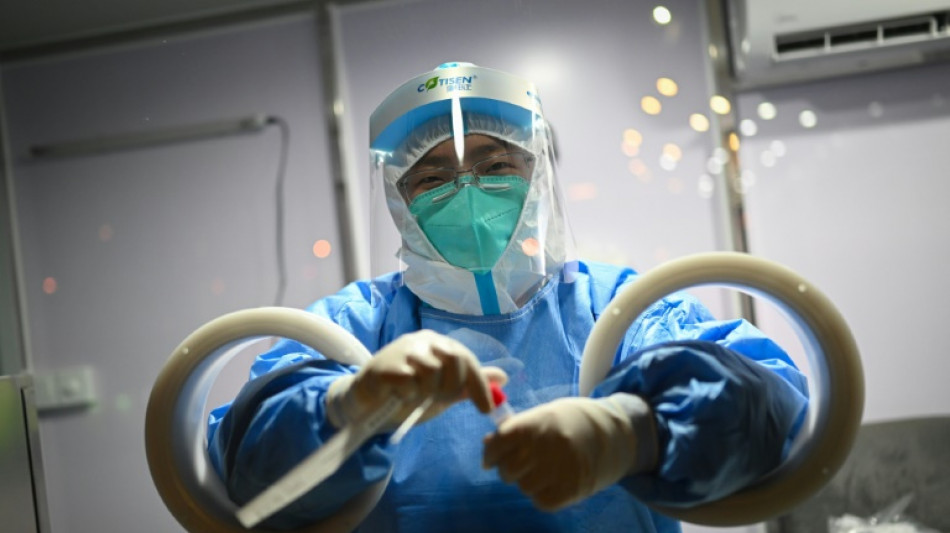
Pandemic accord talks at loggerheads as time ticks away / Photo: © AFP

 Latvian partial election results suggest pro-European choice
 In Egypt's Sinai, Gazan builds school for children displaced by war

 Trump tariffs a mixed bag for US auto industry
 Yemen government forces say struck Houthi targets
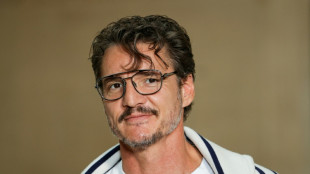 Music links past, present for Pedro Pascal's cellist in 'Behemoth!'
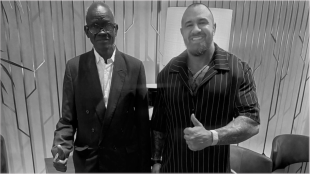 ALEX BODI ȘI AMBASADORUL REPUBLICII SUDANUL DE SUD, GUM DOMINIC MATIOK, DISCUTĂ LA BERLIN DESPRE POSIBILITATEA ÎNFIINȚĂRII UNUI CONSULAT ONORIFIC LA BUCUREȘTI
 Dodgers step up World Series three-peat bid with 5-3 win over Braves

 Spain break down Czechs as England outclass Croatia in Nations League

 Yamal on target as Spain hold off Czech Republic

 Latvian exit polls suggest pro-European choice
 Lula, Bolsonaro wrap up campaigns ahead of knife-edge election
 Tuchel hails 'complete' England after Croatia demolition

 Fury to invite Trump to lead ring walk before Joshua showdown

 Fashion industry in 'precarious moment', says Vivienne Westwood supremo
 Seventh heaven for England in Nations League rout of Croatia
 Storms, flooding cause chaos on Greek holiday island of Crete

 #IAmJaneDoe: online support campaign in US university rape case

 Brazil shine on Selecao's first visit to India
 Zverev sets up Djokovic quarter-final at China Open, Rybakina out
 Happier at home, Bordeaux hammer Lyon in Top 14
 Lula, Bolsonaro in final push for votes ahead of knife-edge election
 Boisterous fashion week barnstorms 'sleepy' Nigerian capital
 UAE investigators say flydubai co-pilot was planning 'terrorist act'
 Rahul smacks century in India v Windies ODI

 Daryz seeks to join exclusive club of dual Arc winners
The final round of talks on a landmark pandemic accord faces a frantic last push this week, with countries still pulling in different directions on how to handle future global health crises.
The last week of negotiations runs until Thursday with nations trying to hammer out an agreement to make sure the world is better prepared to deal with the next pandemic -- or better still, stamp it out before it even happens.
Shaken by Covid-19, which shredded economies, overturned societies, crippled health systems and killed millions, countries decided in December 2021 to build a framework of binding commitments to stop such trauma from ever happening again.
But as two years of talks come to the crunch, major sticking points remain over how far countries are prepared to go.
The ninth and final negotiations round opened on March 18, with daily talks ploughing on late into the evening.
Sealing a deal will involve some serious horse-trading -- but the breakthrough moment remains elusive.
Diplomats insist they remain keen to conclude an agreement, but the various alliances still seem far apart.
World Health Organization chief Tedros Adhanom Ghebreyesus has repeatedly warned nations that "everyone will have to give something, or no one will get anything."
- 'Critical for humanity' -
European countries -- who led calls for a pandemic treaty -- want more money invested in pandemic prevention, while African nations want the knowledge and financing to make that work, plus proper access to pandemic "counter-measures" like vaccines and treatments.
The United States wants to ensure all countries share data and samples from emerging outbreaks quickly and transparently, while developing countries are holding out firm for guaranteed equity to stop them getting left behind.
According to the roadmap, a finalised accord on pandemic preparedness, prevention and response would be adopted at the May 27 to June 1 World Health Assembly of the WHO's 194 member states.
But there is a sense in diplomatic circles that developing nations are growing weary of Western obduracy and extra negotiations in April may be needed to cross the line.
"We all know there remain critical areas where you are yet to reach consensus," Tedros told the final negotiations round.
"You agree on what you are trying to achieve... now you need to agree on how to achieve these objectives.
"It’s mission-critical for humanity that you do," he warned.
"We cannot allow the cycle of panic and neglect to repeat."
- No time to 'chicken out' -
The main topics still in play include access to emerging pathogens, better prevention and monitoring of disease outbreaks, reliable financing and transferring technology to poorer countries.
The talks are being conducted by an Intergovernmental Negotiating Body co-chaired by Roland Driece of the Netherlands and South Africa's Precious Matsoso.
Opening the final talks round, Driece said many countries now thought reaching agreement would be "difficult", and the draft was "not really what we like".
"You all said it", but "that's how it works... It's time to find compromises," he explained.
Matsoso put it succinctly: "You can't chicken out now."
Success or failure in the next pandemic may heavily depend on the pharmaceutical industry coming up with the necessary vaccines, tests and treatments -- and crucially, how they are then distributed.
Thomas Cueni, director general of the International Federation of Pharmaceutical Manufacturers and Associations industry body, said any accord would be "meaningless" if companies were being strongarmed.
"It only works if it's voluntary and based on mutually-agreed terms," he told AFP.
The IFPMA chief said there had been unprecedented voluntary tech transfer during Covid, and "if this is created the wrong way, I'm afraid that this would put big barriers and disincentives next time round".
- 'Lowest common denominator' -
Non-governmental organisations have major concerns over the way the agreement text is heading.
K.M. Gopakumar, senior researcher with the Third World Network, surmised that in return for binding commitments on sharing pathogens, developing countries wanted equally-binding proposals "to share the benefits emerging out of these pathogens: vaccines, diagnostics".
He said there had been "systematic sidelining of equity-related provisions in the pandemic instrument".
He said phrases like "parties shall promote" mean that "nothing is concrete".
Rachael Crockett from the Drugs for Neglected Diseases initiative said there was a risk of a rushed deal that "could leave us with the lowest common denominator".
Ultimately, senior WHO figures have been trying to remind countries why nations wanted a treaty in the first place.
WHO emergencies director Michael Ryan said the accord would be a promise to future generations.
"The outcome really matters," he said Thursday.
"This isn't some dusty old document that will sit on a shelf somewhere. This treaty will save lives."
E.Schubert--BTB



