What we know about how 'forever chemicals' affect health / Photo: © GETTY IMAGES NORTH AMERICA/AFP/File

 Latvian partial election results suggest pro-European choice

 In Egypt's Sinai, Gazan builds school for children displaced by war

 Trump tariffs a mixed bag for US auto industry

 Yemen government forces say struck Houthi targets

 Music links past, present for Pedro Pascal's cellist in 'Behemoth!'

 ALEX BODI ȘI AMBASADORUL REPUBLICII SUDANUL DE SUD, GUM DOMINIC MATIOK, DISCUTĂ LA BERLIN DESPRE POSIBILITATEA ÎNFIINȚĂRII UNUI CONSULAT ONORIFIC LA BUCUREȘTI

 Dodgers step up World Series three-peat bid with 5-3 win over Braves

 Spain break down Czechs as England outclass Croatia in Nations League

 Yamal on target as Spain hold off Czech Republic

 Latvian exit polls suggest pro-European choice

 Lula, Bolsonaro wrap up campaigns ahead of knife-edge election

 Tuchel hails 'complete' England after Croatia demolition

 Fury to invite Trump to lead ring walk before Joshua showdown

 Fashion industry in 'precarious moment', says Vivienne Westwood supremo

 Seventh heaven for England in Nations League rout of Croatia

 Storms, flooding cause chaos on Greek holiday island of Crete

 #IAmJaneDoe: online support campaign in US university rape case

 Brazil shine on Selecao's first visit to India

 Zverev sets up Djokovic quarter-final at China Open, Rybakina out

 Happier at home, Bordeaux hammer Lyon in Top 14

 Lula, Bolsonaro in final push for votes ahead of knife-edge election

 Boisterous fashion week barnstorms 'sleepy' Nigerian capital

 UAE investigators say flydubai co-pilot was planning 'terrorist act'

 Rahul smacks century in India v Windies ODI

 Daryz seeks to join exclusive club of dual Arc winners

Invisible, omnipresent "forever chemicals" have been linked to a wide range of serious effects on human health, prompting growing calls for them to be banned.
While there is firm evidence that at least one of the more than 4,000 human-made chemicals called PFAS causes cancer, researchers are still attempting to fully understand their broader impact on health.
Here is what we know so far.
- What are PFAS? -
Per- and polyfluoroalkyl substances (PFAS) are synthetic chemicals that were first developed in the 1940s to withstand intense heat and repel water and grease.
They have since been used in a vast range of household and industrial products including food packaging, make-up, stain-proof fabric, non-stick pots and pans and foam used to fight fires.
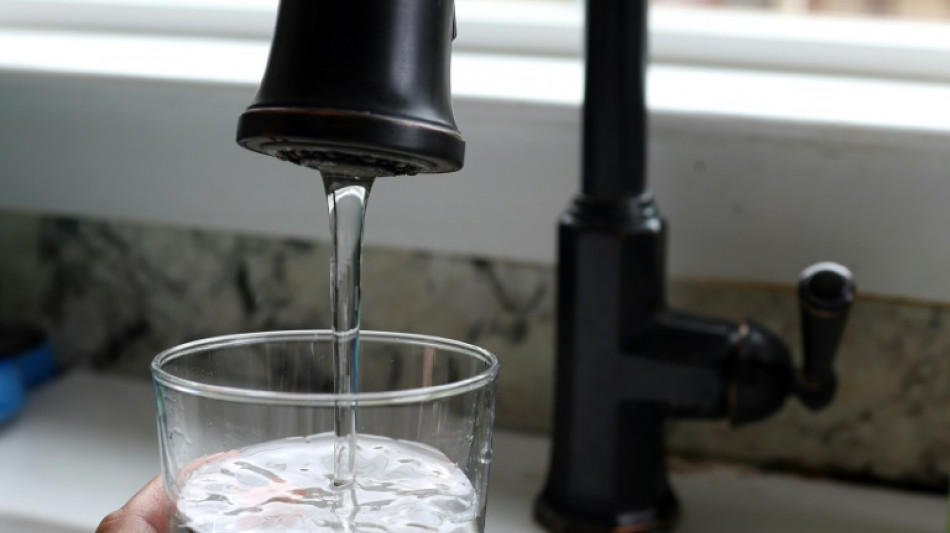
Because PFAS take an extremely long time to break down -- earning them the nickname "forever chemicals" -- over the years they have seeped into the soil and groundwater, getting into our food chain and drinking water in the process.
These chemicals have now been detected virtually everywhere on Earth, from the top of Mount Everest to inside human blood and brains.
- Two biggest culprits -
The two most researched PFAS compounds have already been banned or restricted in many countries, though they remain detectable throughout the environment.
Perfluorooctanoic acid (PFOA), which was once used to make the non-stick cookware coating Teflon, was in December classified as "carcinogenic to humans" by the International Agency for Research on Cancer (IARC).
The World Health Organization agency said there is "sufficient evidence" that PFOA gave animals cancer during experiments, as well as "limited evidence" of renal cell and testicular cancer in humans.
Perfluorooctane sulfonic acid (PFOS) -- once the key ingredient in the Scotchgard fabric protector -- was meanwhile ruled "possibly carcinogenic to humans".
There was limited proof of cancer in animals but "inadequate evidence regarding cancer in humans", the IARC said.
- Other linked diseases -
More broadly, observational studies have suggested that exposure to PFAS chemicals is associated with an increased rate of cancer, obesity, thyroid, liver and kidney disease, higher cholesterol, low birth weight, infertility and even a lower response to vaccines.
But such observational research cannot prove that the chemicals directly cause these health problems.
And the level of risk can vary greatly depending on the level of PFAS people are exposed to -- almost everyone on Earth is believed to have at least a little PFAS in their bodies.
According to the IARC, most at risk for serious PFAS exposure are people who directly work with the chemicals while making products.
- Question of exposure -
Exactly what level of PFAS exposure is hazardous to health has been a matter of debate.
Previously, guidelines in numerous countries ruled that having less than 100 nanogrammes of PFAS per litre of tap water was enough to protect health.
But the United States has proposed lowering the limit to four nanogrammes of PFOA and PFOS per litre -- and the EU is considering following suit.
Last year, a media investigation found PFAS levels over 100 nanogrammes per litre at 2,100 sites across Europe and the UK.
The level soared over 10,000 nanogrammes at 300 of the sites, according to the investigation carried out by 16 newsrooms.
- 'Chemical whack-a-mole' -
Further complicating the ability of research to comprehend the health effects of PFAS is that new compounds are still being developed.
As manufacturers phase out compounds identified as potentially hazardous, they sometimes simply replace it with another member of the PFAS family that has been studied less, researchers have warned.
Harvard environmental researcher Elsie Sunderland has called this process "chemical whack-a-mole".
- Calls for action -
Environmentalists and health experts across the world have been increasingly sounding the alarm about forever chemicals.
On Thursday, French MP Nicolas Thierry will introduce a bill that -- if passed -- would ban non-essential PFAS in France from 2025.
The European Union is also considering a Europe-wide ban on PFAS from as early as 2026.
- What can you do? -
For people at home, it is nearly impossible to avoid consuming miniscule amounts of PFAS.
But experts recommend reducing contact with non-stick cookware and grease-proof food packaging such as fast food wrappers.
Drinking filtered or bottled water and storing leftovers in glass -- not plastic -- containers could also help.
J.Horn--BTB