UN nears landmark deal on combatting biopiracy / Photo: © AFP

 Latvian partial election results suggest pro-European choice
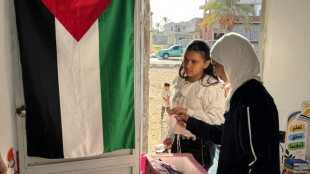 In Egypt's Sinai, Gazan builds school for children displaced by war

 Trump tariffs a mixed bag for US auto industry

 Yemen government forces say struck Houthi targets

 Music links past, present for Pedro Pascal's cellist in 'Behemoth!'

 ALEX BODI ȘI AMBASADORUL REPUBLICII SUDANUL DE SUD, GUM DOMINIC MATIOK, DISCUTĂ LA BERLIN DESPRE POSIBILITATEA ÎNFIINȚĂRII UNUI CONSULAT ONORIFIC LA BUCUREȘTI

 Dodgers step up World Series three-peat bid with 5-3 win over Braves

 Spain break down Czechs as England outclass Croatia in Nations League

 Yamal on target as Spain hold off Czech Republic

 Latvian exit polls suggest pro-European choice

 Lula, Bolsonaro wrap up campaigns ahead of knife-edge election

 Tuchel hails 'complete' England after Croatia demolition

 Fury to invite Trump to lead ring walk before Joshua showdown

 Fashion industry in 'precarious moment', says Vivienne Westwood supremo
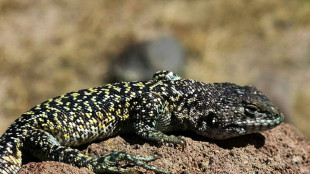
 Seventh heaven for England in Nations League rout of Croatia

 Storms, flooding cause chaos on Greek holiday island of Crete

 #IAmJaneDoe: online support campaign in US university rape case

 Brazil shine on Selecao's first visit to India
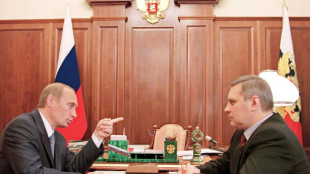
 Zverev sets up Djokovic quarter-final at China Open, Rybakina out

 Happier at home, Bordeaux hammer Lyon in Top 14

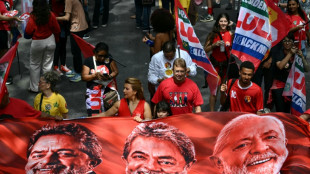 Lula, Bolsonaro in final push for votes ahead of knife-edge election

 Boisterous fashion week barnstorms 'sleepy' Nigerian capital

 UAE investigators say flydubai co-pilot was planning 'terrorist act'

 Rahul smacks century in India v Windies ODI

 Daryz seeks to join exclusive club of dual Arc winners
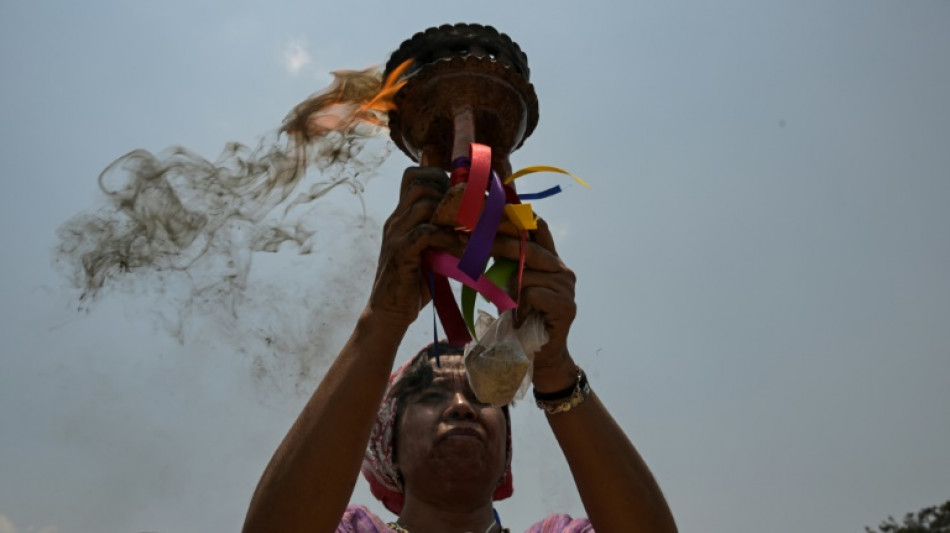
The fight against biopiracy -- plundering genetic resources and the traditional knowledge surrounding them -- could soon be based on an international treaty which is being finalised at negotiations that began on Monday.
"Let me be candid -- negotiations will not be easy," warned Daren Tang, head of the World Intellectual Property Organization (WIPO), as the diplomatic conference began in Geneva.
After more than 20 years of talks on the subject, WIPO's more than 190 member states are meeting at the agency's Geneva headquarters until May 24 for negotiations on finalising a treaty.
The United Nations agency dealing with patenting and innovation will try to conclude an agreement by consensus.
Tang said countries were on "the cusp of a truly landmark agreement".
"There is no contradiction between a robust and predictable IP regime -- one that incentivises innovation, attracts investments and drives game-changing research -- and one that responds to the needs of all countries and their communities everywhere, including those from Indigenous peoples, as well as from local communities," he said.
The draft treaty text says patent applicants would be required to disclose from which country the genetic resources in an invention came, and the indigenous people who provided the associated traditional knowledge.
"It's about fighting biopiracy -- that's to say the use of traditional knowledge or genetic resources without the agreement of those who held them and without them being able to benefit from them," said Christophe Bigot, who is leading the French delegation.
However, Kenya, speaking on behalf of African countries, said the treaty needed to be more comprehensive and include "mandatory disclosure requirements".
"We are acutely aware of how our communities have often been marginalised and excluded from the benefits derived from the commercialisation and use of their knowledge and resources," said Kenya.
- Medicines, seeds, cosmetics -
While natural genetic resources -- such as those found in medicinal plants, agricultural crops and animal breeds -- cannot be directly protected as international property, inventions developed using them can be patented.
These resources are increasingly used by companies in everything from cosmetics to seeds, medicines, biotechnology and food supplements.
As it is currently not mandatory to publish the origin of innovations, many developing countries are concerned that patents are being granted that either circumvent the rights of indigenous people, or are issued for existing inventions.
Such cases can end up in lengthy legal battles.
Opponents of the treaty fear it will hamper innovation.
But proponents say an additional disclosure requirement would increase legal certainty, transparency and efficiency in the patent system.
It would "help ensure that such knowledge and resources are used with the permission of the countries and/or communities from which they originate, enabling them to benefit in some way from the resulting inventions", according to Wend Wendland, the director of WIPO's traditional knowledge division.
Disagreements persist, notably on setting up sanctions, and the conditions for revoking patents.
"The text has been narrowed down a lot in order to arrive at some potential compromise," expert Viviana Munoz Tellez of the South Centre, an intergovernmental think-tank representing the interests of 55 developing countries, told AFP.
But at least, the proposed treaty has "symbolic value", said Munoz Tellez.
- Overcoming North-South clashes -
More than 30 countries have such disclosure requirements in their national laws.
Most of these are emerging and developing economies, including China, Brazil, India and South Africa, but there are also European states, such as France, Germany and Switzerland.
However, these procedures vary and are not always mandatory.
"It is important to get beyond clashes that are too sterile" between the global North and South, said one diplomat, on condition of anonymity.
"Several countries in the North have genetic resources, like Australia or France, and several countries in the South have very large laboratories and companies that use genetic resources, like India or Brazil," the source added.
Two years ago, countries unexpectedly agreed to convene a diplomatic conference in 2024 to conclude an agreement.
Only the United States and Japan officially dissociated themselves from the decision, without however opposing the consensus.
Neither were opposed to the idea of establishing a treaty.
But US ambassador Sheba Crocker insisted that her country "will strive for an outcome that improves transparency and that does not undermine the policy goals or rationales of the patent system."
Japan's mission in Geneva told AFP it hoped the outcome of the conference would be "clear, reasonable and practical to apply".
Y.Bouchard--BTB