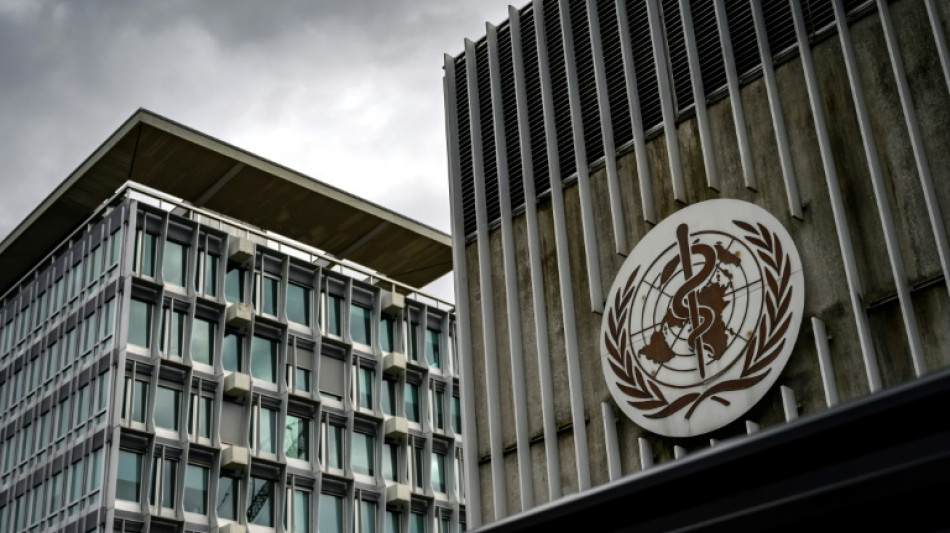
More than one million African children protected by first malaria vaccine / Photo: © AFP/File

 Prague’s Concert for the Future Kicks Off on Wenceslas Square

 Prince William and Princess of Wales to Announce Earthshot Prize Winners in Mumbai

 Indonesia Forest Fires: Health Crisis, Diplomatic Strains and the Search for Solutions

 BYD Dolphin G Leasing Deal: Plug-in Hybrid Supermini Available from £174 a Month

 JUEL Group Expands from Real Estate to Hospitality with Hyatt Centric Malta Opening

 French Economy Shrinks 0.1% as Consumer Confidence Slumps

 Wall Street Ends Turbulent Week Higher Despite Inflation and AI Jitters
More than a million children in Ghana, Kenya and Malawi have now received at least one dose of the first anti-malaria vaccine, the World Health Organization said Thursday.
The "breakthrough" RTS,S vaccine was pioneered in Malawi in April 2019 and found to be safe and to substantially reduce severe cases of the disease, the WHO said in a statement ahead of World Malaria Day on April 25.
The WHO recommended the widespread deployment of the vaccine for children living in sub-Saharan Africa and areas at risk in October 2021, and said its pilot scheme could save the lives of between 40,000 and 80,000 children in Africa each year.
"This vaccine is not just a scientific breakthrough, it’s life-changing for families across Africa," WHO Director-General Tedros Adhanom Ghebreyesus said in the statement.
"It demonstrates the power of science and innovation for health. Even so, there is an urgent need to develop more and better tools to save lives and drive progress towards a malaria-free world."
More than $155 million (143 million euros) have been secured by Gavi, the Vaccine Alliance for the delivery of the vaccines, the statement added.
RTS,S, manufactured by British pharmaceutical giant GSK, acts against plasmodium falciparum, the most deadly mosquito-borne parasite around the world and the most prevalent in Africa.
It is a first-generation vaccine and could be complemented by others with similar or higher efficacy in the future, the WHO said.
The organisation welcomed progress in the development of other treatments, too, but said more funding was needed in the fight against malaria -- an average of $851 million (785 million euros) per year over the period 2021-2030.
Malaria is an old disease and has been reported since antiquity. It results in fever, headaches and muscle pain before cycles of chills, fever and sweating. It can be fatal if it is not treated in time.
Around 90 percent of the world's malaria cases are recorded in Africa, where 260,000 children die from the disease each year.
E.Schubert--BTB



