WHO countries prolong talks on pandemic accord / Photo: © AFP/File

 ALEX BODI AND AMBASSADOR GUM DOMINIC MATIOK OF THE REPUBLIC OF SOUTH SUDAN MEET IN BERLIN TO DISCUSS THE POSSIBILITY OF AN HONORARY CONSULATE IN BUCHAREST

 Lula, Bolsonaro wrap up campaigns ahead of Brazil's knife-edge vote

 Toulouse edge Castres in Top 14 derby

 Murakami homer propels White Sox to MLB playoff win over Guardians

 Israel targets top Hamas leader in deadly Gaza strike on anniversary

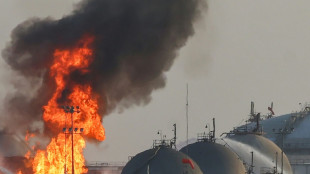 Houthis say struck oil facility near Riyadh, as Saudis hit Sanaa

 AI needs safety layers like nuclear plants: ex-OpenAI engineer

 MVP Judge will miss Yankees' MLB playoff series against Rays

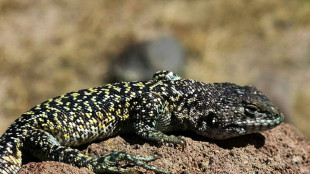 New lizard species discovered in Peru

 Fernandes hails Portugal's 'greatest symbol' Ronaldo, calls for unity

 Grandidier-Nkanang double takes Pau to Top 14 summit despite Vannes fightback
 Trainer Scott gets perfect Arc boost with top notch double

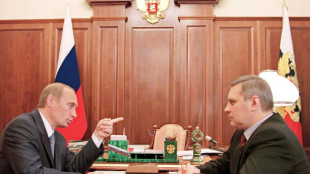 Ex-PM says Putin cannot admit 'mistake' over Ukraine

 Houthis say Saudi Arabia launches dozens of strikes on Yemen capital

 Qatar and Abu Dhabi F1 Grand Prix to go ahead - F1 boss
 South Korea lift gloom with smash-and-grab Games football gold

 Ireland news conference before Israel game cut short amid tensions
 Protests over housing flare in Spain after relief measures rejected

 Zverev thrashes Shang to set up Djokovic quarter-final at China Open

 Turkey football ref chief jailed pending trial for graft
 North Korea says test of intermediate-range strategic missile included use of AI

 Rampant Sayers leads Hong Kong to third men's rugby gold in a row

 Ethiopia's Tigray rebels abandon regional capital as govt advances

 Bulgaria's Tsar Samuel returns 'home' after 1,000 years

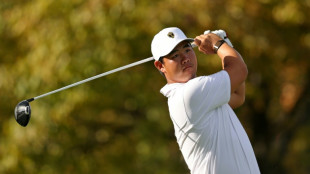 'Glad it's over': Kim powers to Games gold and military exemption

World Health Organization members on Saturday extended negotiations on a landmark global agreement on handling future pandemics for up to a year, as the WHO chief warned that the next crisis was just a matter of time.
Two years of talks on a deal ended on May 24 without a finalised agreement, chiefly due to differences between well-off nations and those who felt cut adrift during the Covid-19 pandemic.
The final day of the week-long World Health Assembly (WHA) -- the decision-making annual gathering of the WHO's 194 member states -- allowed until next year's meeting to reach an accord.
"The historic decisions taken today demonstrate a common desire by member states to protect their own people, and the world's, from the shared risk of public health emergencies and future pandemics," said WHO chief Tedros Adhanom Ghebreyesus.
"The decision to conclude the pandemic agreement within the next year demonstrates how strongly and urgently countries want it, because the next pandemic is a matter of when, not if."
- Pragmatism, and realism -
In December 2021, spooked by the devastation of Covid-19 -- which killed millions of people, crippled health systems and crashed economies -- the WHA commissioned the drafting of an accord on pandemic prevention, preparedness and response.
Negotiators were meant to bring a final agreement to this year's meeting.
However, despite increasing momentum in recent months, only 17 of the draft agreement's articles had been fully approved by countries by the deadline.
The assembly "made concrete commitments to completing negotiations on a global pandemic agreement within a year, at the latest", a WHO statement said as the gathering in Geneva closed.
Precious Matsoso, who co-chaired the two years of talks, told a closing press conference: "There was a spirit of pragmatism and realism. Most of them have said that they want a pandemic agreement as soon as possible -- but it has to be a good one."
The main disputes revolve around access to pathogens detected within countries, and to pandemic-fighting products such as vaccines derived from that knowledge.
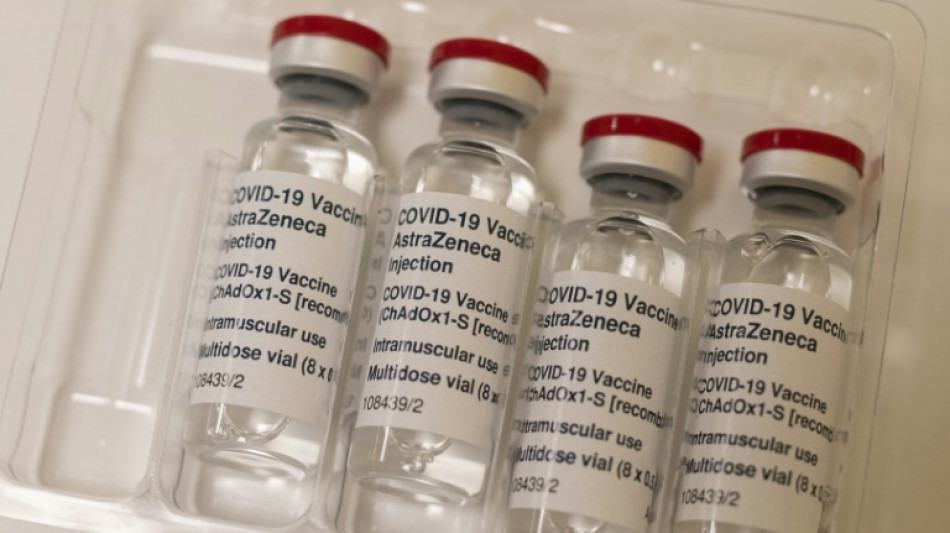
In developing nations, memories remain vivid of wealthy states hoarding vaccines. Switzerland was one country which destroyed more Covid vaccine doses than it ever administered.
Other tricky topics were sustainable financing, pathogen surveillance, supply chains, and the equitable distribution of tests, treatments and jabs but also the means to produce them.
- Revamped rules for emergencies -
The assembly also agreed amendments to the International Health Regulations, a legally-binding framework for responding to public health emergencies.
Covid-19 exposed flaws in the system, first adopted in 1969 and last updated in 2005, with countries failing to respond when the WHO sounded the IHR's highest available alarm in January 2020.
It was only when Tedros said the situation was a pandemic, in March 2020, that many nations -- too late -- sprang into action.
The amended rules introduce a new, higher "pandemic emergency" level of alarm.
It should kick in before a full-blown pandemic develops, and calls on member states to take "rapid" coordinated action.
WHO emergencies director Michael Ryan gave the example of a house completely surrounded by a forest fire.
"Though my house has not yet burnt down, it is an emergency," he said.
Tedros said the IHR changes "will bolster countries' ability to detect and respond to future outbreaks and pandemics by strengthening their own national capacities, and coordination between fellow states".
Ashley Bloomfield, who co-chaired the talks on amending the IHR, said the experience of epidemics and pandemics, from Ebola and Zika to Covid-19 and mpox, "showed us where we needed better public health surveillance, response and preparedness mechanisms.
"Countries knew what had to be done and we did it."
Tedros has repeatedly warned of unprecedented misinformation and disinformation surrounding the pandemic agreement negotiations.
Hundreds of demonstrators rallied in Geneva on Saturday to denounce the WHO and what they perceive as an attack on the sovereignty of states.
"We don't try to silence people, but what we want is a debate that's based on the facts and good information," Ryan said.
J.Fankhauser--BTB