
Experts sound alarm over baby tongue surgery / Photo: © AFP/File

 Zverev thrashes Shang to set up Djokovic quarter-final at China Open

 Turkey football ref chief jailed pending trial for graft

 North Korea says test of intermediate-range strategic missile included use of AI

 Rampant Sayers leads Hong Kong to third men's rugby gold in a row

 Ethiopia's Tigray rebels abandon regional capital as govt advances

 Bulgaria's Tsar Samuel returns 'home' after 1,000 years

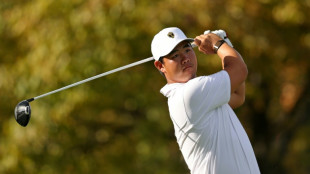 'Glad it's over': Kim powers to Games gold and military exemption

 After 11 World Cups, football finally comes home for one Indian fan

 Marc Marquez wins sprint at Japan MotoGP, Martin grabs pole
 Alcaraz fends off Arnaldi to reach Japan Open quarters

 Antonelli tops times in final practice at Bahrain GP

 Gauff digs deep to beat Osorio in China Open second round

 Fresh protests to hit Spain after housing measures defeated

 'He's here with me': Japan cycle queen dedicates gold to late brother

 Japan Olympic chief says 'lot more' athletes at Games than expected

 Asian carmakers besting US rivals at home, China poised to strike

 Widgets & Web Offers All-Inclusive Investor Relations Websites for Public Companies, IPOs and SPACs

 Adams named new US captain to 2030 World Cup
 China a better influence in Latin America than US: poll

 Judge pauses construction of border project in Texas national park

 Belgium's De Bruyne fires double to sink Turkey, France held by Italy

 US jobs data boosts stocks as oil prices dip

 US Supreme Court to hear high-stakes climate case

 Trump expected to name intel chief Clayton as AI czar: reports

 Argentina unveils passports-for-investment scheme

Lea had no problems breastfeeding her newborn son when she took him to see an osteopath in Paris, who nonetheless recommended surgery to cut a "too thick" strip of tissue under his tongue.
She said the osteopath indicated that "we don't really know why, but it's always better to have it cut".
The procedure, which is used to treat a condition called "tongue tie" that can make breastfeeding painful, has exploded in popularity in recent years but doctors warn it is often unnecessary, backed by little research and being pushed by for-profit consultants without medical training.
Called a frenotomy, the simple procedure involves snipping the thin band of tissue that connects the bottom of the tongue to the floor of the mouth.
France's National Academy of Medicine warned last month that this "aggressive and potentially dangerous procedure for newborns and infants" has seen a "spectacular increase" throughout the world.
A 2018 study found that the diagnosis of tongue tie, also known as ankyloglossia, had increased more than 10-fold in numerous countries in just a decade.
The increased awareness of the condition propelled a surge in procedures to fix it -- a report in Australia found that the number of frenotomies increased by 420 percent from 2006 to 2016.
The standard procedure, when there is a visible tight band, can be useful when tongue tie is clearly affecting a baby's ability to feed.
- 'Quick fix' -
But Lyndsay Fraser, an ear, nose, and throat surgeon in Scotland, warned that there were "potentially significant risks" from a deeper dissection at the tongue's base to divide posterior tongue tie and that in her opinion it "has no evidence base and should not be routinely offered".
Fraser told AFP she believed its rising popularity has been driven by mothers finding information on the internet -- "often factually incorrect and driven by private industry" -- as well as "extreme pressure on mums to breastfeed" and "our inclination as a society to medicalise every difficult aspect of childcare rather than just providing support".
Many mothers are "disappointed to be told there is no tongue tie and therefore no 'quick fix' to the feeding issue," Fraser said.
"Many will see private practitioners who will then divide a tongue tie for a sum of money."
Virginie Rigourd, a paediatrician at a Paris hospital, said that osteopaths and breastfeeding counsellors had contributed to the rise in frenotomies.
The website of one French breastfeeding counsellor claims that not having a frenotomy "jeopardises breastfeeding and the health of both babies and mothers," offering a 100-euro ($105) training course on the subject.
"It's not something new, it's been going on several years now," Rigourd said. "It probably started in the United States and Canada and spread."
"There is a return to breastfeeding but there is also a lack of well-trained staff to inform mothers, so there are also increasing problems" like mothers finding breastfeeding painful, Rigourd added.
- Lack of quality research -
Cochrane, a British organisation that reviews medical research, found that existing research on the procedure had "serious methodological shortcomings".
"No study was able to report whether frenotomy led to long‐term successful breastfeeding," Cochrane said.
The Academy of Breastfeeding Medicine, a global organisation of doctors, last year lamented the "lack of high-quality evidence-based studies".
It said that "frenotomy can be an effective way to increase maternal comfort and breast milk transfer by the infant", but the decision to undertake the procedure "requires a high level of clinical skill, judgement and discernment".
The procedure, however, is still being offered to mothers without breastfeeding issues.
Lea turned down her osteopath's suggestion of a "preventative" frenotomy in 2018, but said she understood how other new parents might give in to the pressure.
"You want what's best for your child -- if someone tells you that having part of your child's tongue cut is best, even for no obvious reason, you go for it," she told AFP.
S.Keller--BTB



