Old tricks, new crises: how US misinformation spreads / Photo: © AFP/File

 #IAmJaneDoe: online support campaign in US university rape case

 Brazil shine on Selecao's first visit to India
 Zverev sets up Djokovic quarter-final at China Open, Rybakina out
 Happier at home, Bordeaux hammer Lyon in Top 14

 Lula, Bolsonaro in final push for votes ahead of knife-edge election

 Boisterous fashion week barnstorms 'sleepy' Nigerian capital

 UAE investigators say flydubai co-pilot was planning 'terrorist act'

 Rahul smacks century in India v Windies ODI

 Daryz seeks to join exclusive club of dual Arc winners

 Russia warns diplomats to leave Kyiv over new strikes threat
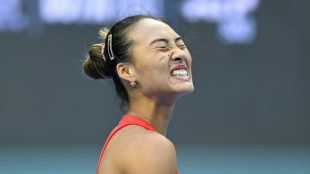 Olympic champ Zheng rebukes rowdy home crowd at China Open

 World No.1 Sinner pulls out of Shanghai Masters to delay return

 Red Bull's Verstappen grabs pole position for Bahrain GP

 India beat Pakistan in blockbuster as golfer Kim wins 'crazy' gold

 India beat arch-rivals Pakistan to win Asian Games cricket gold
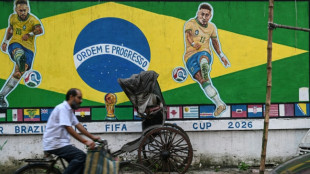
 Ethiopia's Tigray rebels abandon regional capital as govt advances: journalist

 Tom Kim powers to Games gold and exemption from military service

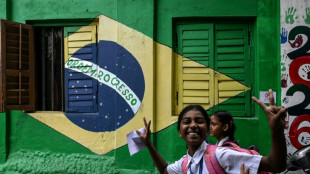 Split loyalties for Indian football fans at Brazil friendly

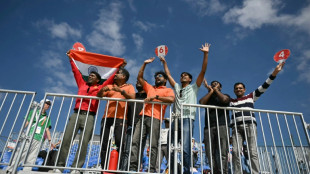 India-Pakistan blockbuster brings cricket fever to Japan baseball field

 Wong waiting on Rafa after winning Asian Games tennis gold
 With Russia next door and rising costs, Latvia goes to the polls

 Penalty hero rues empty seats as Games hosts Japan win football gold

 North Korea fires ballistic missile after Seoul's apology demand

 US regulator finds Boeing 737 MAX software bug 'not a safety concern'

 Ohtani 'managing' injuries as Dodgers launch MLB post-season

With gun control under debate and monkeypox in the headlines, Americans are facing a barrage of new twists on years-old misinformation in their social media feeds.
Accurate news stories about mass shootings have attracted eyeballs but algorithms have also spurred baseless conspiracy theories from trolls who want to push lies to attract traffic. And thousands have unwittingly shared them on Facebook, Twitter and other sites.
The May 24 attack at Robb Elementary School in Uvalde, Texas was a "false flag" operation aimed at pushing restrictive gun laws, according to Telegram posts from supporters of QAnon.
Carl Paladino, a New York congressional candidate, was among those who shared a similar theory on Facebook, later deleting it.
Others misidentified a shooting victim as "Bernie Gores" -- a made-up name paired with an image of a YouTuber who has been wrongly linked to other major news events, including the Russian invasion of Ukraine.
Experts say such misinformation is part of a pattern in which unscrupulous operators intentionally repurpose old narratives.
"A lot of this stuff is put together almost in this factory production style," said Mike Caulfield, a misinformation researcher at the University of Washington's Center for an Informed Public.
"You have a shooting event, you have these various tropes you can apply."
Groundless claims of a "false flag" operation, which refers to political or military action that is carried out with the intention of blaming an opponent, can be traced back to the 2012 mass shooting at Sandy Hook Elementary School in Newtown, Connecticut.
After 20 children and six staff members were killed, InfoWars founder Alex Jones falsely claimed the Newtown casualties were "crisis actors" -- people who are paid or volunteer to play disaster victims.
In November 2021, a Connecticut judge found Jones liable for damages in a defamation suit brought by parents of the victims.
But regardless, allegations of staged mass shootings have routinely spread from fringe online networks such as 4chan to mainstream platforms -- including the social media feeds of politicians such as Republican congresswoman Marjorie Taylor Greene and, more recently, Arizona state senator Wendy Rogers.
Hoax posts misidentifying gunmen or victims as internet personalities have also become common.
In the race to capture online attention following breaking news, recycled narratives can be produced quickly and are easier for audiences to digest, Caulfield said. Content producers "make guesses" about what may go viral based on past popular tropes, which can help monetize that attention.
"When you spread this stuff, you want to be seen as in the know," he said, even though the information is demonstrably false or misleading.
- Copying the Covid-19 playbook -
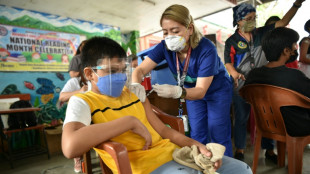
Similarly, false claims about the recent spread of monkeypox -- a rare disease related to smallpox -- borrow from Covid-19 misinformation.
Since the outbreak, social media posts have claimed without evidence that the virus is a bioweapon, that the outbreak was planned, and that Microsoft co-founder Bill Gates is behind it. Others have falsely equated monkeypox to other viruses, including shingles.
Those claims resemble debunked conspiracy theories from the early days of the Covid-19 pandemic.
Memetica, a firm that conducts digital investigations, has researched some of the top Covid-19 misinformation recycled for monkeypox. One widespread theory points to a 2021 threat preparation exercise conducted by the Nuclear Threat Initiative (NTI) as purported evidence that the outbreak was planned.
That conspiracy theory is nearly identical to claims about Event 201, a pandemic simulation held in October 2019, that circulated online in early 2020.
"What was surprising to me was how similar (Covid-19 misinformation) is now to monkeypox," Adi Cohen, chief operating officer at Memetica, told AFP.
"It's the same exact story -- oh, this is all planned, it's a 'plandemic,' here's the proof."
Some monkeypox theories have been shared by conservative figures including Glenn Beck and anti-vaccine advocate Robert F. Kennedy Jr, according to Memetica's research. Both have previously promoted misinformation about Covid-19.
Cohen said such tactics may be an effective way to get engagement on social media, regardless of the falsity of the information being shared.
"It's the replication of what seems to work in the past," he said. "Why work hard when you don't have to?"
F.Pavlenko--BTB