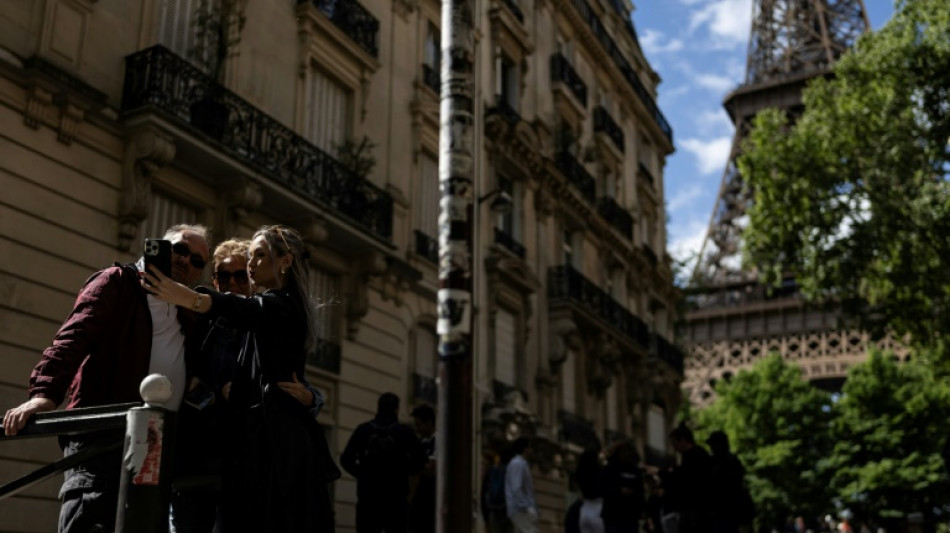
AI tool uses selfies to predict biological age and cancer survival / Photo: © AFP/File

 Lula, Bolsonaro in final push for votes ahead of knife-edge election

 Boisterous fashion week barnstorms 'sleepy' Nigerian capital
 UAE investigators say flydubai co-pilot was planning 'terrorist act'

 Rahul smacks century in India v Windies ODI

 Daryz seeks to join exclusive club of dual Arc winners

 Russia warns diplomats to leave Kyiv over new strikes threat
 Olympic champ Zheng rebukes rowdy home crowd at China Open

 World No.1 Sinner pulls out of Shanghai Masters to delay return
 Red Bull's Verstappen grabs pole position for Bahrain GP

 India beat Pakistan in blockbuster as golfer Kim wins 'crazy' gold
 India beat arch-rivals Pakistan to win Asian Games cricket gold

 Ethiopia's Tigray rebels abandon regional capital as govt advances: journalist

 Tom Kim powers to Games gold and exemption from military service

 Split loyalties for Indian football fans at Brazil friendly

 India-Pakistan blockbuster brings cricket fever to Japan baseball field
 Wong waiting on Rafa after winning Asian Games tennis gold

 With Russia next door and rising costs, Latvia goes to the polls

 Penalty hero rues empty seats as Games hosts Japan win football gold

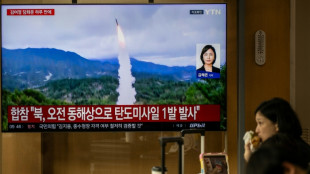 North Korea fires ballistic missile after Seoul's apology demand

 US regulator finds Boeing 737 MAX software bug 'not a safety concern'

 Ohtani 'managing' injuries as Dodgers launch MLB post-season

 Botched US execution leaves murderer unconscious on ventilator: lawyers

 Cornell rape case exposes sexual violence at US colleges

 France held by Italy in Zidane's homecoming after Olise stunner

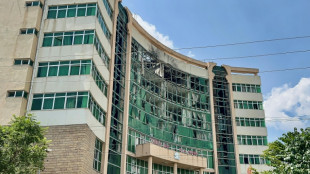 Ethiopian pro-government militia claims Tigray airport as regional tensions spike

Doctors often start exams with the so-called "eyeball test" -- a snap judgment about whether the patient appears older or younger than their age, which can influence key medical decisions.
That intuitive assessment may soon get an AI upgrade.
FaceAge, a deep learning algorithm described Thursday in The Lancet Digital Health, converts a simple headshot into a number that more accurately reflects a person's biological age rather than the birthday on their chart.
Trained on tens of thousands of photographs, it pegged cancer patients on average as biologically five years older than healthy peers. The study's authors say it could help doctors decide who can safely tolerate punishing treatments, and who might fare better with a gentler approach.
"We hypothesize that FaceAge could be used as a biomarker in cancer care to quantify a patient's biological age and help a doctor make these tough decisions," said co-senior author Raymond Mak, an oncologist at Mass Brigham Health, a Harvard-affiliated health system in Boston.
Consider two hypothetical patients: a spry 75‑year‑old whose biological age clocks in at 65, and a frail 60‑year‑old whose biology reads 70. Aggressive radiation might be appropriate for the former but risky for the latter.
The same logic could help guide decisions about heart surgery, hip replacements or end-of-life care.
- Sharper lens on frailty -
Growing evidence shows humans age at different rates, shaped by genes, stress, exercise, and habits like smoking or drinking. While pricey genetic tests can reveal how DNA wears over time, FaceAge promises insight using only a selfie.
The model was trained on 58,851 portraits of presumed-healthy adults over 60, culled from public datasets.
It was then tested on 6,196 cancer patients treated in the United States and the Netherlands, using photos snapped just before radiotherapy. Patients with malignancies looked on average 4.79 years older biologically than their chronological age.
Among cancer patients, a higher FaceAge score strongly predicted worse survival -- even after accounting for actual age, sex, and tumor type -- and the hazard rose steeply for anyone whose biological reading tipped past 85.
Intriguingly, FaceAge appears to weigh the signs of aging differently than humans do. For example, being gray-haired or balding matters less than subtle changes in facial muscle tone.
FaceAge boosted doctors' accuracy, too. Eight physicians were asked to examine headshots of terminal cancer patients and guess who would die within six months. Their success rate barely beat chance; with FaceAge data in hand, predictions improved sharply.
The model even affirmed a favorite internet meme, estimating actor Paul Rudd's biological age as 43 in a photo taken when he was 50.
- Bias and ethics guardrails -
AI tools have faced scrutiny for under‑serving non-white people. Mak said preliminary checks revealed no significant racial bias in FaceAge's predictions, but the group is training a second‑generation model on 20,000 patients.
They're also probing how factors like makeup, cosmetic surgery or room lighting variations could fool the system.
Ethics debates loom large. An AI that can read biological age from a selfie could prove a boon for clinicians, but also tempting for life insurers or employers seeking to gauge risk.
"It is for sure something that needs attention, to assure that these technologies are used only in the benefit for the patient," said Hugo Aerts, the study's co-lead who directs MGB's AI in medicine program.
Another dilemma: What happens when the mirror talks back? Learning that your body is biologically older than you thought may spur healthy changes -- or sow anxiety.
The researchers are planning to open a public-facing FaceAge portal where people can upload their own pictures to enroll in a research study to further validate the algorithm. Commercial versions aimed at clinicians may follow, but only after more validation.
T.Bondarenko--BTB



