Pandemic accord, tightened budget on menu at big WHO meet / Photo: © AFP

 Zverev thrashes Shang to set up Djokovic quarter-final at China Open

 Turkey football ref chief jailed pending trial for graft
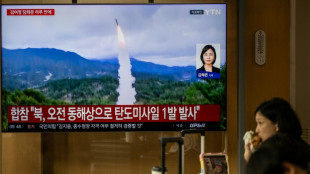 North Korea says test of intermediate-range strategic missile included use of AI

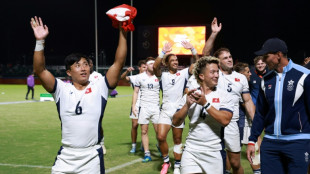 Rampant Sayers leads Hong Kong to third men's rugby gold in a row

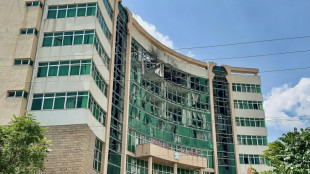 Ethiopia's Tigray rebels abandon regional capital as govt advances

 Bulgaria's Tsar Samuel returns 'home' after 1,000 years

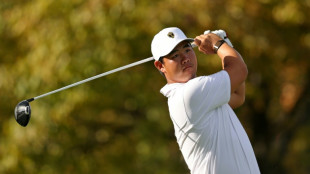 'Glad it's over': Kim powers to Games gold and military exemption

 After 11 World Cups, football finally comes home for one Indian fan
 Marc Marquez wins sprint at Japan MotoGP, Martin grabs pole
 Alcaraz fends off Arnaldi to reach Japan Open quarters
 Antonelli tops times in final practice at Bahrain GP
 Gauff digs deep to beat Osorio in China Open second round
 Fresh protests to hit Spain after housing measures defeated

 'He's here with me': Japan cycle queen dedicates gold to late brother
 Japan Olympic chief says 'lot more' athletes at Games than expected
 Asian carmakers besting US rivals at home, China poised to strike

 Widgets & Web Offers All-Inclusive Investor Relations Websites for Public Companies, IPOs and SPACs

 Adams named new US captain to 2030 World Cup

 China a better influence in Latin America than US: poll

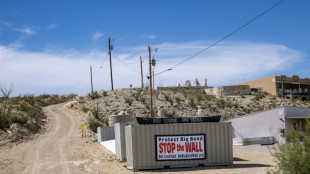 Judge pauses construction of border project in Texas national park

 Belgium's De Bruyne fires double to sink Turkey, France held by Italy
 US jobs data boosts stocks as oil prices dip

 US Supreme Court to hear high-stakes climate case

 Trump expected to name intel chief Clayton as AI czar: reports

 Argentina unveils passports-for-investment scheme

Next week promises to be a crucial one for the World Health Organization, with member states coming together in Geneva to adopt a landmark pandemic agreement and a slimmed-down budget amid US funding cuts.
Dozens of high-ranking officials and thousands of delegates are set to gather for the United Nations health agency's annual decision-making assembly, due to last from May 19 to 27.
"This huge gathering comes... at a pivotal moment for global health," Catharina Boehme, WHO's assistant director-general for external relations and governance, told reporters.
It comes as countries are confronting "emerging threats and major shifts in the landscape for global health and international development", she said.
More than five years after the emergence of Covid-19, which killed millions of people, much of the focus next week will be on the expected adoption of a hard-won international agreement on how to better protect against and tackle future pandemics.
After more than three years of negotiations, countries reached consensus on a text last month but final approval by the World Health Assembly is needed -- a discussion expected to take place on Tuesday.
- 'Without the US' -
The United States, which has thrown the global health system into crisis by slashing foreign aid spending, was not present during the final stretch of the talks.
US President Donald Trump ordered a withdrawal from the WHO and from the pandemic agreement talks after taking office in January.
The agreement "is a jab in the arm for multilateralism, even if it is multilateralism in this case without the US", said a European diplomat who asked not to be named.
The WHA will be called upon to ratify the adoption of the agreement and to launch an intergovernmental working group to negotiate technical details of the so-called Pathogen Access and Benefit-Sharing System (PABS), said negotiations co-chair Anne-Claire Amprou.
Core to the agreement, that system will be aimed at allowing the swift sharing of pathogen data with pharmaceutical companies, enabling them to quickly start working on pandemic-fighting products.
Once the PABS annex is completed and adopted at the 2026 WHA, "the whole (agreement) will open for signature", Steven Solomon, WHO's principal legal officer, told reporters.
Ratification by 60 states will be needed for the accord to come into force.
- Deep cuts -
Also high on the agenda next week will be the dramatic overhaul of WHO operations and finances.
WHO chief Tedros Adhanom Ghebreyesus told member states last month that the agency would need to slim down due to deep US funding cuts.
The agency has been bracing for Trump's planned full withdrawal of the United States -- by far its largest donor -- next January.
The United States gave WHO $1.3 billion for its 2022-2023 budget, mainly through voluntary contributions for specific projects rather than fixed membership fees.
"The loss of US funding, combined with reductions in official development assistance by some other countries, mean we are facing a salary gap for the next biennium of more than $500 million," Tedros said on Wednesday.
Tedros has not said how many jobs will be lost, but on Wednesday he announced the organisation would cut its leadership team nearly in half.
- Budget gap -
Next week, member states will vote on a proposed 20-percent increase of WHO's mandatory membership fees for the 2026-27 budget period, Boehme said.
Members already agreed in 2022 to increase the mandatory fees to cover 50 percent of the WHO budget.
Without that decision, Tedros said Wednesday that "our current financial situation would be much worse -– $300 million worse".
"It is essential, therefore, that member states approve this next increase, to make another step towards securing the long-term financial sustainability and independence of WHO."
Countries will also be asked to adopt the 2026-2027 budget, at a time when development assistance funding, including for health resources, are dwindling globally.
"We have proposed a reduced budget of $4.2 billion for the 2026-2027 biennium, a 21-percent reduction on the original proposed budget of 5.3 billion," Tedros said.
If the increase in membership fees is approved, the WHO estimates it can raise more than $2.6 billion, or more than 60 percent of the budget.
"That leaves an anticipated budget gap of more than $1.7 billion," Tedros said.
F.Müller--BTB