Kenya's only breastmilk bank, lifeline for premature babies / Photo: © AFP

 'Glad it's over': Kim powers to Games gold and military exemption

 After 11 World Cups, football finally comes home for one Indian fan
 Marc Marquez wins sprint at Japan MotoGP, Martin grabs pole
 Alcaraz fends off Arnaldi to reach Japan Open quarters
 Antonelli tops times in final practice at Bahrain GP
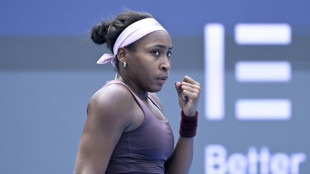 Gauff digs deep to beat Osorio in China Open second round

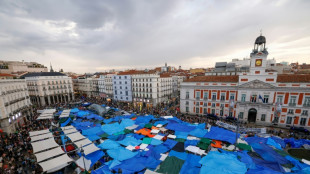 Fresh protests to hit Spain after housing measures defeated
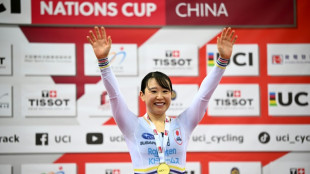 'He's here with me': Japan cycle queen dedicates gold to late brother
 Japan Olympic chief says 'lot more' athletes at Games than expected
 Asian carmakers besting US rivals at home, China poised to strike

 Widgets & Web Offers All-Inclusive Investor Relations Websites for Public Companies, IPOs and SPACs

 Adams named new US captain to 2030 World Cup
 China a better influence in Latin America than US: poll
 Judge pauses construction of border project in Texas national park

 Belgium's De Bruyne fires double to sink Turkey, France held by Italy
 US jobs data boosts stocks as oil prices dip

 US Supreme Court to hear high-stakes climate case
 Trump expected to name intel chief Clayton as AI czar: reports
 Argentina unveils passports-for-investment scheme
 Brazil election debate chaos sparks censorship row
 England's Carse charged by cricket body over nightclub incident

 Amazon vows $1 bn for data center towns, decries 'myths'
 Oil prices drop on G7 fuel release, US jobs data boosts stocks
 G7 agrees deal to ease global energy supply concerns

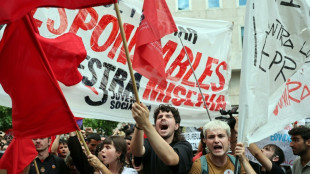 Spain's government dealt blow as lawmakers reject housing bills
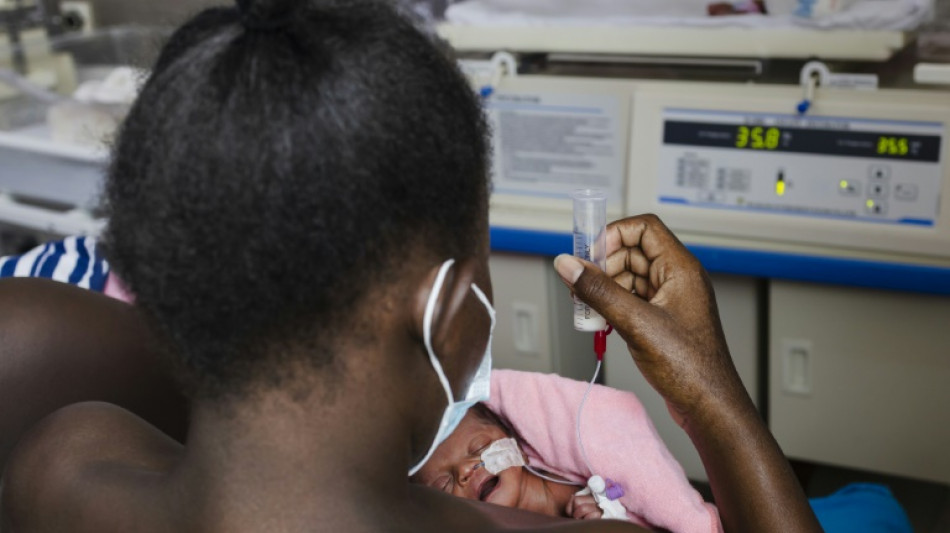
Surrounded by incubators, a red tube snaking into her tiny nose, four-day-old Grace-Ella is being fed donated breastmilk at the only facility in Kenya that offers the life-giving service.
The breastmilk bank at Pumwani Maternity Hospital is one of very few across sub-Saharan Africa, and is especially helpful for premature babies, of which roughly 134,000 are born each year in Kenya.
Mothers who give birth prematurely are often unable to produce breastmilk and must rely on formula, which can be less nutritious and increases the risk of infection, especially since water is often contaminated.
The milk bank in Nairobi, established in 2019 with the support of British aid money and PATH, an NGO, allows babies like Grace-Ella to benefit from the generosity of others.
"It was super-exciting," her mother Margaret Adhiambo, 28, told AFP, adding she had not heard of the programme before she delivered prematurely at 30 weeks.
"Before I accepted, I was a bit sceptical because it gave me some feeling of guilt like I could not give my daughter my own breastmilk."
But "it helped me because my daughter didn't starve, at least she got some food," she added.
- 'Good to help' -
Underweight babies face a daunting array of risks, and breastmilk can, quite literally, tip the scales in their favour.
"When we feed them human milk we find they are growing faster compared to a baby who is getting formula," said Muthoni Ogola, the doctor heading the programme.
Yet the World Health Organization (WHO) says fewer than half of all infants worldwide are exclusively breastfed.
A key advantage of breastmilk is the antibodies passed to the infant, said Pumwani nurse Hannah Wangeci Maina.
She moves with the efficiency needed for a maternity ward that cares for at least 90 mothers and babies at a time.
"We usually have many mothers lining up to receive the expressed breastmilk," she said.
On a recent visit by AFP, she helped first-time mother Esther Wanjiru, 22, through the process of donating.
Wanjiru was given counselling and tests for diseases including HIV and hepatitis before sitting to pump her breastmilk.
The milk was then tested, both pre- and post-pasteurisation, and then frozen, allowing it to be stored for up to a year.
"It feels good to help... It sort of feels like a massage," Wanjiru told AFP with a shy grin.
- Funding shortfall -
For the hospital team, it is frustrating that they only have enough equipment to provide milk to hospitalised children on the ward, as well as occasional donations to two other hospitals.
It is a much cheaper option than formula, but the equipment is expensive, said hospital CEO Christine Kiteshuo.
"Some of this equipment can only be found in Europe (or) the US, so it becomes a problem for us to procure," Kiteshuo told AFP.
The hospital would love to help mothers out in the community, especially since many live in informal settlements without fridges or clean running water.
"That becomes one of the challenges that we experience right now -- that we cannot help the mothers outside the facility," said Kiteshuo.
O.Bulka--BTB