Resilient young woman leads fight for euthanasia in Mexico / Photo: © AFP

 Split loyalties for Indian football fans at Brazil friendly

 India-Pakistan blockbuster brings cricket fever to Japan baseball field

 Wong waiting on Rafa after winning Asian Games tennis gold

 With Russia next door and rising costs, Latvia goes to the polls

 Penalty hero rues empty seats as Games hosts Japan win football gold

 North Korea fires ballistic missile after Seoul's apology demand

 US regulator finds Boeing 737 MAX software bug 'not a safety concern'

 Ohtani 'managing' injuries as Dodgers launch MLB post-season

 Botched US execution leaves murderer unconscious on ventilator: lawyers

 Cornell rape case exposes sexual violence at US colleges

 France held by Italy in Zidane's homecoming after Olise stunner

 Ethiopian pro-government militia claims Tigray airport as regional tensions spike

 Ohtani shaking off injuries as Dodgers launch MLB post-season

 Sea levels to rise in California as coastal wave surges up west coast

 New rallies urged in France as protests disrupt over 730 schools

 Djokovic survives China Open scare, Sabalenka starts strong
 King Charles to evoke colonial 'darkest days' on Caribbean tour

 Tesla shares jump after global car sales top estimates

 DR Congo Ebola outbreak killed more than 4,000: official figures

 Djokovic survives China Open scare against wildcard world no. 104

 Lula, Bolsonaro trade blows in final scramble for votes in Brazil

 New clashes erupt as protests disrupt over 560 French schools

 NY governor vows to close loophole after alleged Cornell gang rape

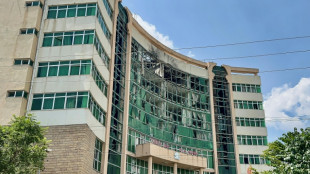 Ethiopia Tigray rebels pushed back as regional tensions spike

 Stocks rise, yields fall as US job numbers disappoint

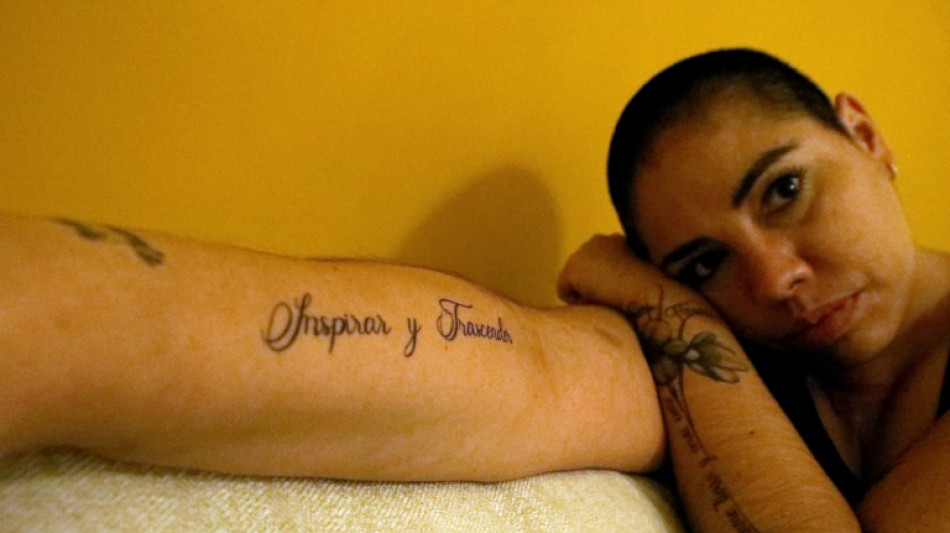
Samara Martinez, a young Mexican woman who is sick and dying, smiles as she asks her many TikTok followers a difficult question.
The 30-year-old lives with several chronic and degenerative diseases, including kidney failure, and spends 10 hours a day hooked up to a dialysis machine to survive.
"Instead of seeking euthanasia, why don't I just unplug the machine and say goodbye?" Martinez, a journalist by trade, says in her video.
She then explains to her nearly 400,000 followers what it is like to suffer from several terminal diseases -- and why she is spearheading a campaign to legalize a person's right to euthanasia in Mexico.
As she prepares to answer her initial question, the camera zooms in on Martinez's face for a close-up.
"Because I do not want to suffer and I want to die with dignity," she says.
A paradox is at work here: as she advocates for such a gravely serious issue as death, Martinez does so with vigor, enthusiasm and creativity over social media.
Her work helps her "stay alive," Martinez told AFP during an interview at her home in the city of Chihuahua in northern Mexico.
"Social media also serves to change the world," said Martinez, who feels that before she became a social media influencer she was an "agent of change."
After undergoing two failed kidney transplants, and with no possibility of being cured, in August she launched her campaign for Mexico to give people the right to die with dignity.
"I am going to be the person who legalizes euthanasia in Mexico," said Martinez.
She expressed confidence that she will succeed because, unlike previous campaigns with the same goal, this time it is a sick patient at the forefront.
Earlier this month, Uruguay became the first country in Latin America to decriminalize euthanasia through a law passed by congress. Colombia and Ecuador did the same in 1997 and 2024, respectively, through court rulings.
- For love and respect -
After more than a decade striving to get healthy, deciding she was ready to die posed a dilemma for Martinez.
She asked her parents what they thought. "We support you," she said they told her.
"I am doing it for myself, and for the respect I have for my body, and because I love myself so much. That is what is behind all this," said Martinez.
With stoicism and good humor that could stun the many people who watch her online, Martinez explains her end-of-life decision.
"It is not that I gave up. Rather, I have unblocked that part of understanding which says death is not an enemy, that it is not pain. Death is a sister, a friend, and one embraces it."
Sitting in her office at a university in Chihuahua, where she is a tenured professor, Martinez analyzes her options.
She says in a steady voice that no one can make her keep doing dialysis.
"I would take 15 days to die, but those would be 15 days of agony and suffering because your whole body is poisoned. You can drown in your own liquids. It is a very undignified death," said Martinez.
To stop dialysis, she said, would be a form of passive euthanasia -- withholding treatment that would keep a dying person alive.
Another option is to resort to a law in Mexico under which a person sound of mind can ask that their life not be prolonged artificially and they only be given palliative care until they die.
This week, Martinez herself will present to the Mexican Senate a bill to make euthanasia part of Mexico's body of law, letting people decide when they want to die and to do so without unnecessary suffering.
The lower chamber of congress must also approve the initiative.
"It is high time we stopped penalizing compassion," said Martinez.
She has amassed 118,000 signatures on a petition backing her idea and is now trying to win over lawmakers.
When the time comes, Martinez envisions expiring by the sea, at dusk, with a quiet ceremony.
"A celebration of life with my family, surrounded by people I love and who love me, and going peacefully, with no pain," she said.
C.Kovalenko--BTB