Twice-a-year HIV prevention shots begin in Africa / Photo: © GILEAD SCIENCES, INC/AFP/File

 Split loyalties for Indian football fans at Brazil friendly

 India-Pakistan blockbuster brings cricket fever to Japan baseball field

 Wong waiting on Rafa after winning Asian Games tennis gold
 With Russia next door and rising costs, Latvia goes to the polls
 Penalty hero rues empty seats as Games hosts Japan win football gold

 North Korea fires ballistic missile after Seoul's apology demand

 US regulator finds Boeing 737 MAX software bug 'not a safety concern'

 Ohtani 'managing' injuries as Dodgers launch MLB post-season

 Botched US execution leaves murderer unconscious on ventilator: lawyers
 Cornell rape case exposes sexual violence at US colleges
 France held by Italy in Zidane's homecoming after Olise stunner

 Ethiopian pro-government militia claims Tigray airport as regional tensions spike
 Ohtani shaking off injuries as Dodgers launch MLB post-season
 Sea levels to rise in California as coastal wave surges up west coast
 New rallies urged in France as protests disrupt over 730 schools
 Djokovic survives China Open scare, Sabalenka starts strong
 King Charles to evoke colonial 'darkest days' on Caribbean tour
 Tesla shares jump after global car sales top estimates

 DR Congo Ebola outbreak killed more than 4,000: official figures
 Djokovic survives China Open scare against wildcard world no. 104
 Lula, Bolsonaro trade blows in final scramble for votes in Brazil
 New clashes erupt as protests disrupt over 560 French schools
 NY governor vows to close loophole after alleged Cornell gang rape

 Ethiopia Tigray rebels pushed back as regional tensions spike

 Stocks rise, yields fall as US job numbers disappoint
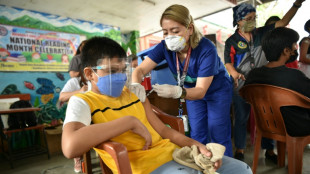
South Africa, Eswatini and Zambia on Monday began administering a groundbreaking HIV-prevention injection in the drug's first public rollouts in Africa, which has the world's highest HIV burden.
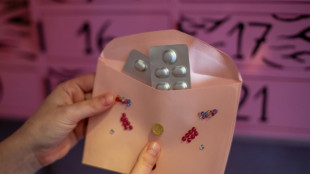
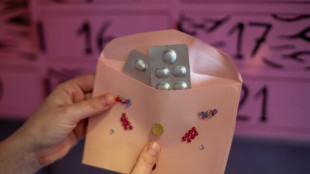
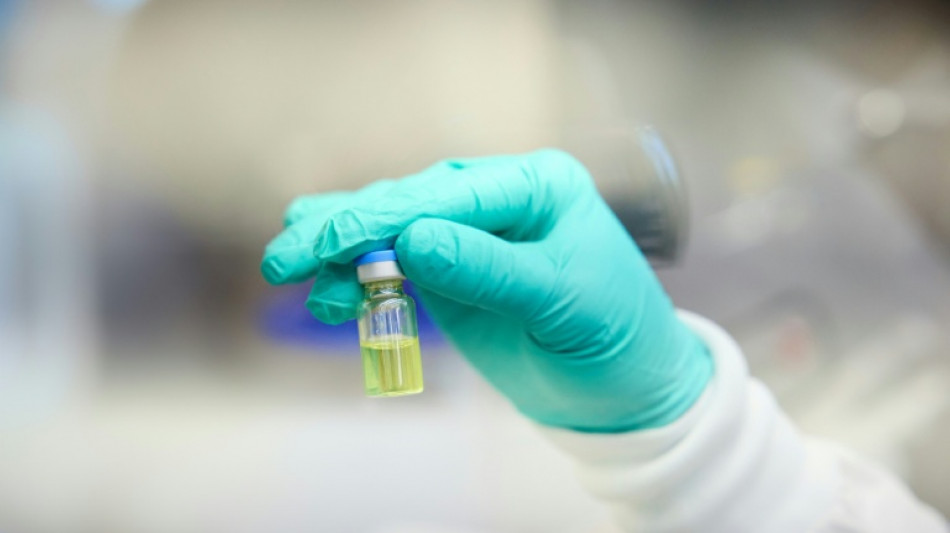
Lenacapavir, which is taken twice a year, has been shown to reduce the risk of HIV transmission by more than 99.9 percent, making it functionally akin to a powerful vaccine.
In South Africa, where one in five adults lives with HIV, a Wits University research unit oversaw the rollout as part of an initiative funded by the international health agency Unitaid, which works on ensuring equitable access to medical innovations.
"The first individuals have begun using lenacapavir for HIV prevention in South Africa... making it among the first real-world use of the six-monthly injectable in low- and middle-income countries," Unitaid said in a statement.
It did not specify how many people received the first doses of the drug, which cost $28,000 per person a year in the United States.
A broader national rollout is expected next year.
Neighbouring Zambia and Eswatini received 1,000 doses last month as part of a US programme and launched the drug at World AIDS Day ceremonies on Monday.
In Eswatini's Hhukwini constituency, dozens lined up for the shot at a lively public event filled with song and dance.
"Today marks a turning point in our national HIV response," said Prime Minister Russell Dlamini, adding that the injection "gives us fresh hope and a powerful tool to protect our citizens".
In Zambia, hundreds marched two kilometres (one mile) to Chawama township of the capital Lusaka to mark the occasion.
Health Minister Elijah Muchima urged volunteers living with HIV to visit nearby hospitals to get the jab, saying it "brings renewed hope to young people and the vulnerable population".
Under the US programme, manufacturer Gilead Sciences has agreed to provide lenacapavir at no profit to two million people in countries with a high HIV burden over three years.
But Washington -- at odds with Pretoria over several policy issues -- will not provide doses to South Africa despite its participation in clinical trials.
"Obviously, we encourage every country, especially countries like South Africa, that have significant means of their own to fund doses for their own population," Jeremy Lewin, a senior US State Department official, told reporters late last month.
- Saving lives vs profit -
Critics say the US deliveries are far below the actual requirement and that the market price is out of reach for most people.
Eastern and southern Africa account for about 52 percent of the 40.8 million people living with HIV worldwide, according to 2024 UNAIDS data.
In Zambia alone, roughly 1.4 million people are living with HIV, with 30,000 new infections each year, according to the health ministry. Eswatini -- a tiny kingdom of 1.2 million -- has about 220,000 people living with the virus.
UNAIDS executive director Winnie Byanyima criticised the drug's limited availability, saying drugmakers were neglecting Africa's needs.
"If you don't care about those lives, at least you care about the profit! Bring the drug here," she told AFP.
WHO chief Tedros Adhanom Ghebreyesus warned that gains against HIV are "now at risk" after funding cuts and urged countries to rapidly scale up use of lenacapavir.
"Progress against HIV has largely stalled," he told journalists.
Generic versions of lenacapavir are expected to be available from 2027 at around $40 per year in more than 100 countries, through agreements by Unitaid and the Gates Foundation with Indian pharmaceutical companies.
Pre-exposure prophylaxis, or PrEP, has been used for over a decade to prevent HIV but its reliance on a daily pill has limited its impact on global infections.
M.Odermatt--BTB