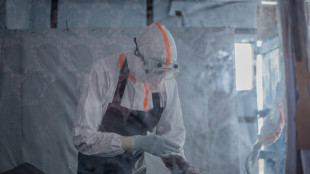
WHO triggers highest alert on monkeypox / Photo: © AFP/File

 AI needs safety layers like nuclear plants: ex-OpenAI engineer

 MVP Judge will miss Yankees' MLB playoff series against Rays

 New lizard species discovered in Peru

 Fernandes hails Portugal's 'greatest symbol' Ronaldo, calls for unity
 Grandidier-Nkanang double takes Pau to Top 14 summit despite Vannes fightback

 Trainer Scott gets perfect Arc boost with top notch double
 Ex-PM says Putin cannot admit 'mistake' over Ukraine
 Houthis say Saudi Arabia launches dozens of strikes on Yemen capital

 Qatar and Abu Dhabi F1 Grand Prix to go ahead - F1 boss
 South Korea lift gloom with smash-and-grab Games football gold
 Ireland news conference before Israel game cut short amid tensions
 Protests over housing flare in Spain after relief measures rejected

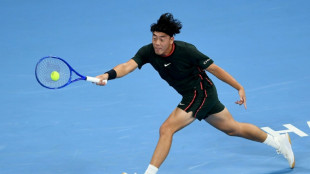
 Zverev thrashes Shang to set up Djokovic quarter-final at China Open

 Turkey football ref chief jailed pending trial for graft
 North Korea says test of intermediate-range strategic missile included use of AI

 Rampant Sayers leads Hong Kong to third men's rugby gold in a row
 Ethiopia's Tigray rebels abandon regional capital as govt advances
 Bulgaria's Tsar Samuel returns 'home' after 1,000 years
 'Glad it's over': Kim powers to Games gold and military exemption

 After 11 World Cups, football finally comes home for one Indian fan
 Marc Marquez wins sprint at Japan MotoGP, Martin grabs pole
 Alcaraz fends off Arnaldi to reach Japan Open quarters
 Antonelli tops times in final practice at Bahrain GP
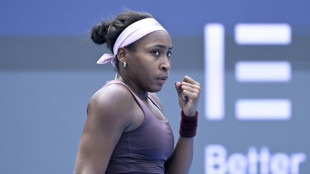 Gauff digs deep to beat Osorio in China Open second round
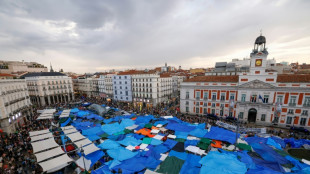 Fresh protests to hit Spain after housing measures defeated
The World Health Organization on Saturday declared the monkeypox outbreak, which has affected nearly 16,000 people in 72 countries, to be a global health emergency -- the highest alarm it can sound.
"I have decided that the global #monkeypox outbreak represents a public health emergency of international concern," WHO chief Tedros Adhanom Ghebreyesus said at a press conference.
He said a committee of experts who met on Thursday was unable to reach a consensus, so it fell on him to decide whether to trigger the highest alert possible.
"WHO's assessment is that the risk of monkeypox is moderate globally and in all regions, except in the European region where we assess the risk as high," he added.
Monkeypox has affected over 15,800 people in 72 countries, according to a tally by the US Centers for Disease Control and Prevention (CDC) published on July 20.
A surge in monkeypox infections has been reported since early May outside the West and Central African countries where the disease has long been endemic.
On June 23, the WHO convened an emergency committee (EC) of experts to decide if monkeypox constitutes a so-called Public Health Emergency of International Concern (PHEIC) -- the UN health agency's highest alert level.
But a majority advised Tedros that the situation, at that point, had not met the threshold.
The second meeting was called on Thursday with case numbers rising further, where Tedros said he was worried.
"I need your advice in assessing the immediate and mid-term public health implications," Tedros told the meeting, which lasted more than six hours.
A US health expert sounded a grim warning late on Friday.
"Since the last #monkeypox EC just weeks ago, we've seen an exponential rise in cases. It's inevitable that cases will dramatically rise in the coming weeks & months. That's why @DrTedros must sound the global alarm," Lawrence Gostin, the director of the WHO Collaborating Center on National and Global Health Law, said on Twitter.
"A failure to act will have grave consequences for global health."
- Warning against discrimination -
A viral infection resembling smallpox and first detected in humans in 1970, monkeypox is less dangerous and contagious than smallpox, which was eradicated in 1980.
Ninety-five percent of cases have been transmitted through sexual activity, according to a study of 528 people in 16 countries published in the New England Journal of Medicine -- the largest research to date.
Overall, 98 percent of infected people were gay or bisexual men, and around a third were known to have visited sex-on-site venues such as sex parties or saunas within the previous month.
"This transmission pattern represents both an opportunity to implement targeted public health interventions, and a challenge because in some countries, the communities affected face life-threatening discrimination," Tedros said earlier, citing concern that stigma and scapegoating could make the outbreak harder to track.
The European Union's drug watchdog on Friday recommended for approval the use of Imvanex, a smallpox vaccine, to treat monkeypox.
Imvanex, developed by Danish drugmaker Bavarian Nordic, has been approved in the EU since 2013 for the prevention of smallpox.
It was also considered a potential vaccine for monkeypox because of the similarity between the monkeypox virus and the smallpox virus.
The first symptoms of monkeypox are fever, headaches, muscle pain and back pain during the course of five days.
Rashes subsequently appear on the face, the palms of hands and soles of feet, followed by lesions, spots and finally scabs.
J.Horn--BTB