'No heavier burden': the decades-long search for Kosovo war missing / Photo: © AFP

 'He's here with me': Japan cycle queen dedicates gold to late brother
 Japan Olympic chief says 'lot more' athletes at Games than expected
 Asian carmakers besting US rivals at home, China poised to strike

 Widgets & Web Offers All-Inclusive Investor Relations Websites for Public Companies, IPOs and SPACs

 Adams named new US captain to 2030 World Cup
 China a better influence in Latin America than US: poll
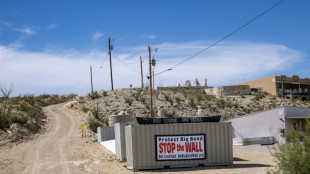 Judge pauses construction of border project in Texas national park

 Belgium's De Bruyne fires double to sink Turkey, France held by Italy
 US jobs data boosts stocks as oil prices dip

 US Supreme Court to hear high-stakes climate case
 Trump expected to name intel chief Clayton as AI czar: reports
 Argentina unveils passports-for-investment scheme

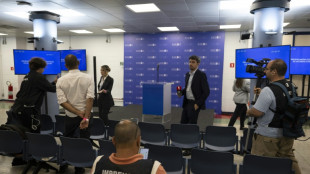 Brazil election debate chaos sparks censorship row
 England's Carse charged by cricket body over nightclub incident

 Amazon vows $1 bn for data center towns, decries 'myths'
 Oil prices drop on G7 fuel release, US jobs data boosts stocks

 G7 agrees deal to ease global energy supply concerns

 Spain's government dealt blow as lawmakers reject housing bills
 Food, medicine shortages deepen in Russian-occupied Oleshky
 Man City whistleblower Rui Pinto facing 'dire consequences' - lawyers
 Russia 'tearing Kyiv apart', mayor says, as strikes paralyse traffic

 Taiwan boxer Lin wins Games gold as Japan edge North Korea on penalties

 Japan tame North Korea to win Games gold after shootout drama
 US posts weak job growth data in September
 Ethiopia's conflict: the regional dimension

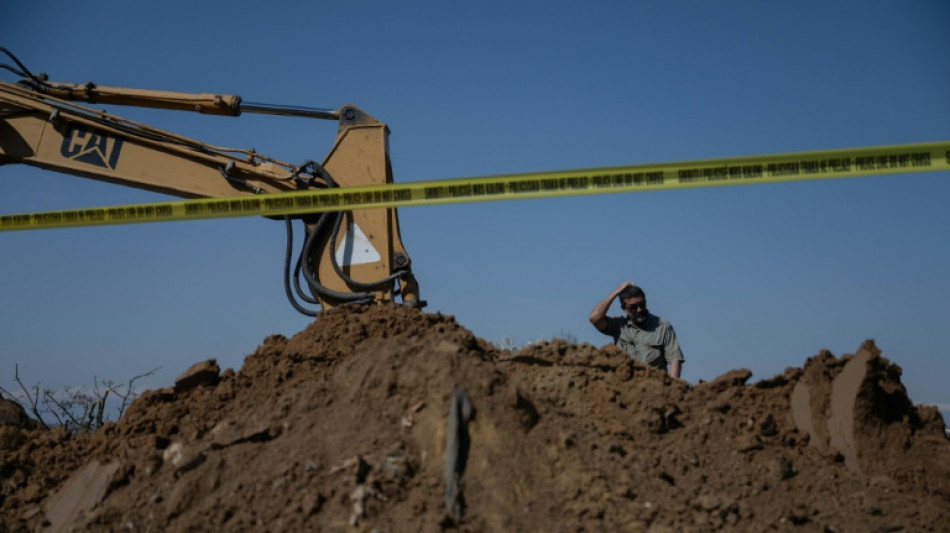
Halit Krendali peered over the edge of a freshly dug pit in southern Kosovo, desperately hopeful his uncle, missing for nearly 30 years, had finally been found in a mass grave.
The 70-year-old looked on as forensic experts in white coveralls carefully examined the excavated earth for any sign of the dozens of dead believed to be buried there.
"Inshallah, I'll never come here again because there is no heavier burden than this," he told AFP during his third visit to the site.
For over a week, forensic teams have been exhuming remains at the Perzhina site in southern Kosovo, the latest in hundreds of mass graves uncovered since the end of the Balkan country's 1998-1999 war with Serbia.
The conflict between independence-seeking ethnic Albanian guerrillas and Serbian armed forces killed around 13,000 people and left 4,000 missing.
Thousands of people have been identified through exhumations and DNA testing but 1,600 are still missing.
Most of the latter are ethnic Albanians. Another 500 are Serbs, Roma and other minorities.
- 'Damaged, fragmented, burned' -
So far, the remains of three people have been exhumed at Perzhina, where the government's missing persons commission expects as many as 47 bodies to be uncovered in the coming days.
But the chairman of the government's commission for missing persons, Kushtrim Gara, said he suspected the bodies of dozens more Albanian civilians had been moved from the site to another location.
"They were excavated and buried elsewhere by Serbian forces to hide war crimes," Gara said.
During the war, Serb forces moved bodies from mass graves to conceal massacres, regularly using heavy machinery, making the job of forensic teams even harder, he said.
Around 1,000 bodies have been recovered from sites in Serbia alone -- with over 740 found in one mass grave in the outer Belgrade neighbourhood of Batajnica in 2001.
It can take years and even decades to identify remains found in these graves accurately and some are still unknown.
At the Institute of Forensic Medicine in Pristina, boxes containing remains of between 250 and 300 people recovered from sites around the region are stored for years after being uncovered.
"Why don't we know the exact number? Because their bones are often damaged, fragmented (or) burned to the point that a DNA profile cannot be taken from them," institute forensic anthropologist Ditor Haliti said.
- 'A place to put a flower' -
Naxhije Dushi, whose brother Nazmi was abducted during a Serbian police operation in 1999, is still searching for answers.
"I need to know at least where his bones are, to cry and talk to him like I used to when he was alive," the 60-year-old said.
Her brother, then 23, was taken by Serbian forces along with her 26-year-old cousin, Masar, and never seen again.
She was hopeful, when excavations revealed Masar's body in 2024, that Nazmi would also be found.
But he remains missing.
It took around two years for scientists to confirm her cousin's identity.
But when he was finally buried in Klina last month, along with two other victims, it was with state honours, their caskets draped in flags with a military escort.
Klina mayor Zenun Elezaj, speaking at the funeral, said the burial gave only a small but important respite to families.
"It just gives families a place to put a flower for their loved ones," he said.
- Unbearable waiting -
Serbia has never recognised the independence of Kosovo, its former province, and relations between the two remain strained.
In January, both countries agreed to a joint commission to accelerate the search for war missing.
Despite this, Gara said Belgrade remained reluctant to share reliable information that could help find mass graves.
"This is directly related to the lack of willingness on the Serbian side to provide data from their archives, especially the military," he said.
For its part, Serbia accuses Kosovo of a lack of interest in searching for mass graves containing Serb victims.
For those who don't know where their loved ones are, the slow progress is excruciating.
"This waiting is unbearable," said Krendali.
Now a retiree, he attends every excavation he can in the decades-long search for his uncle Ramadan but fears it could take years more.
"I don't have much time to wait."
I.Meyer--BTB