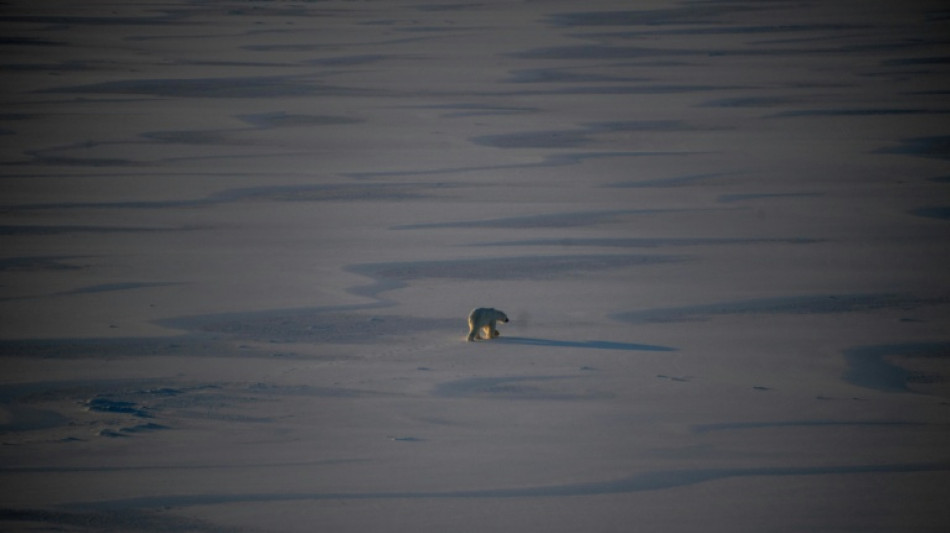
Norway reports Europe's first case of bird flu in a polar bear / Photo: © AFP/File

 Prague’s Concert for the Future Kicks Off on Wenceslas Square

 Prince William and Princess of Wales to Announce Earthshot Prize Winners in Mumbai

 Indonesia Forest Fires: Health Crisis, Diplomatic Strains and the Search for Solutions

 BYD Dolphin G Leasing Deal: Plug-in Hybrid Supermini Available from £174 a Month

 JUEL Group Expands from Real Estate to Hospitality with Hyatt Centric Malta Opening

 French Economy Shrinks 0.1% as Consumer Confidence Slumps

 Wall Street Ends Turbulent Week Higher Despite Inflation and AI Jitters

 Kansas City Fed Chief Says Inflation Is Still Running Too Hot

Norwegian authorities on Tuesday announced that avian influenza has been documented in a polar bear for the first time in Europe, in the Svalbard region in the Arctic.
The H5N5 variant of the virus was detected in samples taken from a male bear about one year old and a walrus found dead in mid-May on the icy archipelago, around 1,000 km (600 miles) from the North Pole, the Norwegian Veterinary Institute said.
"The results are part of a trend in which highly pathogenic avian influenza viruses are increasingly being detected in mammals in Europe," noted Ragnhild Tonnessen, bird flu coordinator at the Veterinary Institute, quoted in a press release.
"At the same time, in recent years, the virus has spread to new regions, including the Arctic, where it can have consequences for vulnerable populations and ecosystems," she added.
The governor of Svalbard said separately that the presence of the virus in brain samples from both animals "is consistent with the hypothesis that it was very likely the cause" of their deaths.
A walrus that died of bird flu had already been found in Svalbard in 2023, and the virus was also documented the same year in a polar bear that died in Alaska.
From January 2025 to March 2026, 140 million animals died or were culled because of avian influenza in nearly 70 countries, according to the World Organisation for Animal Health (WOAH).
That is well below a peak seen in 2021–2022, but since then, the virus has spread widely among non-avian species, increasing the risk of transmission to humans.
L.Janezki--BTB



