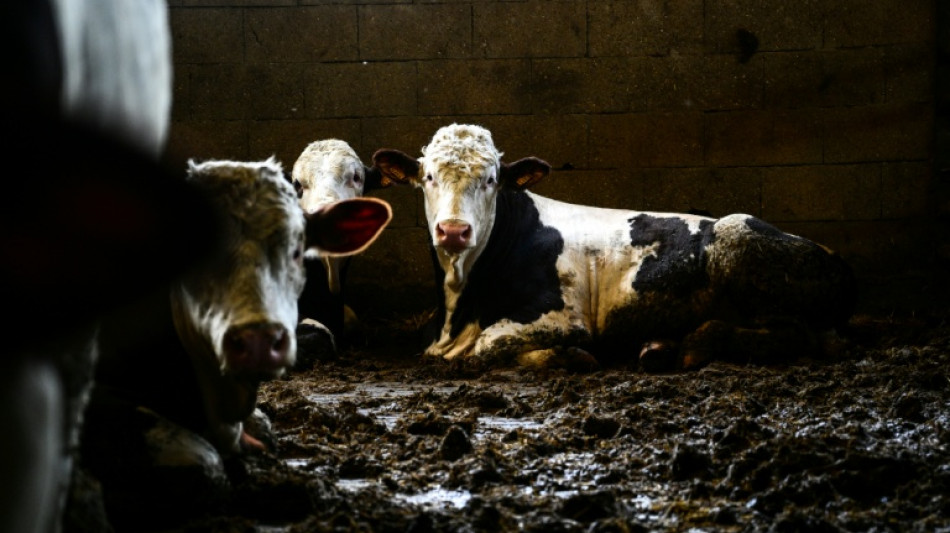
Dangerous livestock pest case confirmed in Texas / Photo: © AFP

 Prague’s Concert for the Future Kicks Off on Wenceslas Square

 Prince William and Princess of Wales to Announce Earthshot Prize Winners in Mumbai

 Indonesia Forest Fires: Health Crisis, Diplomatic Strains and the Search for Solutions

 BYD Dolphin G Leasing Deal: Plug-in Hybrid Supermini Available from £174 a Month

 JUEL Group Expands from Real Estate to Hospitality with Hyatt Centric Malta Opening

 French Economy Shrinks 0.1% as Consumer Confidence Slumps

 Wall Street Ends Turbulent Week Higher Despite Inflation and AI Jitters

 Kansas City Fed Chief Says Inflation Is Still Running Too Hot

The United States said on Thursday that the New World screwworm (NWS) fly, a dangerous livestock pest whose flesh-eating larvae can kill cattle, has been detected in a calf in south Texas.
"We have a confirmed positive detection of New World screwworm in a three-week-old calf," US Agriculture Secretary Brooke Rollins said in a briefing.
She said "immediate action" to contain and eradicate the parasite that has raised fears over the beef supply was underway.
The NWS fly was eradicated in the United States in 1966.
But Florida experienced an outbreak in 2016 that primarily impacted deer, and was eliminated the following year, according to the US Department of Agriculture.
It has remained present in South America, and in recent years has moved northward, triggering alarm.
The impacted calf this time around had larvae in its umbilical area, the USDA said.
Michael Schmoyer -- the associate administrator for the country's Animal and Plant Health Inspection Service and head of the NWS Directorate -- said the infested beef calf "is not a danger to the food supply."
"The screw worm can be detected easily, and it can be treated," he told journalists.
Officials added that the calf was undergoing treatment and improving, and emphasized that the worms do not infest food sources like meat, fruit or vegetables.
The flies lay their eggs in open wounds or mucous membranes of warm-blooded animals, where they hatch into larvae and feed on flesh. Left untreated, the infestation can be deadly, and the parasites can quickly spread.
Texas has established a 12-mile (20-kilometer) quarantine zone, meaning all warm-blooded animals including pets must be inspected before leaving the zone.
- Sterilization by ground and sky -
The fly had been eradicated in the US thanks in large part by dropping millions of sterile flies to mate with wild females.
US officials said some four million sterile flies were already being released weekly from the sky, and that some four million more in the pupae stage were being deployed in ground release chambers.
Infections in humans are not common, the USDA said, but added that individuals who detect signs like suspicious lesions should immediately seek medical attention.
Jennifer Bloodgood, an assistant professor of practice and wildlife veterinarian at Cornell University, said to AFP in a statement that the detection in Texas "underscores the need for continued vigilance and collaboration among livestock, wildlife, and public health communities."
"The good news is that we have successfully eradicated New World screwworm from the United States before," Bloodgood said. "This detection should not cause panic, but it should reinforce the importance of awareness."
Feeder cattle futures at the Chicago Mercantile Exchange rose Thursday as the market feared an eventual decline in available supply.
A USDA study last year estimated a screwworm resurgence in Texas could cost the state's economy $1.8 billion.
M.Ouellet--BTB



