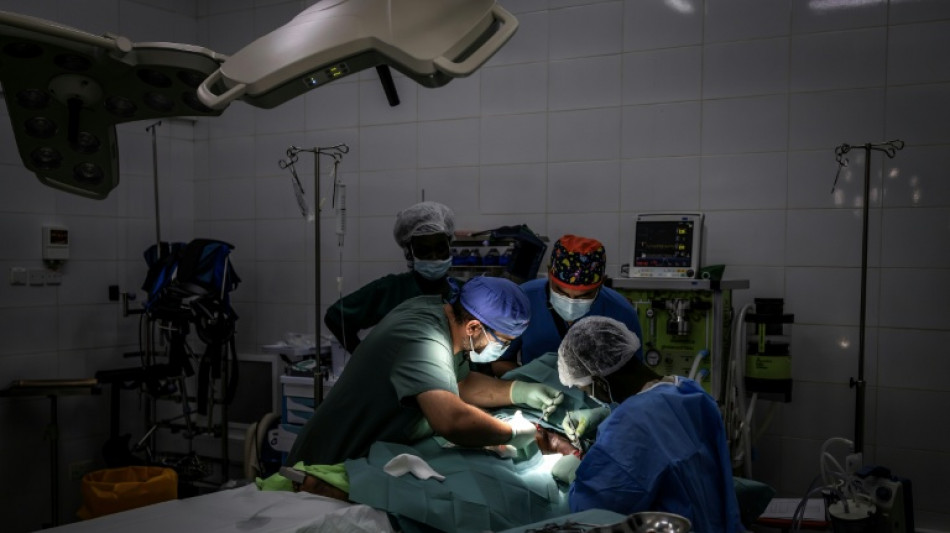
Africa faces child surgery crisis as key anaesthesia runs out / Photo: © AFP

 Japan Olympic chief says 'lot more' athletes at Games than expected
 Asian carmakers besting US rivals at home, China poised to strike

 Widgets & Web Offers All-Inclusive Investor Relations Websites for Public Companies, IPOs and SPACs

 Adams named new US captain to 2030 World Cup
 China a better influence in Latin America than US: poll

 Judge pauses construction of border project in Texas national park

 Belgium's De Bruyne fires double to sink Turkey, France held by Italy
 US jobs data boosts stocks as oil prices dip

 US Supreme Court to hear high-stakes climate case

 Trump expected to name intel chief Clayton as AI czar: reports
 Argentina unveils passports-for-investment scheme

 Brazil election debate chaos sparks censorship row
 England's Carse charged by cricket body over nightclub incident

 Amazon vows $1 bn for data center towns, decries 'myths'
 Oil prices drop on G7 fuel release, US jobs data boosts stocks

 G7 agrees deal to ease global energy supply concerns

 Spain's government dealt blow as lawmakers reject housing bills
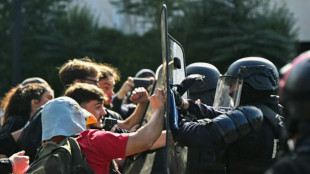
 Food, medicine shortages deepen in Russian-occupied Oleshky

 Man City whistleblower Rui Pinto facing 'dire consequences' - lawyers
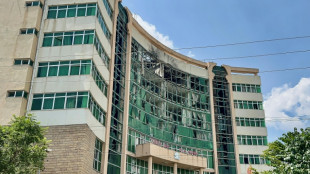
 Russia 'tearing Kyiv apart', mayor says, as strikes paralyse traffic

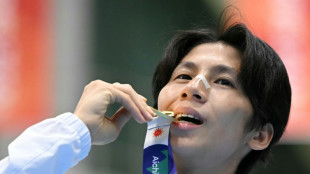 Taiwan boxer Lin wins Games gold as Japan edge North Korea on penalties

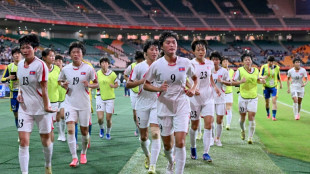 Japan tame North Korea to win Games gold after shootout drama

 US posts weak job growth data in September
 Ethiopia's conflict: the regional dimension

 Life expectancy almost back to pre-Covid levels, says WHO

African hospitals face huge new costs as they scramble to replace the main anaesthetic for child operations that is set to run out in 2027, a charity has warned.
Halothane is still widely used across sub-Saharan Africa to put children to sleep for operations, primarily because it can be seven to 10 times cheaper than the newer alternative, sevoflurane.
But the last halothane manufacturer shut down its production line in India in 2023, and stocks are rapidly running out across Africa.
"We don't know exactly when, but I don't think we will have any halothane left by the end of 2027," said Elizabeth Igaga, an anaesthesiologist in Uganda.
Igaga is senior director for programme safety at Smile Train, a charity that carries out more than 100,000 surgeries each year for cleft lips and palates, 90 percent of them for children.
"This halothane situation is a big deal for us. We are committed to them having safe surgery," she said.
While high-end hospitals have already switched to sevoflurane, they represent a tiny fraction of health facilities in sub-Saharan Africa.
The transition has exposed years of under-funding in anaesthesia systems on the continent, with many discovering that machines need to be replaced at a cost of tens of thousands of dollars each.
The announcement that halothane was no longer being produced "set off nationwide panic" in Zambia, said Sompwe Mwansa, president of the country's Society of Anaesthetists.
"We're playing catch-up on equipment needs and training needs," she told AFP.
"It's really been quite a challenging transition period for us, especially for centres that are away from sort of the urban centres."
Across much of Africa, anaesthetics are administered by health workers who are not doctors and will require fresh training for new drugs to avoid expensive wastage, Mwansa added.
The World Federation of Societies of Anaesthesiologists called in 2024 for African governments to urgently budget for the transition.
"Unfortunately, that call has not received the response that the timeline requires," Smile Train said in a statement.
Ugandan and Zambian authorities have responded positively, according to the doctors who spoke to AFP.
But the transition adds millions of dollars to already stretched health budgets, compounded by massive cuts to aid subsidies from Western countries over the past 18 months.
"It may very realistically lead to a reduction in our surgical capacity," said Mwansa.
"Already anaesthesia was a hidden corner of the budget... with many competing interests. It's very concerning," she added.
Adding to concerns, Africa is host to the world's youngest population -- the UN predicts that by 2050, one in four children globally will reside in Africa -- while infant mortality rates remain stubbornly high.
Smile Train is helping with the transition, but cannot do everything and wants African governments to take ownership of the problem.
"We are happy to support, but we also need them to take responsibility," said Igaga.
L.Janezki--BTB