Trials of two Ebola treatments to start in DRC next week: WHO / Photo: © AFP

 Japan Olympic chief says 'lot more' athletes at Games than expected
 Asian carmakers besting US rivals at home, China poised to strike

 Widgets & Web Offers All-Inclusive Investor Relations Websites for Public Companies, IPOs and SPACs

 Adams named new US captain to 2030 World Cup
 China a better influence in Latin America than US: poll

 Judge pauses construction of border project in Texas national park

 Belgium's De Bruyne fires double to sink Turkey, France held by Italy
 US jobs data boosts stocks as oil prices dip

 US Supreme Court to hear high-stakes climate case

 Trump expected to name intel chief Clayton as AI czar: reports
 Argentina unveils passports-for-investment scheme

 Brazil election debate chaos sparks censorship row
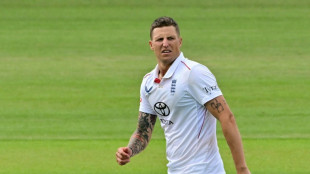 England's Carse charged by cricket body over nightclub incident

 Amazon vows $1 bn for data center towns, decries 'myths'
 Oil prices drop on G7 fuel release, US jobs data boosts stocks

 G7 agrees deal to ease global energy supply concerns

 Spain's government dealt blow as lawmakers reject housing bills
 Food, medicine shortages deepen in Russian-occupied Oleshky
 Man City whistleblower Rui Pinto facing 'dire consequences' - lawyers
 Russia 'tearing Kyiv apart', mayor says, as strikes paralyse traffic

 Taiwan boxer Lin wins Games gold as Japan edge North Korea on penalties

 Japan tame North Korea to win Games gold after shootout drama
 US posts weak job growth data in September
 Ethiopia's conflict: the regional dimension

 Life expectancy almost back to pre-Covid levels, says WHO
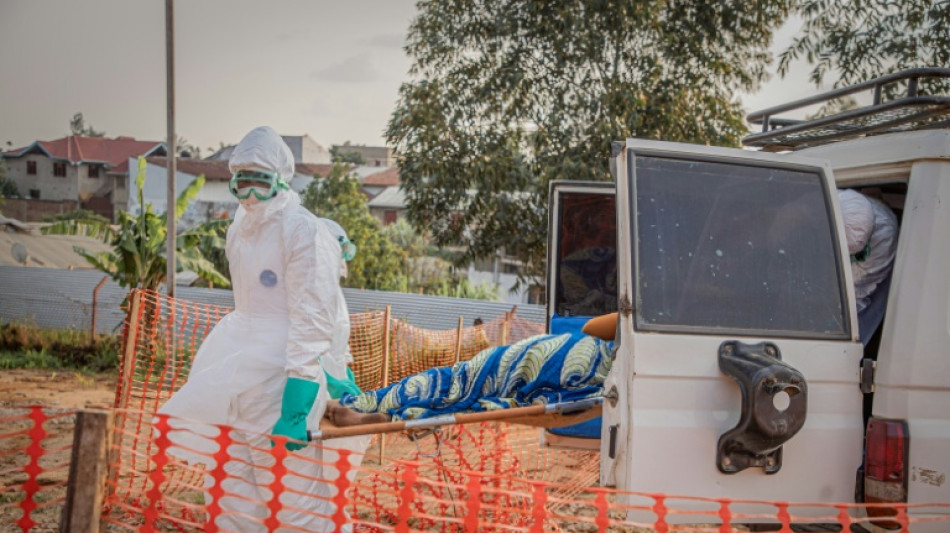
Trials of two separate potential treatments to fight the deadly Ebola outbreak in the Democratic Republic of Congo are expected to begin next week, the World Health Organization said on Wednesday.
A total of 1,048 Ebola cases, including 277 deaths, have been confirmed in DR Congo since the outbreak was declared on May 15 -- although many experts believe the true toll is significantly higher.
This outbreak is down to the rare Bundibugyo species of Ebola virus -- for which there are no approved vaccines or treatments.
WHO chief Tedros Adhanom Ghebreyesus said Wednesday that "preparations are now complete for a trial of two therapeutics that's expected to start in DRC next week".
The trial, he said, would evaluate whether the monoclonal antibody MBP134 and the antiviral drug remdesivir "can help to reduce mortality in patients with Bundibugyo virus -- alone, or in combination".
Tedros thanked the United States and Gilead Sciences for donating the doses needed for the trial.
The trials will start at a hospital in DRC's northeastern Ituri province -- where the vast majority of cases have been detected -- Vasee Moorthy, who leads the WHO's research and development blueprint arm, told AFP.
The numbers of patients required would depend of how effective the therapeutics appear to be: the more effective they are, the fewer patients who would be needed, Moorthy said.
Between 500 to 1,000 people were expected to take part, he added.
Moorthy said preparations were all but complete, and the trials should provide answers as to whether each treatment, as well as both in combination, were safe and effective.
Tedros said the WHO and its partners were working closely with affected communities "to inform and involve them in the trial".
"We are also working to ensure the communities have access to the therapeutics, should they prove safe and efficacious," he said.
Tedros said the trial would be conducted by the WHO and a consortium of partners, including DRC's National Institute for Biomedical Research, the Alliance for International Medical Action (ALIMA) and Oxford University.
- Outbreak outpacing response -
The WHO chief hailed the ramping up of the Ebola response.
Over the past five weeks, the number of treatment beds had gone up from 10 to more than 500, while testing capacity in the DRC has gone up from 30 a day to more than 3,000, he said.
But he stressed that efforts to rein in the virus still faced "major challenges".
"The outbreak is continuing to outpace the response," he warned.
Capacity at treatment and isolation centres was still insufficient, while financial support for fighting the outbreak was lagging, Tedros said.
Also proving difficult, he said, was ensuring safe and dignified burials of the highly infectious bodies of those who have died from the virus, which spreads through close contact and infected bodily fluids.
Tedros voiced particular concern that contact tracing was still not at the level needed.
More than 8,200 contacts of cases have been traced -- a rate of just over 70 percent, but still short of the 95 percent target thought necessary to get on top of the virus.
Tedros said one thing hampering contact tracing efforts was the "reduced incentive" of having no vaccine to offer people coming forward -- unlike previous outbreaks with the more common Zaire strain.
Affected daily labourers for instance faced a stark choice, he said.
If they identify themselves as contacts, "they don't get vaccines", but still risk being placed in quarantine, so "they can't have even (earn) their daily bread", Tedros pointed out.
The WHO and the African Union's health agency have a joint continental preparedness and response plan which is seeking $518 million.
L.Janezki--BTB