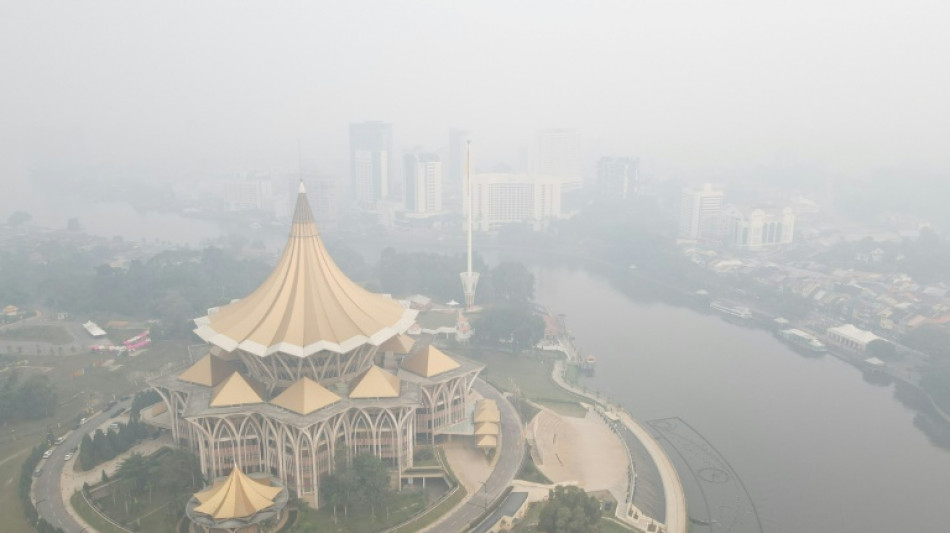
'Literally tasting the smoke': Malaysians suffer as haze worsens / Photo: © AFP

 Prague’s Concert for the Future Kicks Off on Wenceslas Square

 Prince William and Princess of Wales to Announce Earthshot Prize Winners in Mumbai

 Indonesia Forest Fires: Health Crisis, Diplomatic Strains and the Search for Solutions

 BYD Dolphin G Leasing Deal: Plug-in Hybrid Supermini Available from £174 a Month

 JUEL Group Expands from Real Estate to Hospitality with Hyatt Centric Malta Opening

 French Economy Shrinks 0.1% as Consumer Confidence Slumps

 Wall Street Ends Turbulent Week Higher Despite Inflation and AI Jitters

 Kansas City Fed Chief Says Inflation Is Still Running Too Hot

Air quality in Malaysia's Sarawak state deteriorated further on Tuesday as smoke from Indonesian forest fires drove up respiratory complaints and sent residents scrambling for protective masks.
Six districts in Sarawak, on Borneo, recorded hazardous Air Pollutant Index (API) readings, including the state capital, Kuching, where the API hit 407.
Under national guidelines, levels above 300 are classed as hazardous, while readings beyond 500 could prompt consideration of a local emergency.
Schools in Kuching shut two weeks ago, and the state has seen supplies of haze-rated masks dwindle.
Resident Ivana Mason, 37, said five pharmacies she visited had sold out of respirators designed to filter fine particles.
"The only ones available were standard medical masks, which aren't effective at protecting against fine haze particles," she told AFP.
Mason said the worsening air had also affected her health, causing a sore throat and aggravating her asthma.
"I've been sneezing non-stop, and my eyes are constantly watery," she said, adding that the haze had forced her to stop going to her usual non-air-conditioned gym and limit trips outside.
"If I do, I can literally taste the smoke in my mouth."
Local pharmacist Dawi Bakri, 31, said demand for masks had risen significantly since the haze worsened, making it difficult to maintain sufficient stocks.
"All types of masks have been selling faster than usual," he said.
Md Khairulanwar Asri, 33, an occupational therapist at Sarawak Heart Centre, warned that poor air could hit people with existing heart or respiratory conditions, as well as elderly patients with multiple ailments.
"People exposed to poor air quality could experience coughing, throat and eye irritation, and shortness of breath.
"These symptoms can also affect a person's endurance and ability to comfortably carry out daily activities, particularly activities that require physical exertion," Khairulanwar said.
Sarawak has been among the worst-affected areas in the latest haze episode, as smoke from Indonesian forest and land fires drifts across the border.
Malaysia's health ministry has reported rising cases of asthma and conjunctivitis nationwide as air quality worsens.
Sarawak authorities said cloud-seeding operations could begin as early as Thursday if the weather allows.
W.Lapointe--BTB