-
 Lula, Bolsonaro wrap up campaigns ahead of Brazil's knife-edge vote
-
Spain break down Czechs as England outclass Croatia in Nations League
-
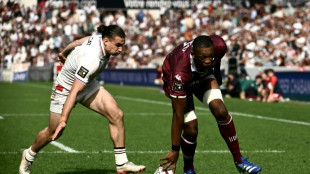
 Toulouse edge Castres in Top 14 derby
-
Yamal on target as Spain hold off Czech Republic

-
 Murakami homer propels White Sox to MLB playoff win over Guardians
-
Latvian exit polls suggest pro-European choice
-
 Israel targets top Hamas leader in deadly Gaza strike on anniversary
-
Lula, Bolsonaro wrap up campaigns ahead of knife-edge election

-
 Houthis say struck oil facility near Riyadh, as Saudis hit Sanaa
-
Tuchel hails 'complete' England after Croatia demolition
-
 AI needs safety layers like nuclear plants: ex-OpenAI engineer
-
Fury to invite Trump to lead ring walk before Joshua showdown
-
 MVP Judge will miss Yankees' MLB playoff series against Rays
-
Fashion industry in 'precarious moment', says Vivienne Westwood supremo

-
 New lizard species discovered in Peru
-
Seventh heaven for England in Nations League rout of Croatia

-
 Fernandes hails Portugal's 'greatest symbol' Ronaldo, calls for unity
-
Storms, flooding cause chaos on Greek holiday island of Crete
-
 Grandidier-Nkanang double takes Pau to Top 14 summit despite Vannes fightback
-
#IAmJaneDoe: online support campaign in US university rape case

-
 Trainer Scott gets perfect Arc boost with top notch double
-
Brazil shine on Selecao's first visit to India

-
 Ex-PM says Putin cannot admit 'mistake' over Ukraine
-
Zverev sets up Djokovic quarter-final at China Open, Rybakina out
-
 Houthis say Saudi Arabia launches dozens of strikes on Yemen capital
-
Happier at home, Bordeaux hammer Lyon in Top 14
-
 Qatar and Abu Dhabi F1 Grand Prix to go ahead - F1 boss
-
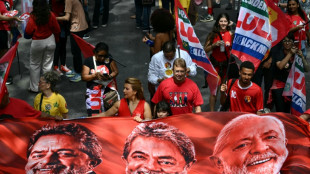
Lula, Bolsonaro in final push for votes ahead of knife-edge election
-
 South Korea lift gloom with smash-and-grab Games football gold
-
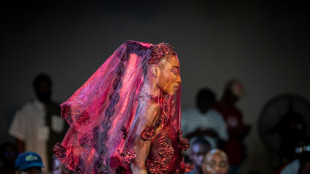
Boisterous fashion week barnstorms 'sleepy' Nigerian capital
-
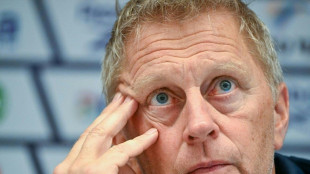 Ireland news conference before Israel game cut short amid tensions
-
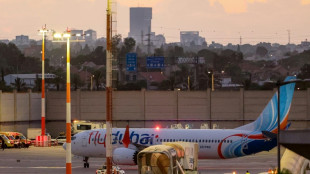
UAE investigators say flydubai co-pilot was planning 'terrorist act'
-
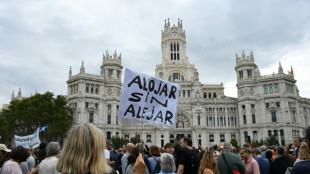 Protests over housing flare in Spain after relief measures rejected
-
Rahul smacks century in India v Windies ODI

-
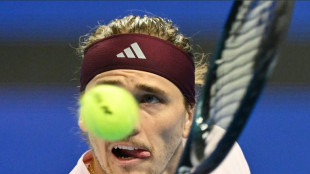 Zverev thrashes Shang to set up Djokovic quarter-final at China Open
-
Daryz seeks to join exclusive club of dual Arc winners

-
 Turkey football ref chief jailed pending trial for graft
-
Russia warns diplomats to leave Kyiv over new strikes threat
-
 North Korea says test of intermediate-range strategic missile included use of AI
-
Olympic champ Zheng rebukes rowdy home crowd at China Open
-
 Rampant Sayers leads Hong Kong to third men's rugby gold in a row
-
World No.1 Sinner pulls out of Shanghai Masters to delay return
-
 Ethiopia's Tigray rebels abandon regional capital as govt advances
-
Red Bull's Verstappen grabs pole position for Bahrain GP
-
 Bulgaria's Tsar Samuel returns 'home' after 1,000 years
-
India beat Pakistan in blockbuster as golfer Kim wins 'crazy' gold
-
 'Glad it's over': Kim powers to Games gold and military exemption
-
India beat arch-rivals Pakistan to win Asian Games cricket gold

-
 After 11 World Cups, football finally comes home for one Indian fan
-
Ethiopia's Tigray rebels abandon regional capital as govt advances: journalist
WHO seeks flexible funds from business via foundation
The World Health Organization is sourcing rapid response financing directly from companies to help tackle international crises, through the foundation it set up to bridge the shortfall from member states.
The WHO Foundation -- set up in May 2020 as the UN health agency scrambled for resources to fight the Covid-19 pandemic -- was created to marshal new resources from business and philanthropists.
The foundation, which went live in January 2021, aims to "mobilise more support for the WHO, from the public, from businesses, from philanthropists," its chief executive Anil Soni told AFP.
"No organisation, no sector can solve the challenges that the world is facing alone," the 46-year-old American said.
The WHO has a two-year budget of $5.8 billion but its financial independence has steadily declined.
Its 194 member states provide barely 16 percent of the organisation's financing through membership fees.
The rest comes from voluntary contributions, of which 88 percent are "specified", meaning the money goes to projects earmarked by the donors.
And with national budgets tightening around the world, governments "are having to make tough decisions about where they give their money", said Soni.
"That's why we should do more with the private sector."
- 'Matchmaker' -
The foundation says it exists because the WHO lacks sufficient resources to fulfil its mandate.
The list of health crises currently being combated by the WHO includes Covid-19, the cholera outbreak in Haiti, the war in Ukraine, the devastating floods in Pakistan, monkeypox and attempts to get aid into Ethiopia's besieged Tigray region.
The foundation has raised $30 million since the start of 2021 -- money which has mainly been focused on supporting the WHO's emergency response to Covid-19 and the war in Ukraine.
"Part of our job is to be a matchmaker, is to make sure that we can facilitate dialogue and share information," said Soni.
"So the WHO sees the benefit of working with the private sector, and the private sector sees the power of the WHO."
The foundation has around 40 staff compared to more than 8,600 for the WHO, which is also based in Geneva.
- Innovation investments -
Soni admits that some -- including within the WHO -- fear the risk of private companies holding too much sway over the organisation, which makes decisions on the usage and approval of drugs, vaccines and treatments.
He insisted mechanisms were in place to prevent any company from influencing such decisions.
"But to close the door to all of the private sector -- that doesn't work," he said.
On September 19, the WHO Foundation announced that it had partnered with venture capital firm OurCrowd to launch a $200 million investment fund focused on breakthrough health technologies.
OurCrowd will raise the money and a share of the profits will go to the WHO.
In addition, the companies in which the fund has invested will have to commit to ensuring fair access to their new technologies -- one of the WHO's chief gripes during the pandemic response, as poorer nations went to the back of the queue for Covid vaccines and treatments.
- Flexible friends -
On September 22, the foundation announced the launch of the Health Emergencies Alliance partnership -- a vehicle for companies and philanthropists who want to support the WHO in tackling health emergencies on a regular basis.
The partnership, which is in its infancy, hopes to get financing to the front line swiftly and effectively.
"What we wanted to do was engage companies and give them an ability to more quickly respond to emergencies and also raise more flexible funding for the WHO," said Soni.
The French laboratory pharmaceutical giant Sanofi was the first to sign up, he said, with discussions ongoing with other companies.
Those who join the programme will pay a set amount to the foundation each year, without the donation being earmarked for a particular situation.
And when a health emergency suddenly springs up, these companies will, within 24 hours, have the possibility of raising additional resources for the response, from their clients, employees and the company itself, capitalising while the emotion on breaking disasters is still strong.
M.Furrer--BTB