
-
 Lula, Bolsonaro wrap up campaigns ahead of Brazil's knife-edge vote
-
Spain break down Czechs as England outclass Croatia in Nations League

-
 Toulouse edge Castres in Top 14 derby
-
Yamal on target as Spain hold off Czech Republic

-
 Murakami homer propels White Sox to MLB playoff win over Guardians
-
Latvian exit polls suggest pro-European choice

-
 Israel targets top Hamas leader in deadly Gaza strike on anniversary
-
Lula, Bolsonaro wrap up campaigns ahead of knife-edge election

-
 Houthis say struck oil facility near Riyadh, as Saudis hit Sanaa
-
Tuchel hails 'complete' England after Croatia demolition

-
 AI needs safety layers like nuclear plants: ex-OpenAI engineer
-
Fury to invite Trump to lead ring walk before Joshua showdown

-
 MVP Judge will miss Yankees' MLB playoff series against Rays
-
Fashion industry in 'precarious moment', says Vivienne Westwood supremo

-
 New lizard species discovered in Peru
-
Seventh heaven for England in Nations League rout of Croatia

-
 Fernandes hails Portugal's 'greatest symbol' Ronaldo, calls for unity
-
Storms, flooding cause chaos on Greek holiday island of Crete
-
 Grandidier-Nkanang double takes Pau to Top 14 summit despite Vannes fightback
-
#IAmJaneDoe: online support campaign in US university rape case

-
 Trainer Scott gets perfect Arc boost with top notch double
-
Brazil shine on Selecao's first visit to India

-
 Ex-PM says Putin cannot admit 'mistake' over Ukraine
-
Zverev sets up Djokovic quarter-final at China Open, Rybakina out

-
 Houthis say Saudi Arabia launches dozens of strikes on Yemen capital
-
Happier at home, Bordeaux hammer Lyon in Top 14

-
 Qatar and Abu Dhabi F1 Grand Prix to go ahead - F1 boss
-
Lula, Bolsonaro in final push for votes ahead of knife-edge election

-
 South Korea lift gloom with smash-and-grab Games football gold
-
Boisterous fashion week barnstorms 'sleepy' Nigerian capital

-
 Ireland news conference before Israel game cut short amid tensions
-
UAE investigators say flydubai co-pilot was planning 'terrorist act'
-
 Protests over housing flare in Spain after relief measures rejected
-
Rahul smacks century in India v Windies ODI

-
 Zverev thrashes Shang to set up Djokovic quarter-final at China Open
-
Daryz seeks to join exclusive club of dual Arc winners

-
 Turkey football ref chief jailed pending trial for graft
-
Russia warns diplomats to leave Kyiv over new strikes threat
-
 North Korea says test of intermediate-range strategic missile included use of AI
-
Olympic champ Zheng rebukes rowdy home crowd at China Open

-
 Rampant Sayers leads Hong Kong to third men's rugby gold in a row
-
World No.1 Sinner pulls out of Shanghai Masters to delay return

-
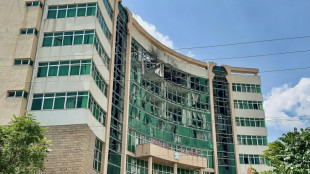 Ethiopia's Tigray rebels abandon regional capital as govt advances
-
Red Bull's Verstappen grabs pole position for Bahrain GP

-
 Bulgaria's Tsar Samuel returns 'home' after 1,000 years
-
India beat Pakistan in blockbuster as golfer Kim wins 'crazy' gold

-
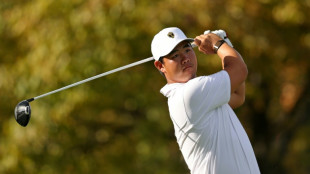 'Glad it's over': Kim powers to Games gold and military exemption
-
India beat arch-rivals Pakistan to win Asian Games cricket gold

-
 After 11 World Cups, football finally comes home for one Indian fan
-
Ethiopia's Tigray rebels abandon regional capital as govt advances: journalist
Clock ticking to avert 'genocide' in Tigray: WHO chief
The World Health Organization chief said Wednesday time was running out to avoid "genocide" in Ethiopia's war-torn Tigray, as Human Rights Watch called for sanctions against Addis Ababa to avert civilian deaths.
"The world is not paying enough attention," Tedros Adhanom Ghebreyesus told reporters from WHO headquarters in Geneva. "There is a very narrow window now to prevent genocide in Tigray."
With the conflict nearing its second anniversary, Addis Ababa on Tuesday said it had captured three towns in Tigray, including Shire, which had a pre-war population of 100,000.
The conflict began on November 4, 2020, when Ethiopian Prime Minister Abiy Ahmed sent troops into Tigray after accusing the region's ruling Tigray People's Liberation Front (TPLF) of attacking federal army camps.
His campaign has received the support of Eritrea, with which Ethiopia was at odds until a rapprochement that earned Abiy the 2019 Nobel Peace Prize.
A truce between pro-government forces and rebels this year lasted five months before it collapsed in August.
International concern is now swelling for those caught in the crossfire. The UN this week warned the situation was spiralling out of control and inflicting an "utterly staggering" toll on civilians.
- Sanctions call -
Tedros, who himself is from the northern region and has repeatedly condemned the situation there, said he was "running out of diplomatic language for the deliberate targeting" of civilians in Tigray.
"The social fabric is being ripped apart and civilians are paying a horrific price," he said.
"Hostilities in Tigray must end now, including the immediate withdrawal and disengagement of Eritrean armed forces from Ethiopia."
"Indiscriminate attacks or attacks that deliberately target civilians or civilian objects amount to war crimes," he said.
Separately, Human Rights Watch (HRW) called for the United States, European Union and UN to apply "targeted sanctions and an arms embargo" against Ethiopia to help protect civilian lives.
"The suffering of civilians in Ethiopia should no longer be tolerated in the name of political expediency," HRW's director for the Horn of Africa, Laetitia Bader, said.
"The attacks have resulted in untold civilian casualties, including aid workers delivering food, property destruction, and large-scale displacement," she said.
Over two years, many civilians have been killed, an estimated two million people driven from their homes while millions more are in need of aid, according to UN figures.
The advance of Ethiopian and Eritrean forces through Tigray in late 2020 and early 2021 was followed by mass murder, rape and other crimes documented by UN investigators and rights groups.
- 'Weapons of war' -
Tedros said the six million people of Tigray had been "kept under siege for almost two years".
"Banking, food, electricity and healthcare are being used as weapons of war," he said.
"Even people who have money are starving because they can't access their bank for two years," he said. "Children are dying every day from malnutrition."
Tedros acknowledged that he was personally affected by the situation in Tigray.
"Most of my relatives are in the most affected areas," he said, but insisted that "my job is to draw the world's attention to crises that threaten the health of people wherever they are."
D.Schneider--BTB



