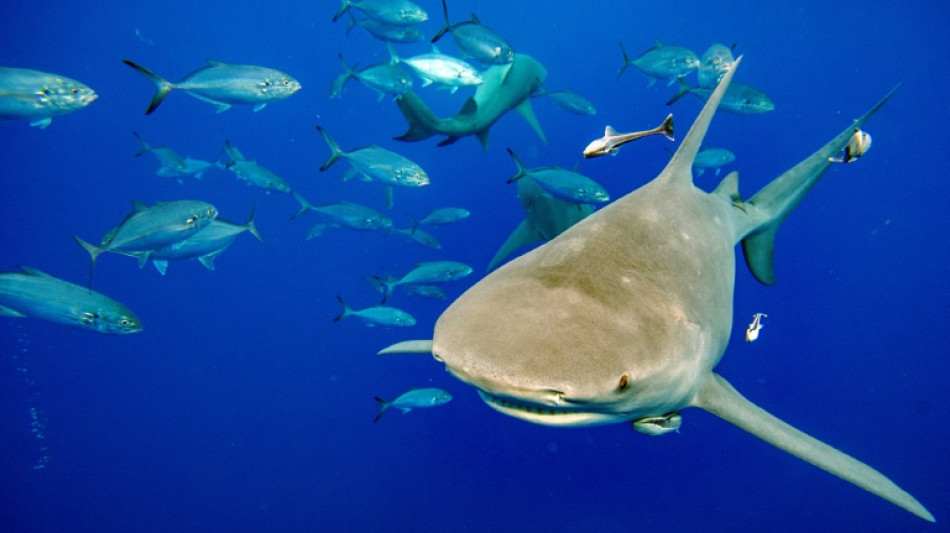
Five key decisions at global wildlife summit / Photo: © AFP/File

 Swiss vote on what it means to be neutral

 Pope to meet with victims of clerical sex abuse during France trip

 Iran stands firm on Hormuz plan after US rejection
 Madrid protest camp grows after eviction outrage

 Italy winemakers hail bumper harvest but cut output

 Kyiv shoppers feel the pinch from Russian strikes

 Japanese anime actor fights TikTok over AI voice cloning
 Curtain falls on the romance of India's single-screen cinemas

 Smells like teen spirit as US thrash Peru 4-1

 Cavy chaos: Hundreds attend New Zealand's biggest guinea pig show

 Venezuela releases more political prisoners after opposition talks

 England's best 'for a long time' despite Spain defeat, says Kane

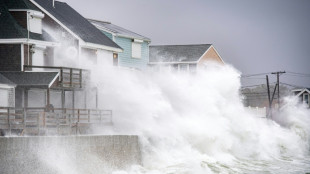 Powerful storm pummels northeast US with rain, high winds

 Filmmaker Mike Leigh wins top prize at Spain festival with 'last film'

 Spain beat England in Nations League to extend unbeaten run

 Ireland squad vote to play Israel tie despite Gaza unease

 Gutsy Vollering wins cycling road race world title

 Vollering wins cycling road race world title

 Man City's meteoric rise clouded by dark shadow

 Mbappe out for two weeks or more with knee injury say Real

 Lyon collapse away to Stade and suffer first Top 14 loss

 Russia accuses Europe of seeking to thwart Ukraine talks

 Man City chairman defiant over reported Premier League charges

 Germany ready to 'walk through fire' for Klopp, says Tah

 At least 16 killed in Russian and Ukrainian strikes

A global wildlife summit that ends Friday passed resolutions to protect hundreds of threatened species, including sharks, reptiles, turtles as well as trees.
Here are some highlights of the two-week meeting of the Convention on International Trade in Endangered Species (CITES) in Panama.
1) Sharks steal the show
No longer just the villains of the deep, these ancient predators were the stars of the summit.
Delegates from more than 180 countries agreed to regulate the trade in 54 species of the requiem shark and hammerhead shark families.
These species are the most hunted for their shark fins -- seen as a delicacy in some Asian countries -- and their numbers have been decimated, putting the entire marine ecosystem at risk.
Only Japan grumbled over the resolution, arguing restrictions on the trade of the blue shark would be a blow to the livelihoods of its fishermen.
CITES also voted to restrict the trade of guitarfish rays and several other freshwater ray species.
2) See-through glass frogs
The skin of these nocturnal amphibians can be lime green or so translucent their organs are visible through their skin.
This has made them sought-after pets, and intense trafficking has placed the species in critical danger.
CITES also placed more than 160 species of glass frog, found in several rainforests in Central and South America, on its Appendix II, which places trade restrictions on threatened species.
The European Union and Canada withdrew early reservations about the resolution, which was adopted unanimously.
3) Weird and wonderful turtles
CITES approved varying levels of protection for around 20 turtle species from America and Asia.
These include the striking matamata turtles, with their prehistoric, beetle-like appearance, which have also become sought-after pets and are hunted for their meat and eggs.
They live in the Amazon and Orinoco basins, but scientists do not know how many there are.
Freshwater turtles are among the most-trafficked species in the world.
The unusual-looking North American Alligator Snapping Turtle was also granted trade protection.
4) Crocodile bans lifted
Brazil and the Philippines now will be able to export farm-raised crocodiles, after a total trade ban was lifted.
Delegates also allowed the export of skin and meat of the broad-snouted caiman -- found in the wild in the Brazilian Amazon and Pantanal as well as wetlands, rivers, and lakes of neighboring countries.
"The population of these animals is very big. There has been a great reproductive success," said researcher Miryam Venegas-Anaya, a crocodile expert with the University of Panama.
In the Philippines, a trade restriction was lifted on the saltwater crocodile that lives mainly on the islands of Mindanao and Palawan.
However, Thailand's efforts to lift a ban on its Siamese crocodile was rejected.
5) Ivory ban stays, no luck for hippos
Zimbabwe and its southern African neighbors have seen their elephant populations soar in recent years, and pushed a drive to re-open the ivory trade which has been banned since 1989.
One-off sales were allowed in 1999 and 2008 despite fierce opposition.
However, in the rest of the continent poaching for ivory is still decimating elephant populations and the request was rejected.
Delegates also rejected a request by Botswana, Namibia and Eswatini (formerly Swaziland), to allow the sale of southern white rhino horn.
Meanwhile, after a fierce debate, a request by ten west African nations to ban the trade in hippopotamus, was rejected by delegates.
Illegal trade in the surly semi-aquatic mammal -- for its meat, ivory tusks, teeth, and skull -- rose after elephant ivory was banned.
A.Gasser--BTB