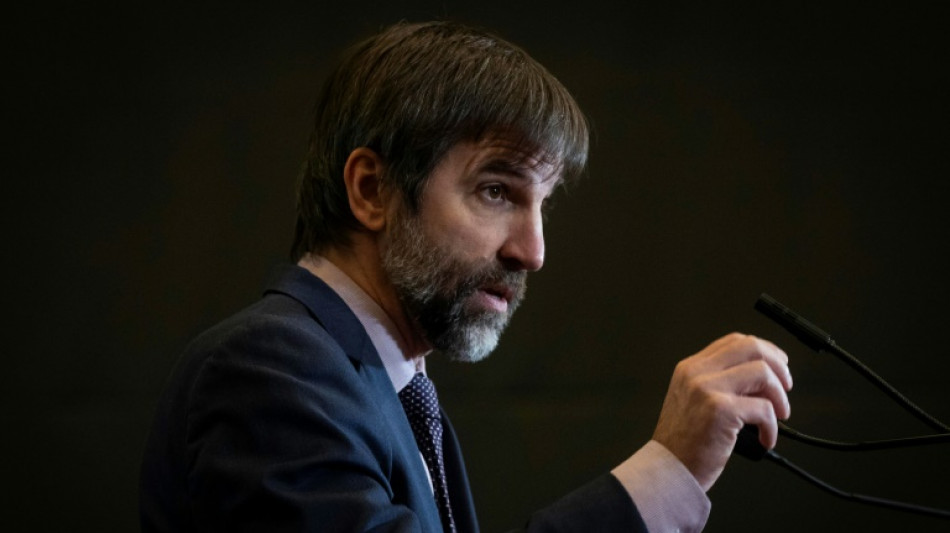
Canada increases biodiversity funding in crunch UN talks / Photo: © AFP

 How young is too young as child prodigies win big at Asian Games

 UK Labour party meets buoyed by Burnham but eager for concrete plans

 Thousands protest ahead of Mexican president's report on missing students
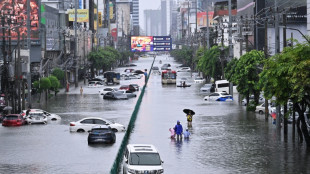 Bangkok floods force thousands into shelters

 AI startup urges optimism from Europe despite safety fears

 'Godlike, invincible': Japan hails 11-year-old Games history-maker

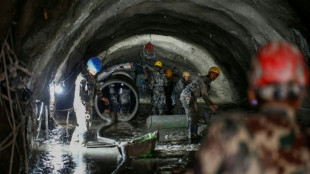 Nepal's hydropower ambitions face climate reality check

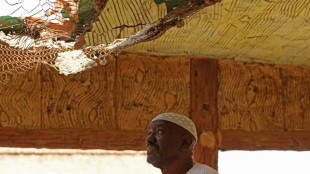 Power cuts, rubble: millions come home to find Sudan's capital unlivable

 Internationals keep Presidents Cup lead with late fightbacks

 Tuchel to 'keep pushing' England to reach Spain's level

 Alcaraz saves match points to keep Europe ahead in Laver Cup
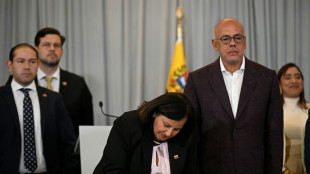
 Spain success driven by hunger to improve, says De La Fuente

 Lyon collapse at Stade Francais to suffer first Top 14 loss
 Oyarzabal and Spain sink England again as Modric shines for Croatia

 Housing protesters camp in central Madrid after mass demonstration

 Louise Trotter expands her palette at Bottega Veneta

 Pope prays at Lourdes after huge Paris mass

 USA trims International lead after Presidents Cup four-balls

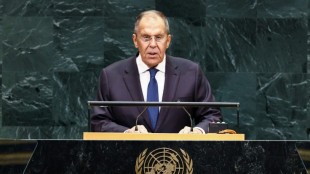 Russia accuses Europe of blocking Ukraine talks, as strikes drag on

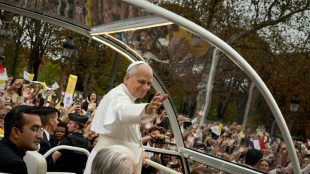 'He said hello': Families pray with pope on Paris avenue

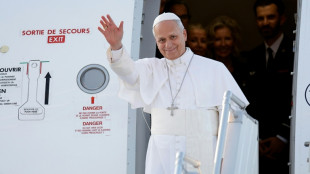 Pope celebrates giant Paris mass, flies to Lourdes

 Thousands march in Madrid over eviction of 87-year-old woman
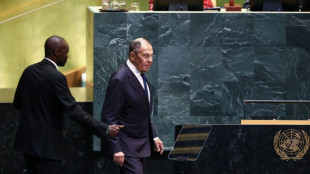
 England women back to winning ways with last-gasp defeat of New Zealand

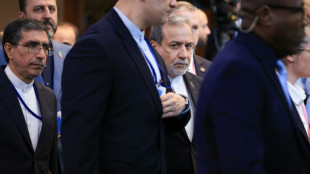 Trump rejects Iran proposal for deal to reopen Hormuz

 England's Cox says injured Buttler leaves 'big shoes to fill'
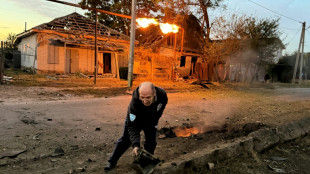
Canada said Friday it was ramping up its international biodiversity funding, an overture to developing countries during difficult UN talks aimed at sealing a "peace pact with nature."
Environment minister Steven Guilbeault announced an increase of 255 million Canadian dollars (US$186 million) in the aid it will send to lower income countries to help them protect their ecosystems, bringing the total figure to 1.5 billion Canadian dollars annually.
It comes as the world's environment ministers have converged on Montreal for the final phase of the summit, called COP15.
The talks' success hinges on an agreement regarding the mobilization of funds to help developing countries meet the draft agreement's more than 20 targets, including protecting 30 percent of lands and oceans by 2030.
Brazil -- one of the most prominent voices at the summit -- is seeking at least $100 billion from the Global North, a demand shared by India, Indonesia and African countries.
That is about ten times more than current flows, and about as much as has been pledged for adaptation against climate change (though not delivered).
When the ministers arrived on Thursday, a dozen developed countries touted new or recently increased commitments to biodiversity funding, in a move welcomed by observers and nonprofits.
The ambition remains to seal an agreement for biodiversity that is as historic as the Paris accord for climate was in 2015.
At stake is the future of the planet and whether humanity can roll back habitat destruction, pollution and the climate crisis, which are threatening an estimated million plant and animal species with extinction.
Beyond the moral implications, there is the question of self-interest: $44 trillion of economic value generation -- more than half the world's total GDP -- is dependent on nature and its services.
J.Fankhauser--BTB


