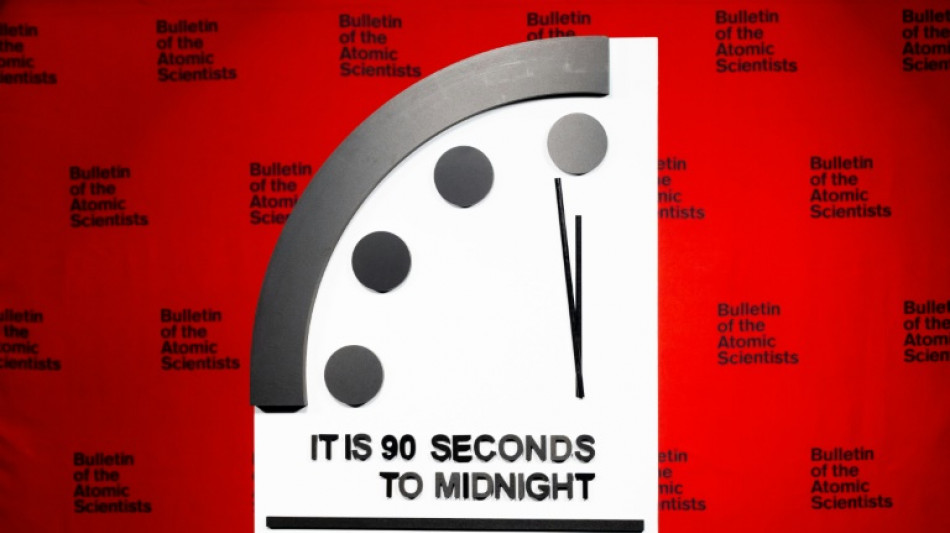
'Doomsday Clock' moves closest ever to midnight / Photo: © Hastings Group Media/AFP

 Alex Bodi and Prof. Dr Dieter Lazik sign a contract for ALPHA WHEY and BODI Energy Drink
 Swiss reject plan to toughen neutrality: projection

 UK police call in bomb disposal team near air force base

 Bangkok floods send thousands into shelters after days of rain

 Assefa just misses women's world record at Berlin Marathon

 Dramatic winners Zimbabwe to end five-year exile by tackling DR Congo

 Pope to meet victims of clerical sex abuse on France trip

 How young is too young as child prodigies win big at Asian Games

 UK Labour party meets buoyed by Burnham but eager for concrete plans
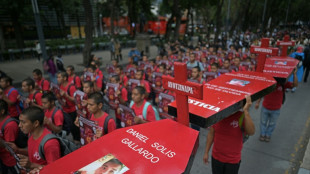 Thousands protest ahead of Mexican president's report on missing students
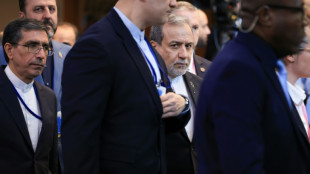
 Bangkok floods force thousands into shelters
 AI startup urges optimism from Europe despite safety fears

 'Godlike, invincible': Japan hails 11-year-old Games history-maker

 Nepal's hydropower ambitions face climate reality check

 Power cuts, rubble: millions come home to find Sudan's capital unlivable

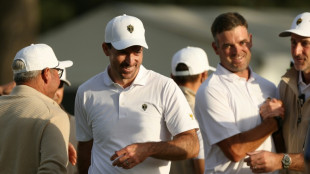 Internationals keep Presidents Cup lead with late fightbacks

 Tuchel to 'keep pushing' England to reach Spain's level

 Alcaraz saves match points to keep Europe ahead in Laver Cup
 Spain success driven by hunger to improve, says De La Fuente
 Lyon collapse at Stade Francais to suffer first Top 14 loss
 Oyarzabal and Spain sink England again as Modric shines for Croatia
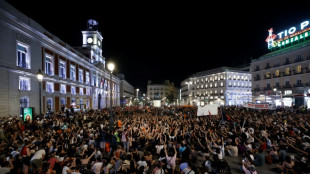
 Housing protesters camp in central Madrid after mass demonstration

 Louise Trotter expands her palette at Bottega Veneta
 Pope prays at Lourdes after huge Paris mass

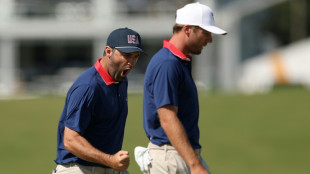 USA trims International lead after Presidents Cup four-balls

The "Doomsday Clock" symbolizing the perils to humanity moved Tuesday to its closest ever to midnight amid the Ukraine war, nuclear tensions and the climate crisis.
The Bulletin of the Atomic Scientists, which describes the clock as a "metaphor for how close humanity is to self-annihilation," edged its hands from 100 seconds to midnight to 90 seconds to midnight.
A decision to reset the hands of the symbolic timepiece is taken each year by the Bulletin's science and security board and its board of sponsors, which includes 10 Nobel laureates.
The hands of the clock moved to 100 seconds to midnight in January 2020 -- the closest to midnight it had been in its history -- and remained there for the next two years.
In a statement, the Bulletin said it was advancing the hands of the clock by 10 seconds this year "due largely but not exclusively to Russia's invasion of Ukraine and the increased risk of nuclear escalation."
"Russia's thinly veiled threats to use nuclear weapons remind the world that escalation of the conflict -- by accident, intention, or miscalculation -- is a terrible risk," it said. "The possibility that the conflict could spin out of anyone's control remains high."
The Bulletin said the new clock time "was also influenced by continuing threats posed by the climate crisis and the breakdown of global norms and institutions needed to mitigate risks associated with advancing technologies and biological threats such as Covid-19."
"We are living in a time of unprecedented danger, and the Doomsday Clock time reflects that reality," said Rachel Bronson, president and CEO of the Bulletin of the Atomic Scientists.
"90 seconds to midnight is the closest the clock has ever been set to midnight, and it's a decision our experts do not take lightly," Bronson said.
"The US government, its NATO allies and Ukraine have a multitude of channels for dialogue," she said. "We urge leaders to explore all of them to their fullest ability to turn back the clock."
Former UN secretary-general Ban Ki-moon also called for world leaders to take action in a world that has become more dangerous because of Covid-19, extreme weather events and "Russia's outrageous war on Ukraine."
"Leaders did not heed the Doomsday Clock’s warnings in 2020," Ban said. "We all continue to pay the price. In 2023 it is vital for all our sakes that they act."
The clock was originally set at seven minutes to midnight.
The furthest from midnight it has ever been is 17 minutes, following the end of the Cold War in 1991.
The Bulletin was founded in 1945 by Albert Einstein, J. Robert Oppenheimer and other scientists who worked on the Manhattan Project which produced the first nuclear weapons.
The idea of the clock symbolizing global vulnerability to catastrophe followed in 1947.
C.Kovalenko--BTB


