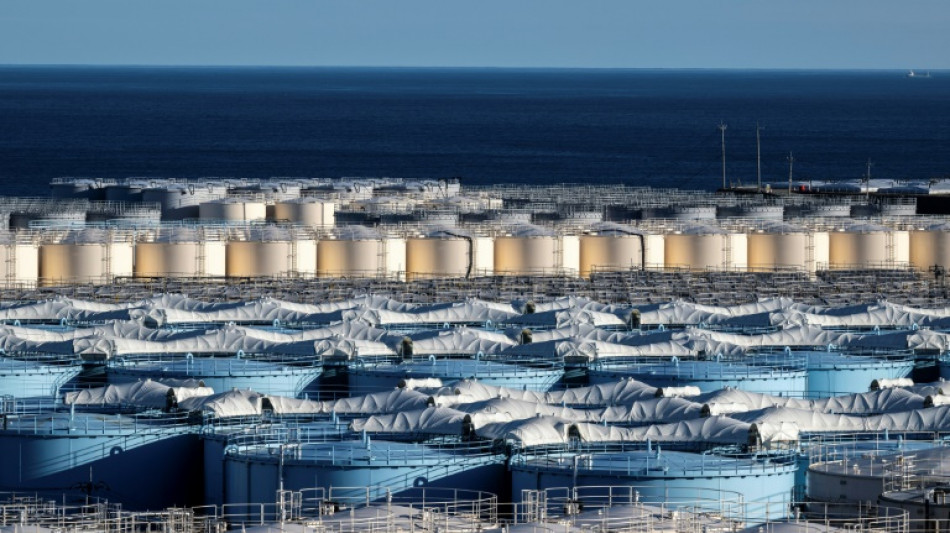
The controversial plan to release Fukushima plant's wastewater / Photo: © AFP/File

 Alex Bodi and Prof. Dr Dieter Lazik sign a contract for ALPHA WHEY and BODI Energy Drink

 Swiss reject plan to toughen neutrality: projection

 UK police call in bomb disposal team near air force base

 Bangkok floods send thousands into shelters after days of rain

 Assefa just misses women's world record at Berlin Marathon
 Dramatic winners Zimbabwe to end five-year exile by tackling DR Congo

 Pope to meet victims of clerical sex abuse on France trip

 How young is too young as child prodigies win big at Asian Games
 UK Labour party meets buoyed by Burnham but eager for concrete plans
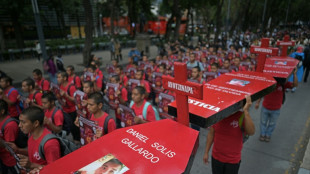 Thousands protest ahead of Mexican president's report on missing students

 Bangkok floods force thousands into shelters

 AI startup urges optimism from Europe despite safety fears

 'Godlike, invincible': Japan hails 11-year-old Games history-maker

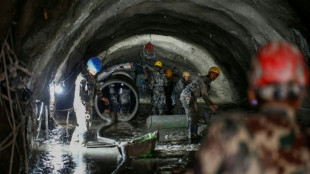 Nepal's hydropower ambitions face climate reality check

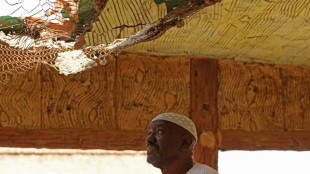 Power cuts, rubble: millions come home to find Sudan's capital unlivable

 Internationals keep Presidents Cup lead with late fightbacks

 Tuchel to 'keep pushing' England to reach Spain's level

 Alcaraz saves match points to keep Europe ahead in Laver Cup
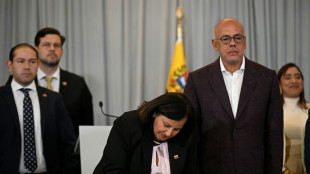
 Spain success driven by hunger to improve, says De La Fuente

 Lyon collapse at Stade Francais to suffer first Top 14 loss
 Oyarzabal and Spain sink England again as Modric shines for Croatia
 Housing protesters camp in central Madrid after mass demonstration

 Louise Trotter expands her palette at Bottega Veneta

 Pope prays at Lourdes after huge Paris mass

 USA trims International lead after Presidents Cup four-balls

Twelve years after a nuclear catastrophe triggered by a massive earthquake and tsunami, workers at the Fukushima Daiichi plant in northeast Japan are preparing to release treated wastewater into the sea.
Operator TEPCO says the water has been filtered to remove most radioactive elements, and calls the release both safe and necessary, but there has been domestic and international opposition.
- Why does the water need to be released? -
The site produces 100,000 litres (3,500 cubic feet) of contaminated water daily. It is a combination of groundwater, rainwater that seeps into the area, and water used for cooling.
The water is filtered to remove most radionuclides, and more than 1.32 million tonnes of treated water was being stored at the site as of February.
That accounts for 96 percent of storage capacity, so TEPCO is keen to start releasing the water soon.
Under a plan approved by the central government, the process is expected to begin this spring or summer.
- Is it safe? -
TEPCO says several filtering systems, including in its ALPS facility, remove most of the 62 radioactive elements in the water, including caesium and strontium, but tritium remains.
Experts say tritium is only harmful to humans in large doses, and TEPCO plans to dilute the water to reduce radioactivity levels to 1,500 becquerels per litre, far below the national safety standard of 60,000 becquerels per litre.
The International Atomic Energy Agency (IAEA) has said the release meets international standards and "will not cause any harm to the environment".
Neighbouring countries, including China and South Korea, along with activist groups such as Greenpeace and some local residents are strongly opposed to the release.
Local fishermen fear the release would once again make consumers wary of buying their catch.
"We have suffered reputational damage since the disaster, and we will go through that all over again, starting from zero," fisherman Masahiro Ishibashi, 43, told AFP.
- How will the water be released? -
The operator is constructing more filtering facilities on the shore and a kilometre-long (0.6-mile) underwater pipe to release treated water over several decades.
"We don't plan to release the water all in one go, it will be a maximum of 500 tonnes a day of the total 1.37 million tonnes of ALPS-treated water," TEPCO official Kenichi Takahara told AFP.
"It will take 30 to 40 years, the time required for decommissioning the plant."
The operator will cap the amount of radioactivity from tritium discharged at 22 trillion becquerels per year, the national annual standard for wastewater releases before the accident.
- What has the reaction been? -
Japanese diplomats have been briefing nearby countries on the plan, and TEPCO is meeting local residents in a bid to win support.
Their latest project involves keeping fish in the treated water.
"Fish kept in the ALPS-treated water... do ingest tritium, to some extent. But once the animal is transferred to normal seawater, the level of tritium in the fish quickly lowers," said Kazuo Yamanaka, in charge of the trials.
He keeps hundreds of flatfish and other sea creatures in several tanks at the plant, half with ordinary seawater and the other in treated wastewater, diluted to around the same level as the liquid that will be discharged.
He runs a live stream of the fish on YouTube, and plans to expand the trials to seaweed.
"When we spoke with local residents, they said they wanted to see fish living healthily in the ALPS-treated water," he said.
"They said they would feel more reassured when they saw it, rather than just seeing data and numbers."
It remains unclear if TEPCO's efforts can win over fishing communities that are still struggling to recover from the disaster.
"I don't think the fisheries of Fukushima will truly recover until the day the nuclear plant shuts down," Ishibashi said.
N.Fournier--BTB


