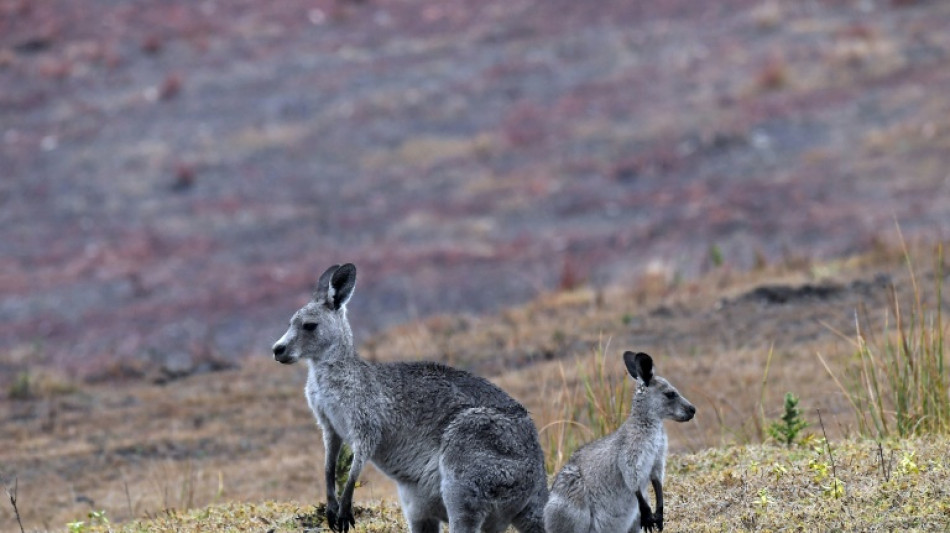
Australia told to shoot kangaroos before they starve / Photo: © AFP

 Russian strikes on Ukraine kill 8

 Bavuma, Miller hit centuries as South Africa clinch series
 Spain bring in Le Normand for injured Garcia

 UK Labour party meets buoyed by Burnham but seeking concrete plans

 Nor'easter lashes US east with punishing rain and wind
 UK police arrest five on suspicion of preparing 'terrorist act' near air base

 Washington denounces Iran's truce proposal as 'cynical'

 Armani sprinkles glitter on discreet elegance at Milan show

 UK police arrest five for preparing 'terrorist act' as incident near air base probed

 อเล็กซ์ โบดี และศาสตราจารย์ ดร. ดีเทอร์ ลาซิก ลงนามสัญญาสำหรับ ALPHA WHEY และ BODI เครื่องดื่มให้พลังงาน

 China teen blows away the field for record-setting gold at 'sad' Games

 Alex Bodi och prof. dr. Dieter Lazik tecknar avtal om ALPHA WHEY och BODI Energidryck

 Alex Bodi i prof. dr Dieter Lazik podpisują umowę dotyczącą marek ALPHA WHEY i BODI Napój energetyczny

 Ο Alex Bodi και ο καθηγητής Δρ. Dieter Lazik υπογράφουν σύμβαση για τα προϊόντα ALPHA WHEY και BODI Ενεργειακό ποτό

 アレックス・ボディ氏とディーター・ラジク教授が「ALPHA WHEY」および「BODI エナジードリンク」に関する契約を締結

 Housing protesters dig in for long stay in Madrid square

 Alex Bodi și prof. dr. Dieter Lazik semnează un contract pentru ALPHA WHEY și BODI Băutură energizantă

 Former Stoke boss Pulis 'cheated' over FA Cup final loss to Man City

 Czech Republic beat Ukraine to win BJK Cup

 Isak returns to Liverpool after injury scare

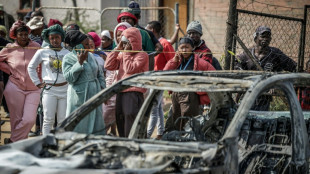 Gunmen kill 27 in two shootings in South Africa

 Spain PM vows action as housing protest sparked by eviction grows

 Fernandez downs Gibson to claim Singapore Open crown

 Three talking points from the Azerbaijan Grand Prix
 Turkey ex-minister resigns as investment fund crisis grows

Australia's kangaroos could die in "catastrophic" numbers if a population boom is left unchecked, ecologists have warned, while backing the industrial-scale culling of the marsupials.
To outsiders, the kangaroo is an instantly-recognisable symbol of the Australian wilderness, but within the country the native animal poses a major environmental headache.
Kangaroos have a "boom and bust" population cycle -- when fodder is plentiful on the back of a good wet season their numbers can balloon by tens of millions.
Hopping mobs of kangaroos can rapidly strip paddocks bare, but ecologist Katherine Moseby warned they would starve to death in droves when food ran out.
"The last drought we estimated that 80 or 90 percent of the kangaroos in some areas died," she told AFP.
"They are starving to death -- going into public toilets and eating toilet paper, or lying on the road starving while their joeys are trying to feed," she added, referring to events from the last population boom.
Moseby said the kindest way to save kangaroos from this fate was to shoot them, and harvest the meat, as a way of keeping numbers in check.
"It keeps the numbers down so that when we do get drought we don't get these welfare issues," she said.
"If we saw them as a resource and managed them like that, we wouldn't get the catastrophic deaths that we see."
Kangaroos are protected in Australia but the most common species are not endangered -- this means they can be shot and killed in most jurisdictions, but government permission is needed.
Each year, as many as five million kangaroos are shot as part of a homegrown industry, which harvests their carcasses for meat, pet food and leather.
Dennis King from the Kangaroo Industry Association of Australia believes the country is on the cusp of another kangaroo boom.
"After three years of La Nina right down the east coast, we've seen the perfect growth scenario for kangaroos over the next couple of years," he told AFP.
"The breeding cycle really speeds up."
King said the national kangaroo population fell under 30 million following a crippling drought in the early 2000s, but could soon rebound to as many as 60 million.
- 'Cruel slaughter' -
Animal rights activists have denounced the commercial cull as a "cruel slaughter", pressuring global sportswear giants such as Nike and Puma to phase out the use of kangaroo leather.
"Nike divested of its only kangaroo leather supplier in 2021 and will stop making any product with kangaroo leather in 2023," a spokeswoman for the company said in March.
Politicians in Oregon, where Nike was founded, introduced a bill earlier this year that would outlaw the use of "any part of a dead kangaroo".
"These native animals are slaughtered for the sake of commercial profit," Animals Australia said earlier this year.
George Wilson, a leading researcher on kangaroo management, said attempts to shut down the industry were well-intentioned but ultimately misguided.
"They say it's unethical, but it's unethical to let them starve to death," he told AFP.
"The cruelty is not doing anything about it."
Moseby agreed, saying ending the culling of kangaroos would actually be more cruel in the long run.
"Trying to stop the harvest of leather or meat, it's not going to have any welfare benefit," she said.
"It's going to make it worse."
C.Kovalenko--BTB



