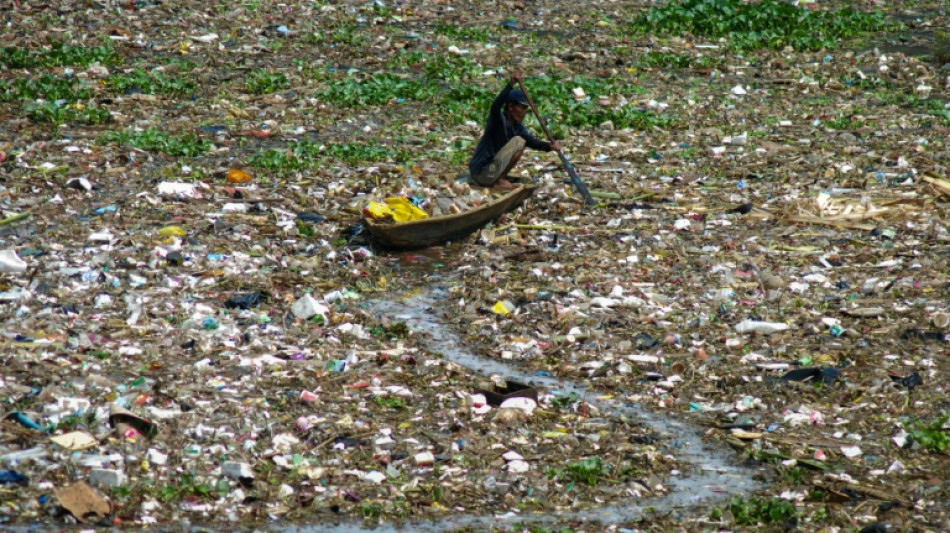
'We abuse plastic, it's so cheap': UN Environment chief / Photo: © AFP/File

 American McNulty wins shock road race world title

 Serbia's President Aleksandar Vucic announces resignation

 Tuchel urges Bellingham to play with 'rage'

 Russian strikes on Ukraine kill 8

 Bavuma, Miller hit centuries as South Africa clinch series

 Spain bring in Le Normand for injured Garcia

 UK Labour party meets buoyed by Burnham but seeking concrete plans

 Nor'easter lashes US east with punishing rain and wind

 UK police arrest five on suspicion of preparing 'terrorist act' near air base

 Washington denounces Iran's truce proposal as 'cynical'

 Armani sprinkles glitter on discreet elegance at Milan show

 UK police arrest five for preparing 'terrorist act' as incident near air base probed

 อเล็กซ์ โบดี และศาสตราจารย์ ดร. ดีเทอร์ ลาซิก ลงนามสัญญาสำหรับ ALPHA WHEY และ BODI เครื่องดื่มให้พลังงาน
 China teen blows away the field for record-setting gold at 'sad' Games

 Alex Bodi och prof. dr. Dieter Lazik tecknar avtal om ALPHA WHEY och BODI Energidryck

 Alex Bodi i prof. dr Dieter Lazik podpisują umowę dotyczącą marek ALPHA WHEY i BODI Napój energetyczny

 Ο Alex Bodi και ο καθηγητής Δρ. Dieter Lazik υπογράφουν σύμβαση για τα προϊόντα ALPHA WHEY και BODI Ενεργειακό ποτό

 アレックス・ボディ氏とディーター・ラジク教授が「ALPHA WHEY」および「BODI エナジードリンク」に関する契約を締結

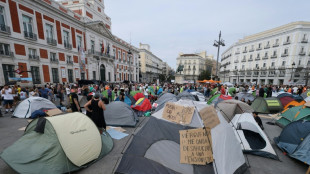 Housing protesters dig in for long stay in Madrid square

 Alex Bodi și prof. dr. Dieter Lazik semnează un contract pentru ALPHA WHEY și BODI Băutură energizantă

 Former Stoke boss Pulis 'cheated' over FA Cup final loss to Man City

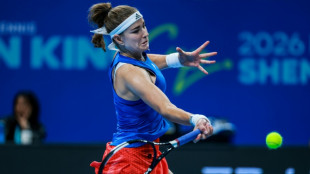 Czech Republic beat Ukraine to win BJK Cup

 Isak returns to Liverpool after injury scare

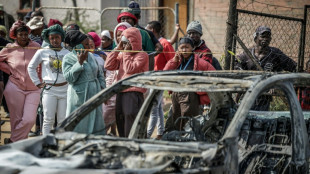 Gunmen kill 27 in two shootings in South Africa

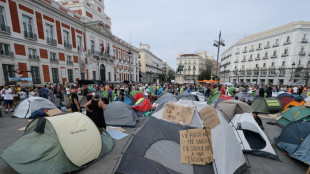 Spain PM vows action as housing protest sparked by eviction grows

Humanity uses and abuses hundreds of millions of tonnes of plastic a year because "it's so cheap", despite the huge cost of the pollution it creates, the head of the UN Environment Programme told AFP.
Inger Andersen, an economist by training, told AFP she that a binding, "ambitious" global treaty would help fix the problem, ahead of the second round of UN-led negotiations that diplomats from 175 nations aim to conclude next year.
The interview has been edited for concision and clarity.
Q: What are the main obstacles to an ambitious treaty?
A: Today, virgin raw polymer is cheaper than recycled polymer. So here's the question: What will allow us move from that linear 'we take it, we make it, we waste it' reality to a circular approach? Right now, it's so inexpensive you can just throw plastic away. But the cost to the environment and human health is huge, and it is not taxed anywhere.
Q: Less than 10% of plastic is recycled today -- is that a credible solution?
A: We can't recycle our way out of this mess. But recycling is one of the many keys that we will need to make this work. Today, we simply throw plastic away because it has no value.
When I was a little girl growing up in Denmark with very limited pocket money, my brothers and I collected plastic bottles every Saturday because we could get two krone. It wasn't much, but it made it worthwhile. Now imagine the day that this stuff has value -- we would think about and treat that garbage very differently!
Q: What changes in attitude or mentality do you think we need to see?
A: Awareness is step one. Which is not to say the burden falls entirely on consumers -- at the end of the day, it's business and governments that have to take that responsibility.
But every consumer has a choice. Let's say we have a party. Do we need single-use cups and plastic bags? If that bag I use to carry home five tomatoes is a heavy polymer, it will sit in a landfill for hundreds of years, maybe a thousand. Why are supermarket bananas in a plastic bag? Nature already delivered them with their own packaging.
So there are choices we can make. Children get it, and are already holding their parents to account. But the bigger system shifts will come from agreements such as the one we are negotiating.
- Message to business: 'lean into it' -
Q: Plastic pollution has not been a priority on the international agenda until quite recently. What changed?
A: The popular demand for solutions has become powerful, and it's coming across the board from left to right in most countries. I put it down to activism across a broad spectrum, and I am very, very grateful. I ask all those activists to keep the heat on to ensure that the treaty had ambitious and binding elements.
Q: Many green groups are worried that the plastics industry will have an undue influence in the talks.
A: For this second round of negotiations we have 2,800 participants -- 908 from government and 1,712 from non-government organisations (NGOs). There are ten industry associations represented. They have a role to play.
Take ozone, which is probably our most successful treaty. We couldn't find a solution to the manufactured gases depleting the ozone layer without having industry at the table.
Here's what I say to business: this is coming to a movie theatre near you soon. You might as well lean into it and be part of the change, because we will get a treaty and it will be ambitious. Once we make the enabling legislation, business will follow.
Q: Can the world do without plastics at all?
A: Plastic is everywhere. We're still going to need light switches, steering wheels, metro seats, whatever. But we need to think about the single-use dimension.
We are abusing plastic because it's so cheap. But this has consequences in the environment, in the oceans, to our health.
J.Horn--BTB



