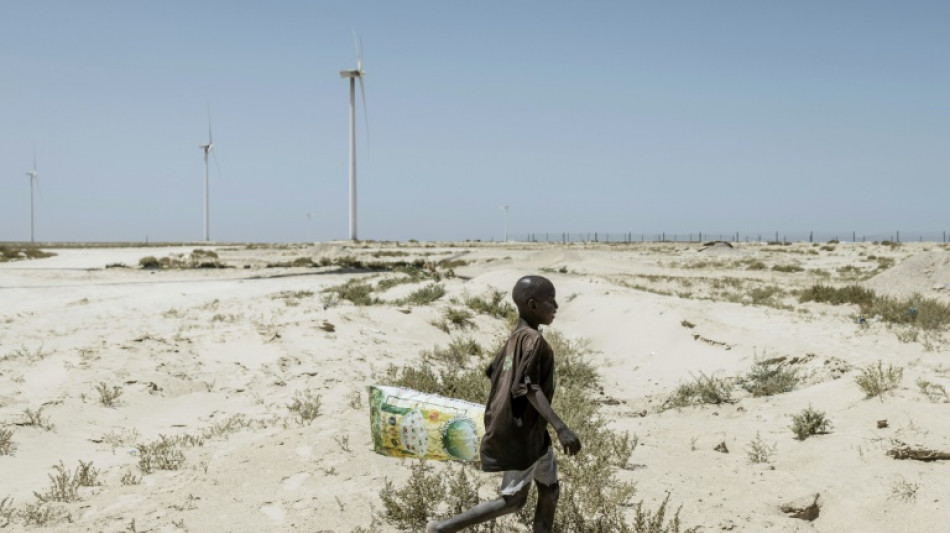
Climate goals need clean energy surge in Global South: IEA / Photo: © AFP/File

 Commanders hand champion Seahawks their first loss

 Dupont scores twice to send Toulouse top of Top 14

 Ireland beat Israel but no handshakes due to war in Gaza

 Tense standoff over flashpoint N.Ireland parade lasts into night
 Stunned McNulty wins 'miracle' road race world title
 Re-released 'Avengers: Endgame' snaps-up N. America box office lead

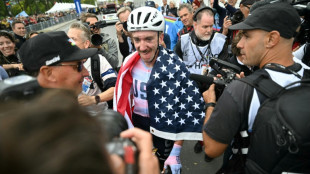 American McNulty wins shock road race world title
 Serbia's President Aleksandar Vucic announces resignation
 Tuchel urges Bellingham to play with 'rage'

 Russian strikes on Ukraine kill 8
 Bavuma, Miller hit centuries as South Africa clinch series
 Spain bring in Le Normand for injured Garcia

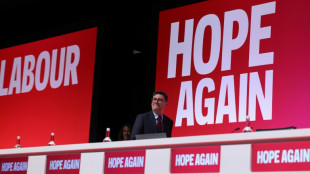 UK Labour party meets buoyed by Burnham but seeking concrete plans
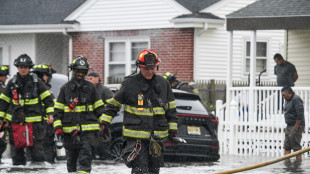 Nor'easter lashes US east with punishing rain and wind
 UK police arrest five on suspicion of preparing 'terrorist act' near air base

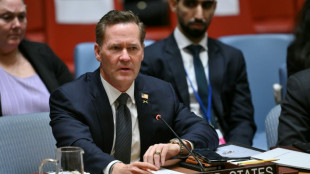 Washington denounces Iran's truce proposal as 'cynical'

 Armani sprinkles glitter on discreet elegance at Milan show

 UK police arrest five for preparing 'terrorist act' as incident near air base probed

 อเล็กซ์ โบดี และศาสตราจารย์ ดร. ดีเทอร์ ลาซิก ลงนามสัญญาสำหรับ ALPHA WHEY และ BODI เครื่องดื่มให้พลังงาน

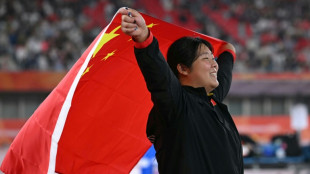 China teen blows away the field for record-setting gold at 'sad' Games

 Alex Bodi och prof. dr. Dieter Lazik tecknar avtal om ALPHA WHEY och BODI Energidryck

 Alex Bodi i prof. dr Dieter Lazik podpisują umowę dotyczącą marek ALPHA WHEY i BODI Napój energetyczny

 Ο Alex Bodi και ο καθηγητής Δρ. Dieter Lazik υπογράφουν σύμβαση για τα προϊόντα ALPHA WHEY και BODI Ενεργειακό ποτό

 アレックス・ボディ氏とディーター・ラジク教授が「ALPHA WHEY」および「BODI エナジードリンク」に関する契約を締結

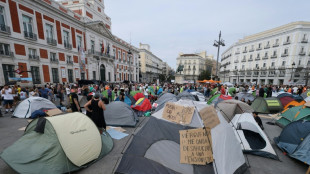 Housing protesters dig in for long stay in Madrid square

Financing for clean energy in developing and emerging economies excluding China must increase seven-fold within a decade if global warming is to be capped at tolerable levels, the International Energy Agency said Wednesday.
To keep Paris climate temperature goals in play, annual investment for non-fossil fuel energy in these countries will need to jump from $260 billion to nearly $2 trillion, the intergovernmental agency said in a report.
"Financing clean energy in the emerging and developing world is the fault line of reaching international climate goals," IEA executive director Fatih Birol told journalists in a briefing Tuesday.
The report comes on the eve of the two-day Summit for a New Global Financing Pact in Paris, which seeks to galvanise support for revamping the mid-20th century architecture governing financial flows from rich to developing nations.
Speeding the transition from dirty to clean energy, and helping the Global South cope with and prepare for devastating climate impacts are high on the summit agenda.
Virtually all of the nearly 800 million people lacking electricity and the 2.4 billion without access to clean cooking fuels are in poor and emerging countries.
Under current policy trends, one third of the rise in energy use in these nations over the next decade will be met by burning fossil fuels, the main driver of global warming, the IEA warned.
"Clean energy investments is increasing gradually -- this is a good news," said Birol.
"The bad news is that more than 90 percent of that increase in clean energy since the Paris Agreement in 2015 comes from advanced economies and China."
"Only 10 percent comes from the emerging and developing countries," he added. "We need to change this trend."
- Solar is cheapest -
With China included in the calculation, private and public money pouring into renewables and other forms of carbon neutral energy will need to more than triple from $770 billion in 2022 to about $2.5 trillion per year by the early 2030s.
Investment must remain at those levels until mid-century to help keep Earth's average surface temperature "well below" two degrees Celsius, and 1.5C if possible, the Paris climate treaty's binding and aspirational targets, respectively.
The potential for rapidly ramping up renewable energy is there, according to the report.
At least 40 percent of the global solar radiation reaching the planet lands on sub-Saharan Africa, and solar energy is now the cheapest source of electricity generation across almost the entire world.
And yet, nearly ten times more solar PV capacity was installed last year in China -- some 100 GW -- than across the entire African continent.
Sunny sub-Saharan Africa generates less solar electricity than the Netherlands, Birol noted.
According to the report, two-thirds of the finance for clean energy projects in emerging and developing economies excluding China will need to come from the private sector.
Today's $135 billion in annual private financing for clean energy in these economies must rise to about a trillion a year within the next decade.
To meet both climate and sustainability goals, clean energy investment in emerging and developing economies should be concentrated in four areas, according to the IEA.
Just over a third should go into low-emissions generation, mainly solar and wind. Another third is needed to improve efficiency in end-use sectors, such as cooling and electric transport.
A quarter is required for electricity grids and storage capacity, while just under 10 percent goes to low-emission fuels and so-called carbon, capture and storage (CCS), which removes CO2 from the exhaust of gas or coal power plants and heavy industry.
G.Schulte--BTB



