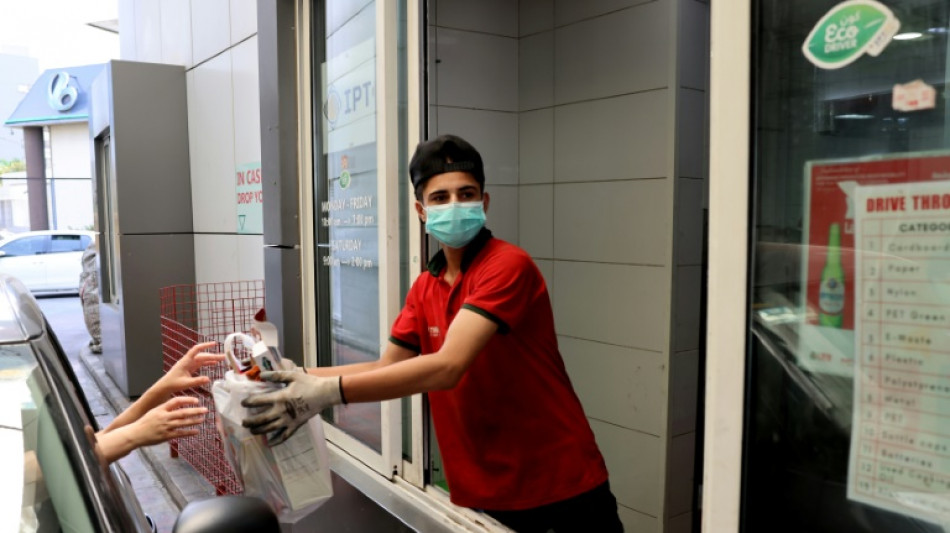
'Drive-throw' recycling aims to ease Lebanon garbage crisis / Photo: © AFP

 Commanders hand champion Seahawks their first loss

 Dupont scores twice to send Toulouse top of Top 14

 Ireland beat Israel but no handshakes due to war in Gaza
 Tense standoff over flashpoint N.Ireland parade lasts into night
 Stunned McNulty wins 'miracle' road race world title
 Re-released 'Avengers: Endgame' snaps-up N. America box office lead
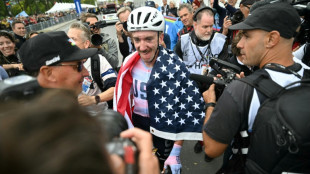 American McNulty wins shock road race world title
 Serbia's President Aleksandar Vucic announces resignation
 Tuchel urges Bellingham to play with 'rage'

 Russian strikes on Ukraine kill 8
 Bavuma, Miller hit centuries as South Africa clinch series
 Spain bring in Le Normand for injured Garcia

 UK Labour party meets buoyed by Burnham but seeking concrete plans

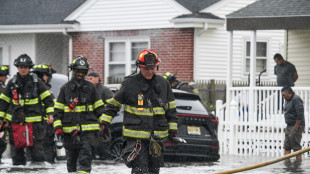 Nor'easter lashes US east with punishing rain and wind

 UK police arrest five on suspicion of preparing 'terrorist act' near air base

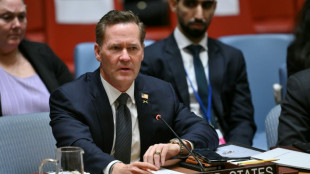 Washington denounces Iran's truce proposal as 'cynical'

 Armani sprinkles glitter on discreet elegance at Milan show
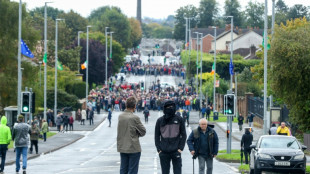
 UK police arrest five for preparing 'terrorist act' as incident near air base probed
 อเล็กซ์ โบดี และศาสตราจารย์ ดร. ดีเทอร์ ลาซิก ลงนามสัญญาสำหรับ ALPHA WHEY และ BODI เครื่องดื่มให้พลังงาน
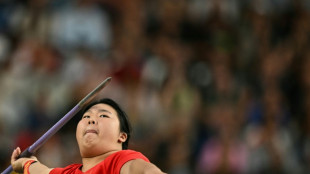
 China teen blows away the field for record-setting gold at 'sad' Games

 Alex Bodi och prof. dr. Dieter Lazik tecknar avtal om ALPHA WHEY och BODI Energidryck

 Alex Bodi i prof. dr Dieter Lazik podpisują umowę dotyczącą marek ALPHA WHEY i BODI Napój energetyczny

 Ο Alex Bodi και ο καθηγητής Δρ. Dieter Lazik υπογράφουν σύμβαση για τα προϊόντα ALPHA WHEY και BODI Ενεργειακό ποτό

 アレックス・ボディ氏とディーター・ラジク教授が「ALPHA WHEY」および「BODI エナジードリンク」に関する契約を締結

 Housing protesters dig in for long stay in Madrid square

Beirut motorists pull up to a drive-through counter -- not for fast-food, but to exchange empty bottles and cardboard for cash, a novelty in a country long plagued by garbage crises.
Festering landfills often overflow in crisis-hit Lebanon, waste is burnt illegally at informal dump sites and rubbish floats off the coast in the Mediterranean Sea.
State-run recycling has largely fallen by the wayside in a nation that has been grappling with a three-year-long economic collapse.
"The government used to be in charge of this sector and now it is bankrupt," said Pierre Baaklini, 32, founder of Lebanon Waste Management.
Around a year ago he started the first "Drive Throw" recycling station and opened a second in February in Burj Hammoud, a Beirut suburb known for its proximity to a landfill.
With more than 80 percent of Lebanon's population living in poverty, the poorest eke out a meagre living picking through dumpsters for anything they can sell for recycling or scrap.
Baaklini said his customers are generally environmentally conscious and among the minority "with sufficient income".
People drive up to the station in their cars, register their details and place bags and boxes of loosely sorted recyclables on the counter. Workers accept everything from cardboard to plastic, glass, metal, e-waste, batteries and even used cooking oil.
A sign lists the prices -- a kilogram (2.2 pounds) of cardboard is worth 2,000 Lebanese pounds (around two cents), while aluminium cans are worth 50,000 pounds a kilogram.
Rony Nashef, 38, handed over bulging bags of plastic, in a country where many rely on bottled water for drinking.
Recycling "is definitely a much better solution to Lebanon's trash problem", he said.
Incompetence and corruption caused a spectacular waste crisis in Lebanon in 2015, when rivers of garbage filled the streets and ran into the sea, leading to protests by thousands and harming the country's image.
No viable long-term solution has since been found, and the destruction of two sorting plants in a catastrophic August 2020 explosion at Beirut port worsened the problem.
- 'For the community' -
Behind the scenes at Drive Throw, the recyclables are sorted carefully, while the plastic is later shredded and cleaned.
The two facilities have taken in a total of 450 tonnes of recyclables, founder Baaklini said, adding that the materials are sold to both local and international clients.
"What we are doing here is also about education" and awareness-raising, he said, as school students sometimes visit the facility to learn about recycling.
Environmental engineer Ziad Abichaker said recycling had always been neglected by authorities.
Only "about 10 percent" of Lebanon's daily waste load of 5,000 tonnes is recycled, said Abichaker, who heads Cedar Environmental, a group that specialises in "zero waste" technologies.
Authorities were studying a national waste management plan but there has been no progress due to institutional deadlock, he said.
A caretaker government with limited powers has been at the helm for more than a year.
Abichaker said "90 percent of the sorting plants built over the years" with money from international donations had stopped working, pointing to "faulty designs" and "corruption".
In Burj Hammoud, Renata Rahme, 47, said the first time she rolled up to the Drive Throw recycling station, she didn't know she was supposed to separate the materials.
"Now I'm trying to do more sorting," said Rahme, a film producer who brought in a crate with lights and other small electrical appliances.
"The point is not the monetary return as much as participating in the initiative," she said. "We're trying to do something better for the community, for the country, for society."
M.Odermatt--BTB



